A tribute to love, grief and loss
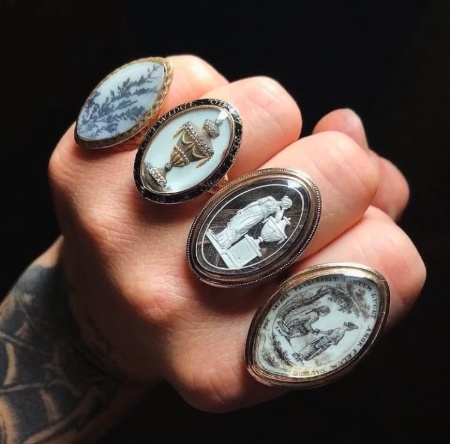
Mourning jewellery – today we might consider it macabre but is it? Could anything be more intimate and deeply personal than to commemorate our lost loved ones in direct sight, through our jewellery?
Throughout history and the centuries people have found ways to remember the people we have lost in many different ways. When it comes to mourning jewellery it can be traced back to ancient civilisations. In ancient Egypt, jewellery played a significant role in burial rituals and the Roman women wore rings with carved portraits of the people they had lost, sometimes inscribed with the name of the lost one with an added phrase like, for example, Ave atque vale – Hail and farewell.
During the dark ages and the rest of medieval Europe, we see more subdued mourning jewellery in line with that era’s somber and sober attitude toward death. In the jewellery of that time religious symbols like crosses and saints are common.
Jump to the Renaissance when a revival of the classical world and its themes and an added fascination with humanism and individualism, influenced the design. This is also when we start to see intricate symbolism, portrait miniatures and cameos.
However, it was in the 17th and 18th centuries, particularly in Europe and especially Great Britain, that mourning jewellery became a widely embraced tradition.
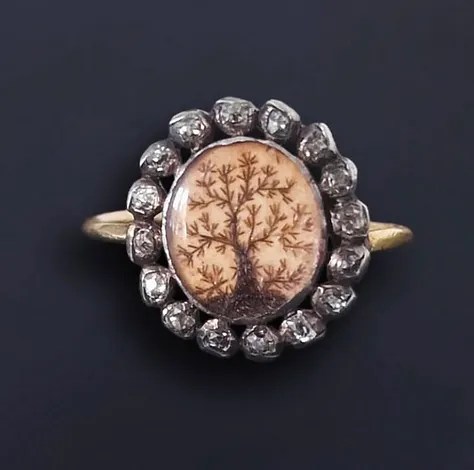
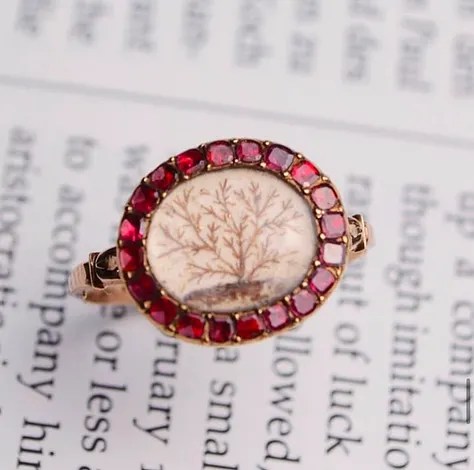
Georgian times
The extensive and public mourning following the death of Queen Mary II from smallpox, in 1694, set a precedent for the use of mourning jewellery in England.
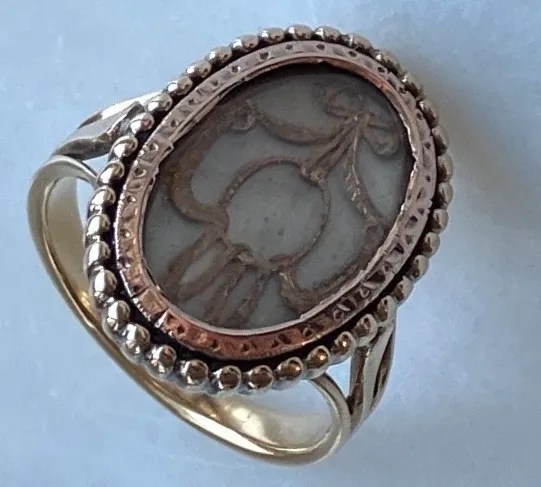
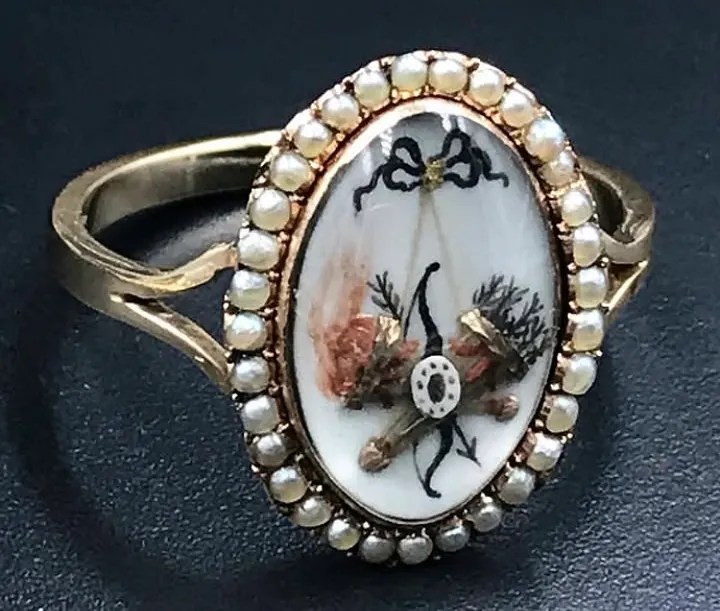
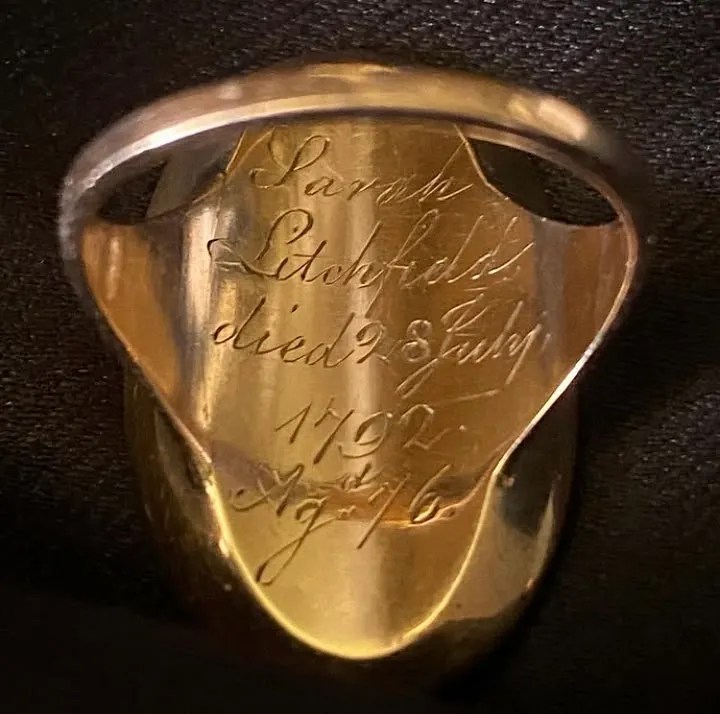
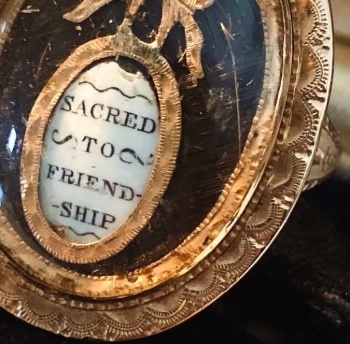
Mourning jewellery became particularly prominent during the Georgian era (1714-1830-37), reflecting the period’s fascination with death, remembrance, and sentimentality. Influenced by the Memento Mori tradition, these pieces, often in black enamel and with detailed engravings, served as both a tribute to the deceased and as a reminder of life’s transient and fleeting nature.
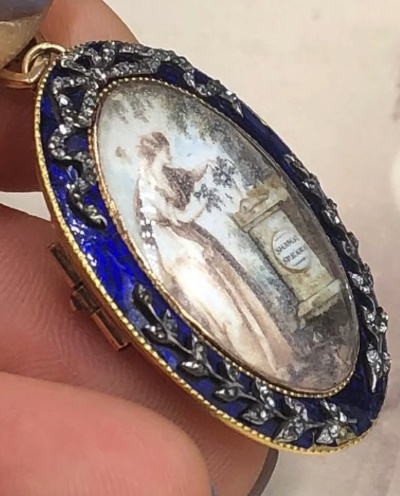
By the end of the Georgian era, mourning jewellery had evolved to include softer, more sentimental designs, paving the way for the elaborate mourning customs of the Victorian period.
Peak mourning
The practice and popularity of mourning jewellery reached its pinnacle and zenith during the Victorian era (1837-1901), especially following the death of Prince Albert, consort of the British monarch, in 1861.
After her beloved husband’s death Queen Victoria plunged into deep mourning and wore black for the remainder of her life. This set a very strong and new “trend” for black clothing which together with mourning jewellery became a staple among the grieving upper and middle classes.
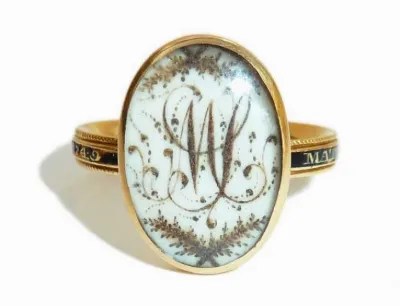
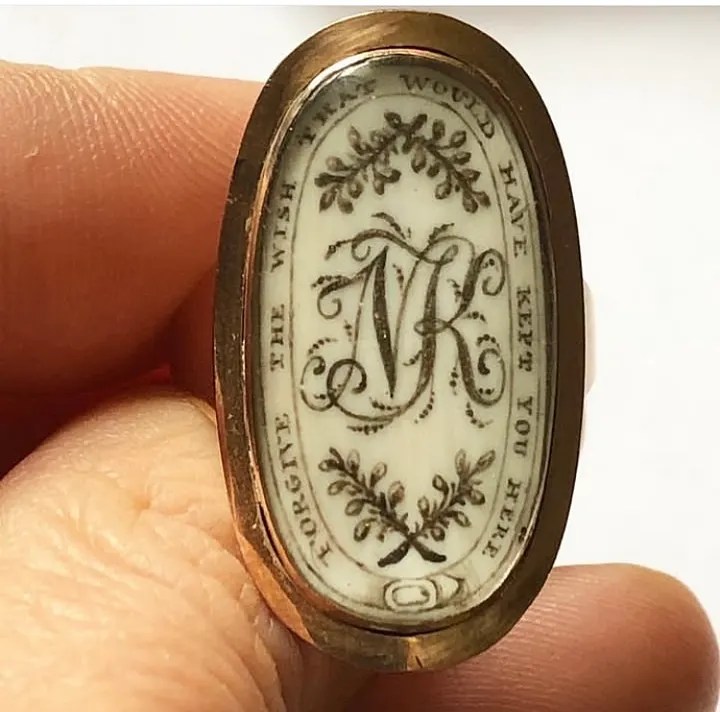
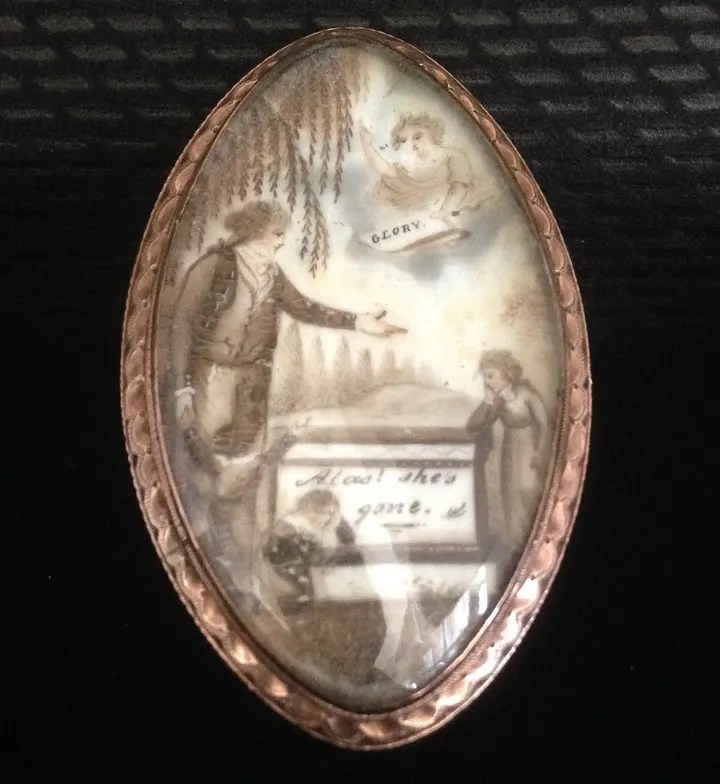
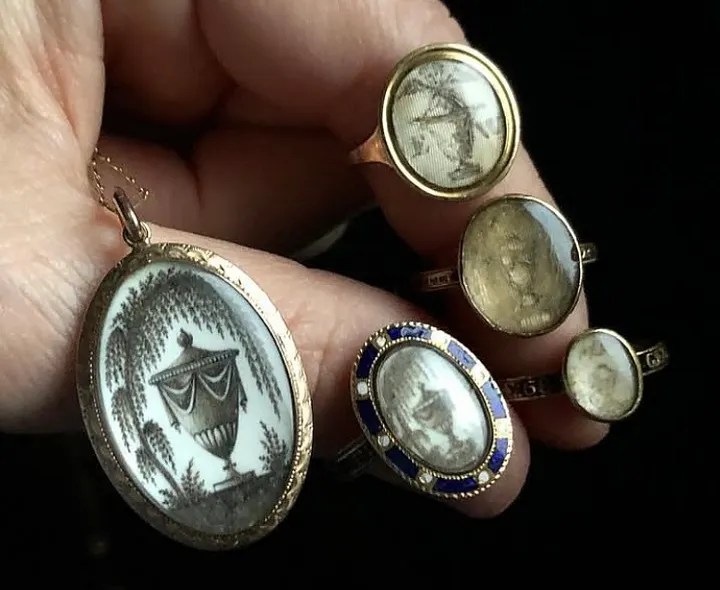
During this period the jewellery became more and more elaborate and symbolic. Enter the weeping willows to symbolize grief, the doves to symbolize peace and the forget-me-nots to symbolize remembrance.
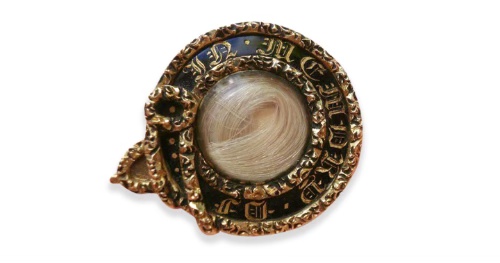
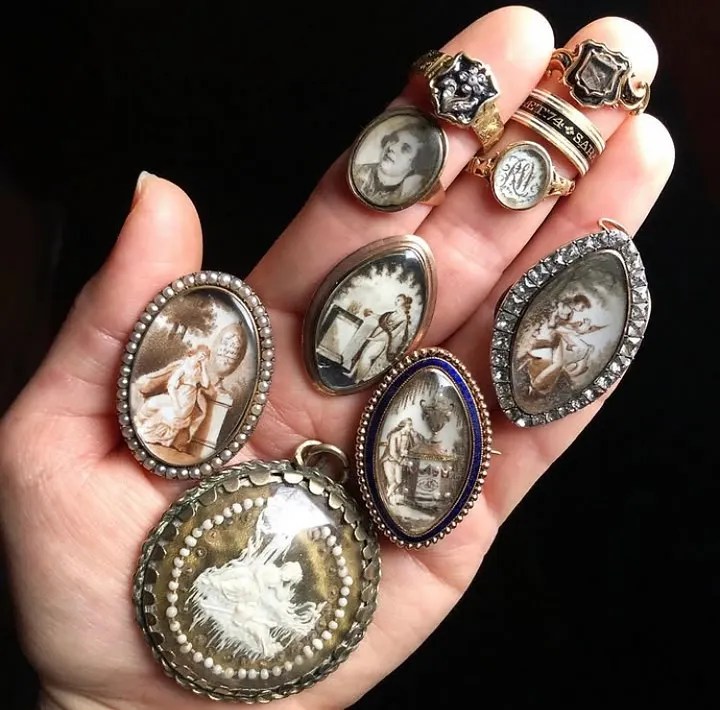
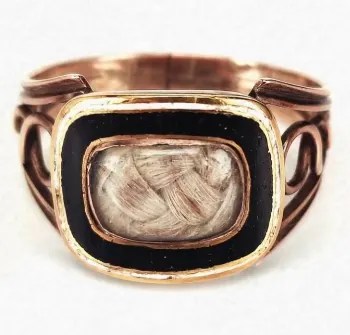
Hair jewellery also became particularly significant during this period. Locks of hair from the deceased were woven into intricate designs and set into rings, lockets or brooches, serving as both a keepsake and a tribute. Inscriptions such as In Memory Of and Gone But Not Forgotten were often engraved on these pieces.
Should we still wear it?
The end of the Victorian era started the decline of the mourning jewellery’s popularity. World War I and the modern age’s rapid societal shifts changed our attitudes towards death and gave us a more restrained version of mourning.
So if you find a beautiful piece of mourning jewellery, should you wear it? I say absolutely. If we go beyond its historical significance, let it serve as a tangible connection between the past and present, symbols of love, memory and the enduring nature of grief.
Simply, a beautiful tribute to those we will forever carry in our hearts.
More facts…
Symbolism
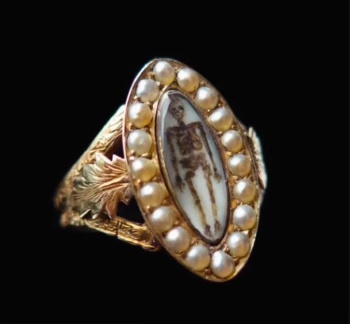
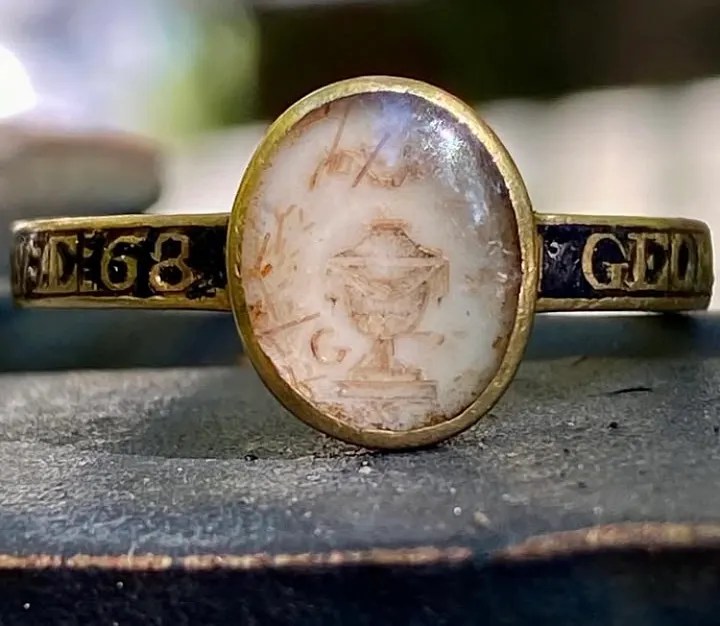
Skulls and skeletons: Inspired by Memento Mori, these designs reminded wearers of mortality.
Coffins and crossbones: Representations of death, commonly seen in early 18th-century mourning rings.
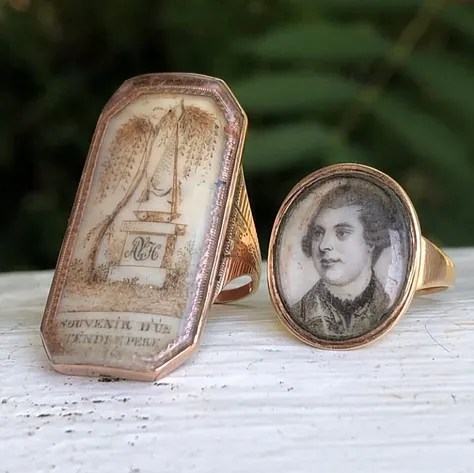
Weeping willows and urns: Popular in the later Georgian period, symbolizing sorrow and eternal remembrance.
Clasped hands: Representing eternal love and reunion in the afterlife.
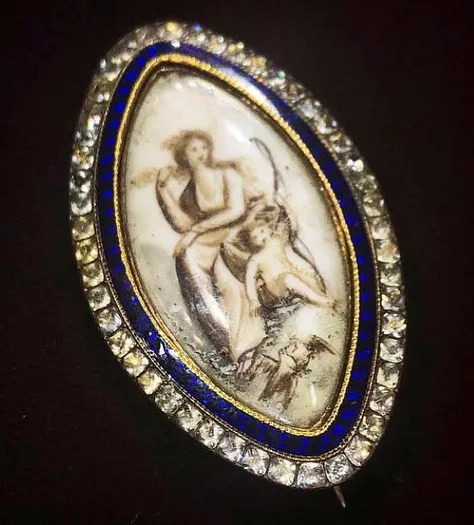
Angels and cherubs: Symbolic of the soul’s journey to heaven.
Forget-Me-Nots: Representing enduring love and remembrance.
Materials
Gold: Frequently used for mourning rings, often featuring black enamel.
Enamel: Black enamel signified mourning for an adult, while white enamel was used for children.
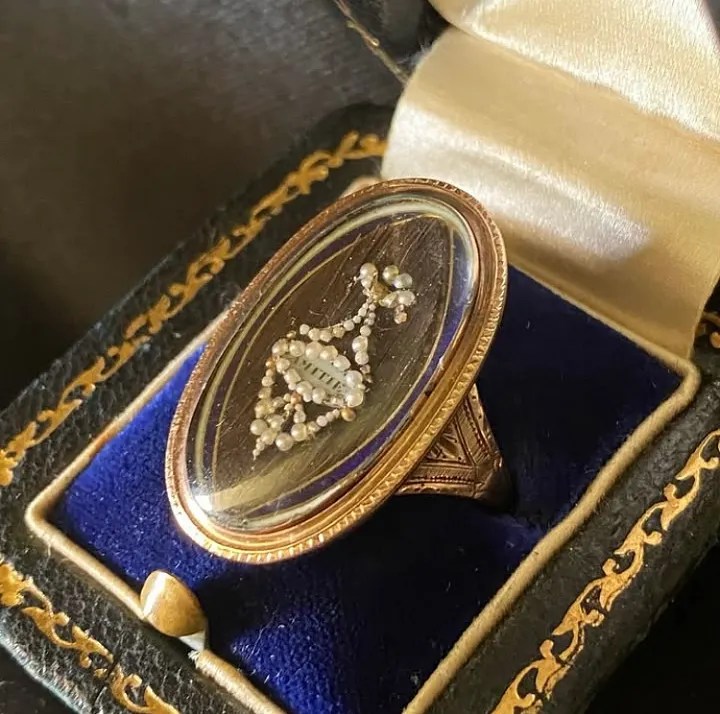
Hair: Locks of the deceased’s hair were woven into intricate patterns and set under crystal or in miniatures and incorporated into rings, brooches, and lockets
Ivory and Mother-of-Pearl: Used in cameos and lockets, often depicting mourning scenes.
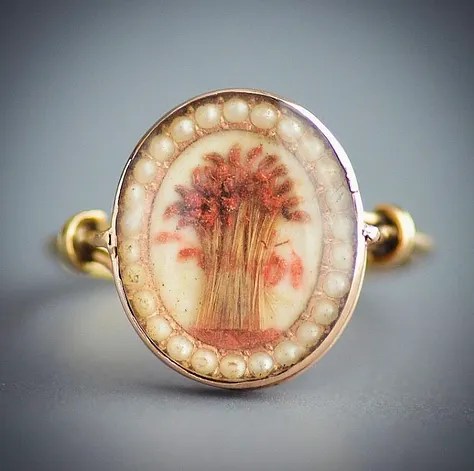
Seed Pearls: Representing tears, especially in pieces made to commemorate children, were frequently incorporated into mourning brooches and lockets.
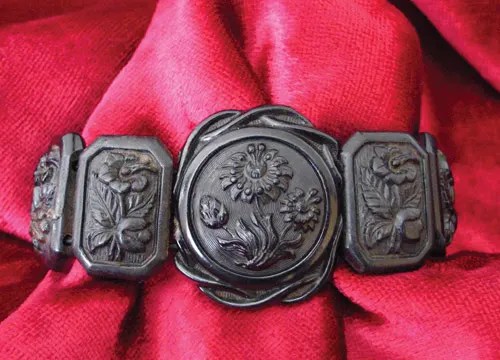
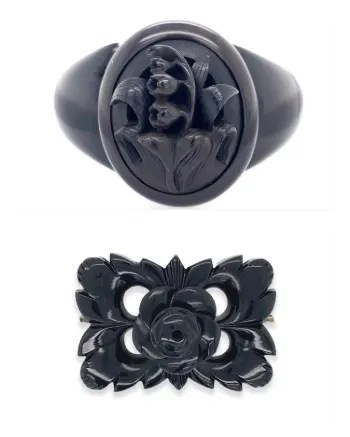
Jet: A fossilized form of wood, jet was highly valued for its deep black color and was commonly used in brooches, rings, and pendants.
Onyx: A naturally occurring black stone that was polished and set into jewellery, often paired with gold or enamel.
Vulcanite: A hardened rubber substitute for jet, making mourning jewellery more affordable for the middle class
Types of Mourning Jeweller
Mourning rings: Often inscribed with the deceased’s name, date of death, and a sentimental phrase.
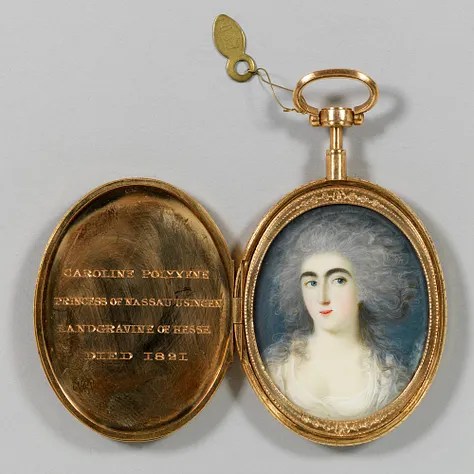
Lockets and miniature portraits: Containing hair or painted likenesses of the deceased.
Brooches and Bracelets: Adorned with hairwork, enamel, and symbolic engravings.
Want to know more?
Visit Art of Mourning where Hayden Peters, Jewellery Historian and Scholar share his knowledge about this interesting part of the jewellery history.
Or visit @estatejewelrymama where one often finds beautiful mourning jewellery for sale.
And no, I am not affiliated with the two above mentioned websites.
©SlowClapStories
Originally published on Substack at Slow Clap Jewels. Read the newsletter here.


You must be logged in to post a comment.