The Maharajas of Nawanagar
In the early 20th century two jewellery planets collided. Two Indian maharajas fell in love with all things European and Jacques Cartier fell in love with everything Indian…
I have earlier written about how Jacques Cartier went to India and was mesmerised by the historic Indian jewellery culture and its astoundingly coloured gemstones.
Back home he and his brother Louis transformed, together with their head designer Charles Jacqueau, all this inspiration into the now famed, “Tutti Frutti” style Cartier pieces. Small colour explosions in which emeralds, rubies and sapphires – just as often carved or cabochon shaped as faceted – was strikingly combined to have a blast together.
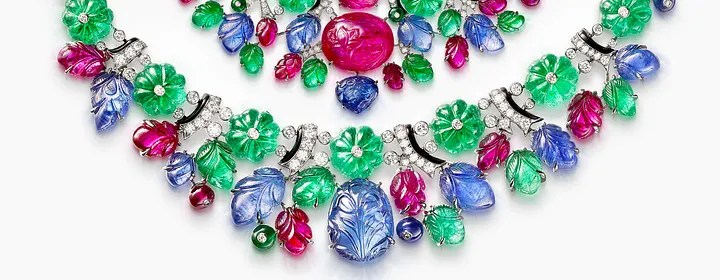
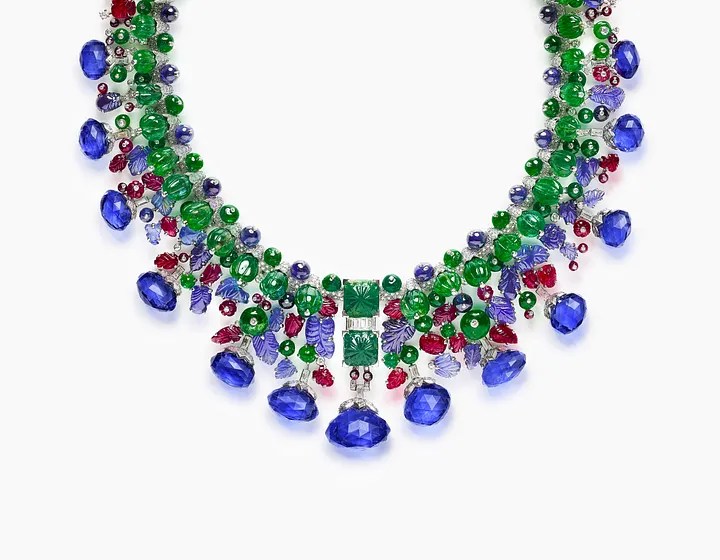
Photos borrowed from Cartier.
Many Maharajas…
During the first half of the 20th century many jewellery pieces were commissioned by different Indian royal families and Jacques Cartier became friend and collaborator to many of the Indian princes. He seems, however, to have formed an especially close bond with Maharaja Sir Ranjitsinhji Vibhaji Jadeja (1872-1933) and later his successor and nephew Maharaja Digvijaysinhji Jadeja of Nawanagar (1895-1966). Their royal domain was an Indian princely state in the Kathiawar region, south of the Gulf of Kutch.
The former, Ranjitsinhji, was also a famous cricket player and the latter, Digvijaysinhji, became in Poland known as the “Good Maharaja” because of the around thousand Polish orphans he saved during World War II while serving as a delegate to the British war cabinet, where he convinced members of amongst others the Red Cross to transport the orphans to Jamnagar.
Their appreciation for both Eastern and Western cultures is reflected in the remarkable jewellery they had made.
Ranjitsinhji came to the throne in 1907 and did not only love cricket, playing for England and Sussex, but also collecting rare jewels. As said, he early formed a close friendship with Jacques Cartier, and one of the most famous jewellery collaborations in the world was born.
But when Ranjitsinhji returned to India to take over the princely state, it was in such poor condition that many of the historical jewels and ornaments in its possession had to be sold to alleviate the severe poverty.
Over the years, the situation in the province improved, largely due to the British administrator Colonel H W Berthon who began a program of modernization. The ports and other infrastructure were improved and new houses, shops and roads were built. Ranjitsinhji was able to spend this new revenue on adding to the “The Nawanagar Jewels”, a collection that Jacques Cartier described as: “Unsurpassed in the world, perhaps not in quantity but certainly in quality.”
Eye of the Tiger and the others…
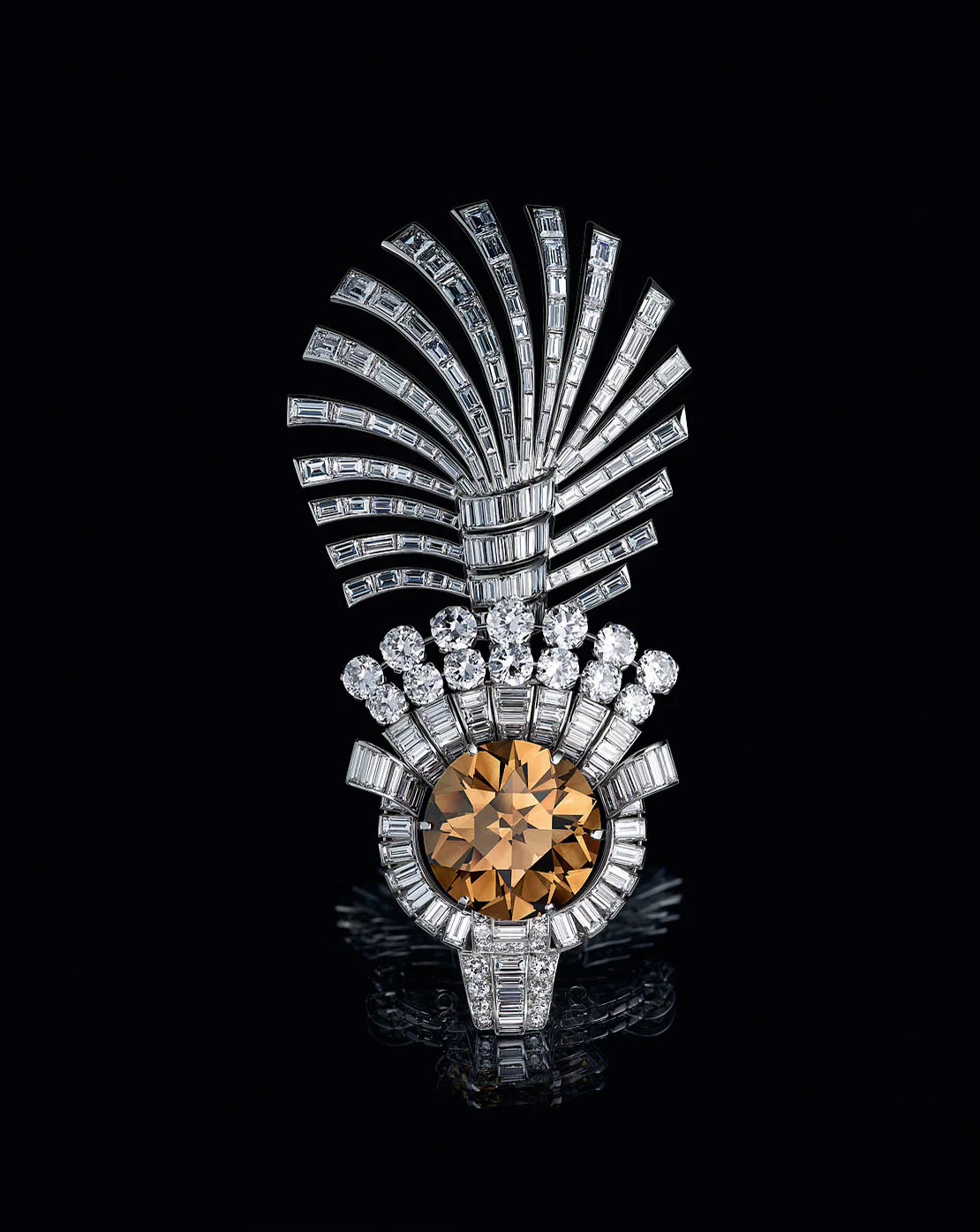
The number of jewels in the collection was unparalleled and almost insurmountable to believe. One of the astounding pieces in the Nawanagar treasure chest was the extraordinary and spectacular Turban jewel of the Maharaja of Nawanagar. It was Digvijaysinhji, who commissioned and asked Cartier to remount an earlier made tiger’s eye diamond sarpech (diamond turban ornament also called jigha) in 1937.
The almost cognac-coloured center piece, Tiger Eye diamond, is a flawless 61.50 carat gemstone. It was discovered in 1913 in the Orange River in South Africa.
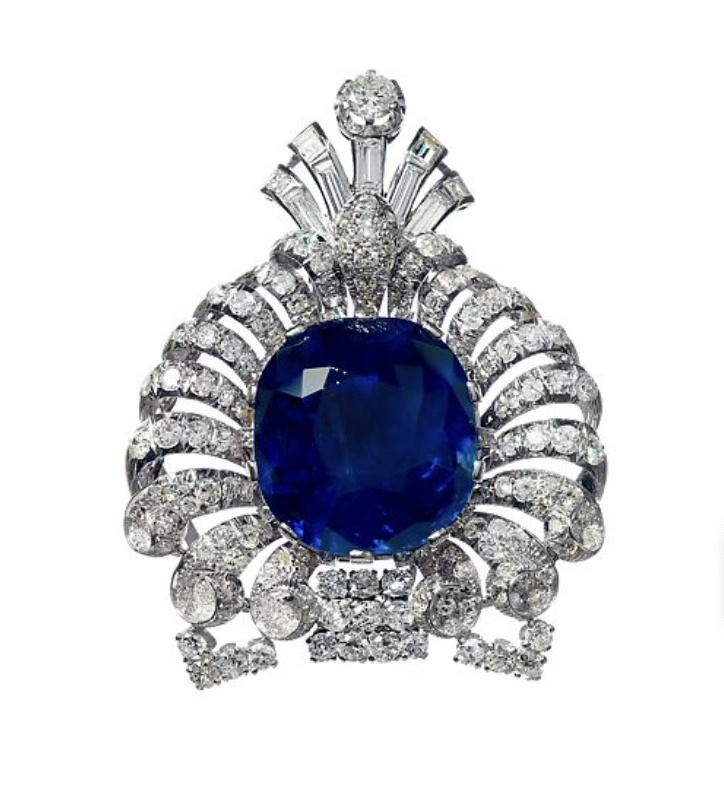
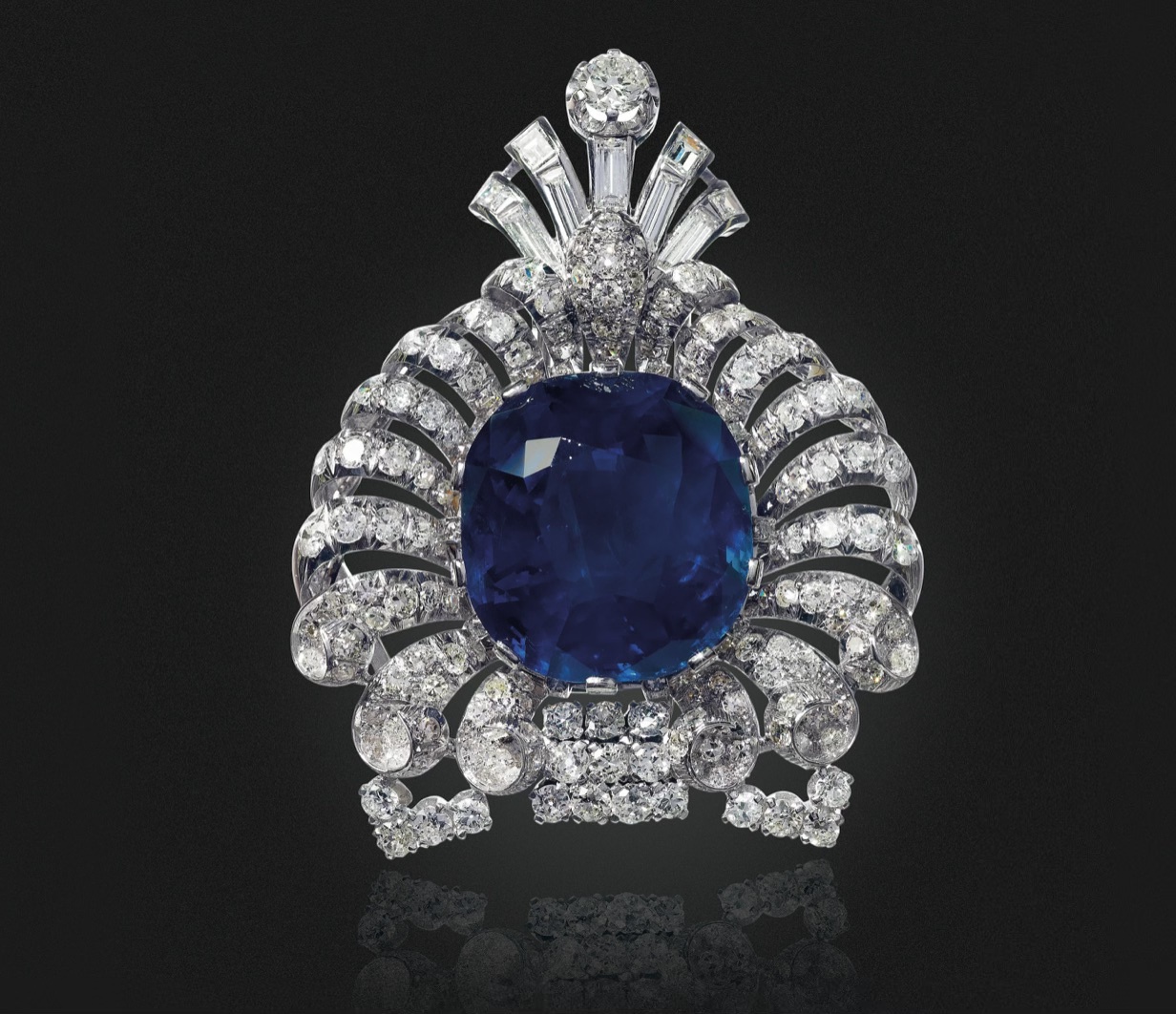
Another amazing jigha is this Brooch of the Maharaja of Nawanagar made circa 1920 but modified somewhere between 1925 to 1935. It is set with a cushion modified mixed-cut sapphire of 109.50 carats and circular, single and baguette-cut diamonds in platinum.
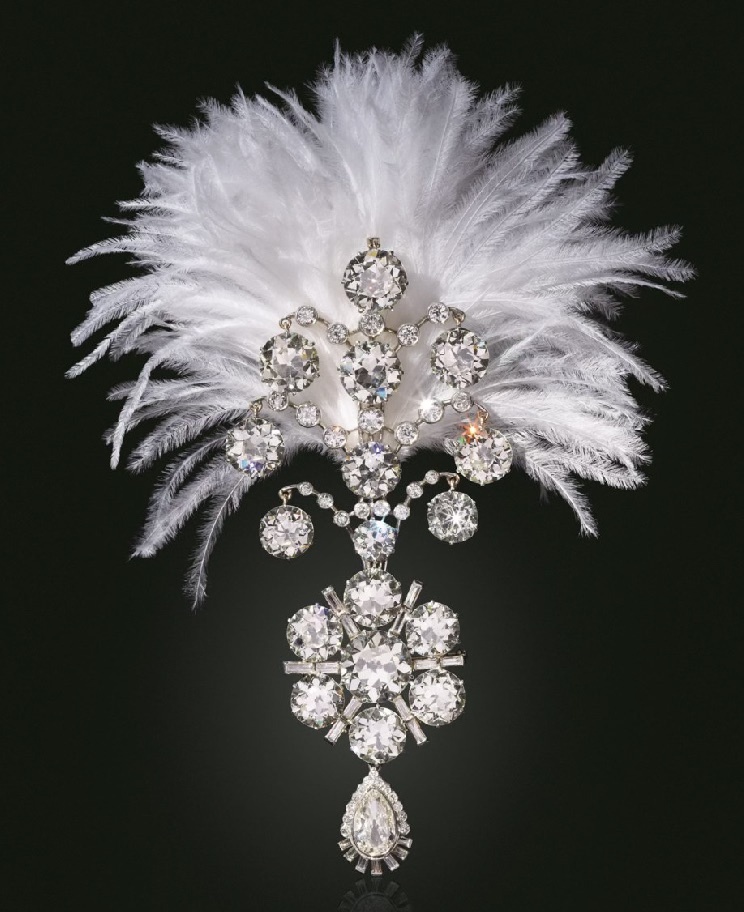
One of the earlier turban ornaments made for the Maharaja of Nawanagar, in true Belle Époque style with its delicate flowing form, was this one with a feather plume. Made in 1907, also this ornament underwent remodelling, in 1935. It is set with old, baguette and pear-shaped diamonds, white gold, fitted with the plume holder on the back. The lower portion of the ornament is detachable and can be worn separately as a brooch. Perhaps this adaptability reflects the changing lifestyles of Indian royalty, who increasingly moved between traditional court ceremonies and European social settings.
The necklaces
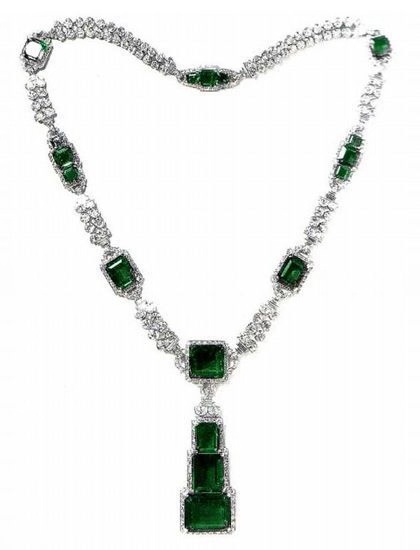
But maybe more amazing still, is the necklaces made by Cartier for the two Maharajas of Nawanagar.
The Maharaja of Nawanagar’s Cartier necklace was created in 1926 by Cartier. This emerald and diamond necklace with its 17 rectangular and remarkable emeralds, of the highest quality, equals no other. The emeralds have a total weight of 277 carats. The emerald in the pendant weighed 70 carats by itself and was said to have come from the collection of a former Sultan of Turkey.
Rubies
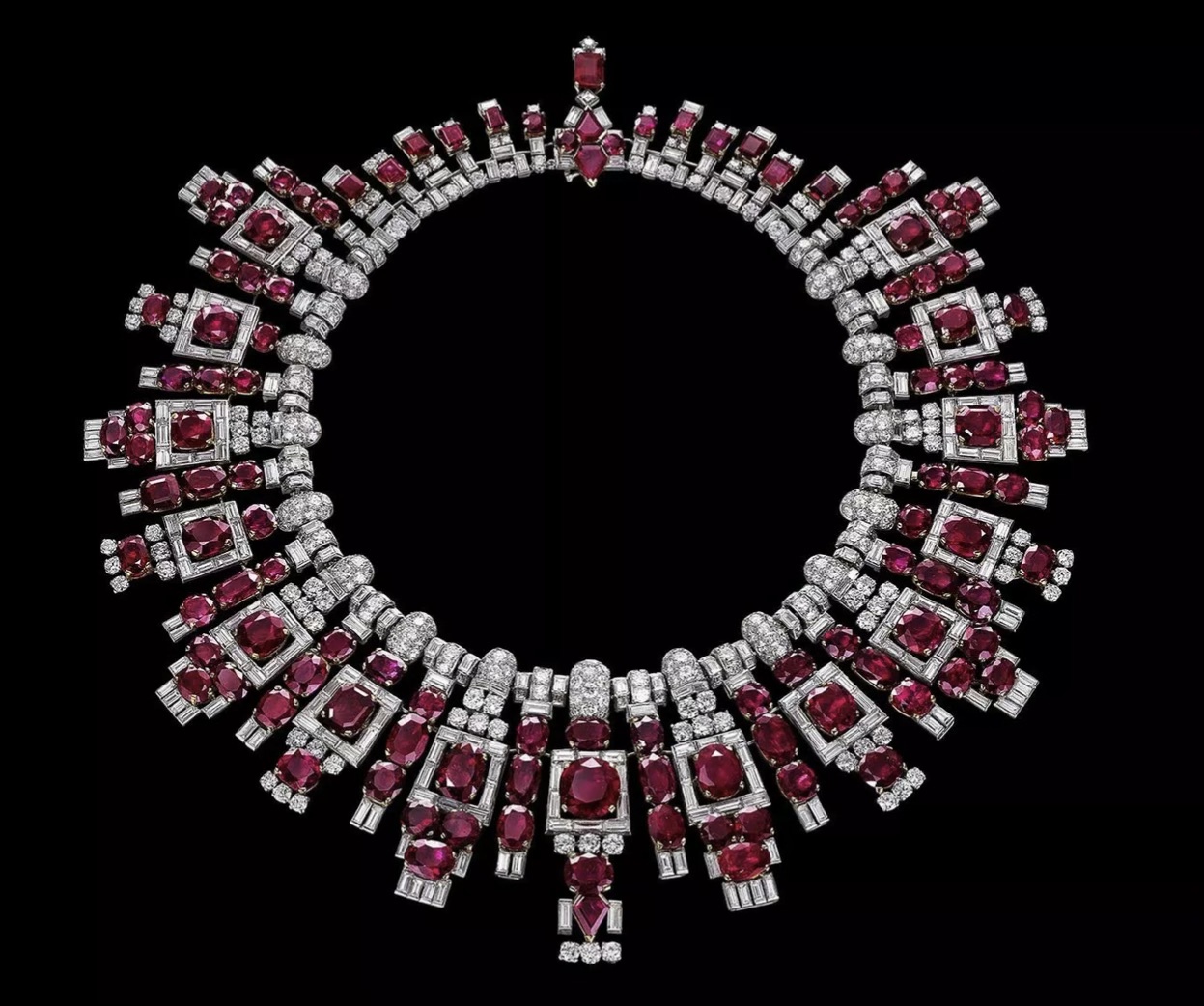
In 1937 Digvijaysinhji commissioned The Nawanagar Ruby Necklace. The necklace consists of 116 rubies, weighing over 170 carats, and diamonds set in platinum. All the rubies originate from the famous Mogok mines of Burma, famous for their natural rich, deep red colour, bereft of any enhancement.
After the Independence of India in 1947 the necklace was, in the early 1950s, returned to Cartier who found an exclusive and select clientele for it. One of those clients bought it and had it slightly altered, from the original design, to fit the fashion of the time.
The magnum opus
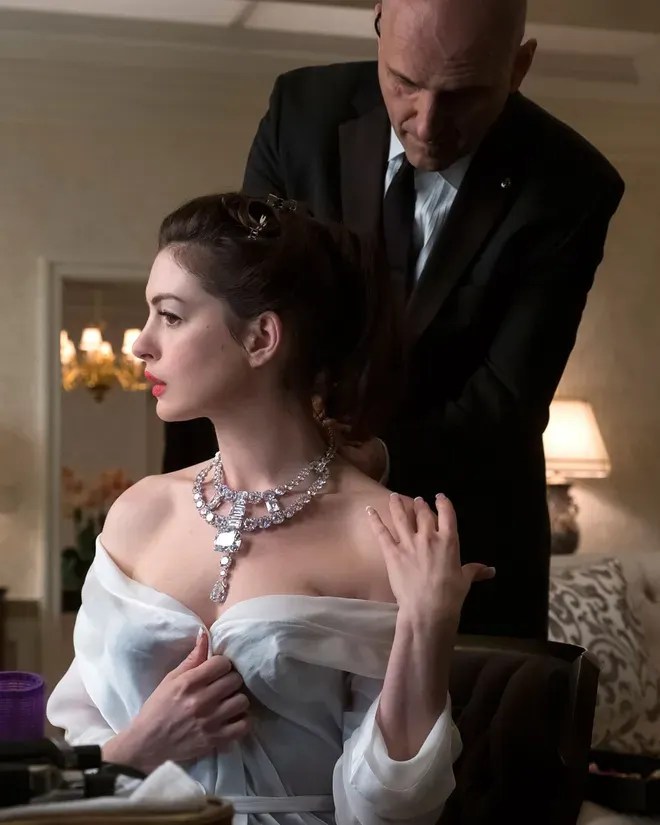
In the 2018 all female cast movie, Ocean’s Eight, we see the jewel heist gang going after the Jeanne Toussaint necklace – a magnificent and certainly heist-worthy jewellery piece!
This cinematic necklace was made to resemble the necklace (perhaps la pièce de résistance of the Nawanagar/Cartier collaborations) commissioned by Ranjitsinhji in 1931, just two years before his death from heart failure.
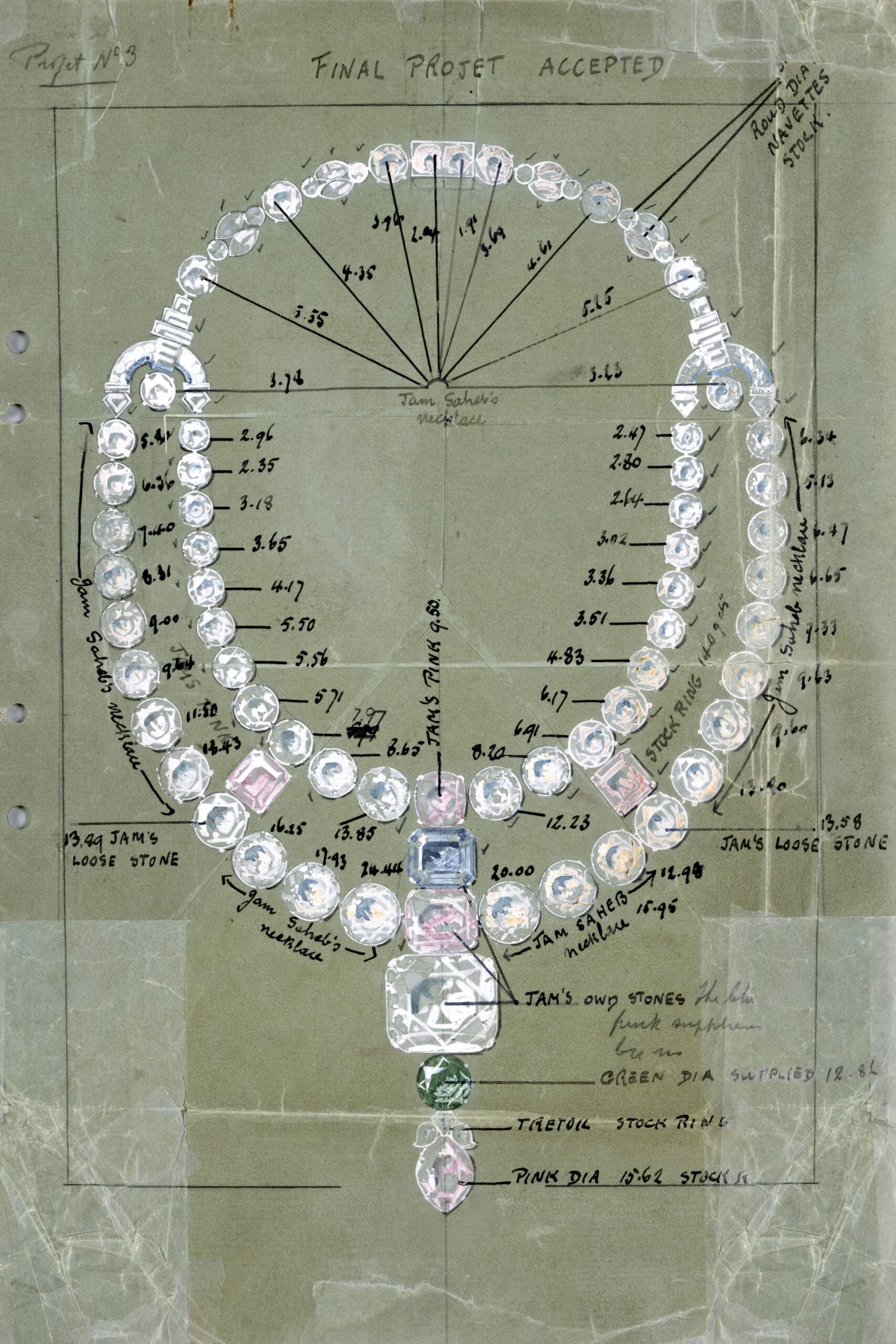
This extraordinary diamond necklace was dismantled in 1960 and today only drawings remains of the original – which was described by Jacques Cartier as “the finest cascade of coloured diamonds in the world”.
The name of the necklace is a tribute to Cartier’s former creative director Jeanne Touissant. She was, just like the Cartier brothers, enormously inspired by India and was made director of fine jewellery in 1933 and remained so until 1970. Few came to elevated the Cartier brand as she did.
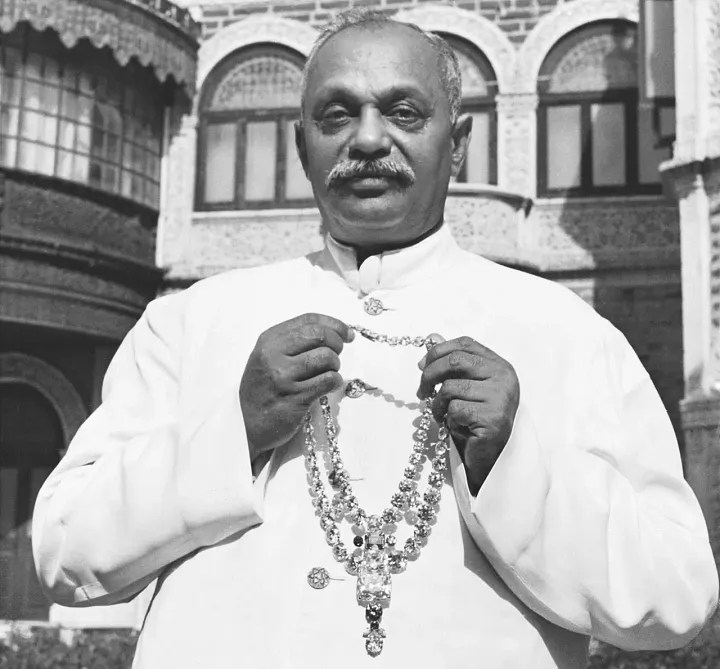
Maharaja Sir Ranjitsinhji Vibhaji Jadeja with the original Jeanne Toussaint necklace. Photo: Cartier’s archives.
Anne Hathaway as Daphne Kluger in Ocean’s 8 wearing the replica. Photo: Warner Bros. Pictures
The Toussaint necklace dimensions were made for a man and it consisted of two chains of large clear white diamonds. In between the chains square pink gems acted as links. In the centre, there were three pink diamonds, along with a 26-carat blue and a 12-carat green diamond. The necklace’s central diamond pendant stone was the bluish Queen of Holland, at the time weighing 136.25 carats and considered one of the largest diamonds in the world.
For the replica the Cartier team went to the archives. Then, between 10 to 15 artisans spent eight weeks’ working on it, in Cartier’s Paris based high jewellery workshops.
The Maharajas of Nawanagar have at times been accused of being more interested in specific, spectacular and jaw-dropping gemstones, than in the jewellery pieces the stones eventually became. Considering the collection they had at their disposal, how could one blame them…
More…
For more Mughal jewels and European-Indian hybrid jewellery designs visit Maharajas & Mughal Magnificence – the 2019 Christie’s auction on behalf of The Al Thani Collection.
©SlowClapStories

Originally published on Substack at Slow Clap Jewels. Read the newsletter here.


You must be logged in to post a comment.