Brothers in jewellery…
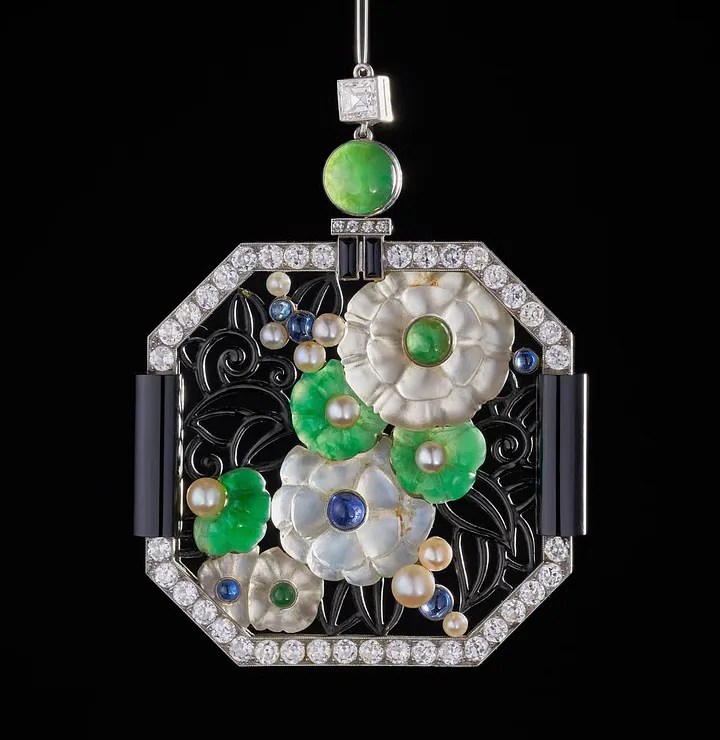
Pendant in platinum, enamel, jadeite, rock crystal, moonstones, sapphires, pearls, jade and diamonds. Photo: Benjamin Chelly
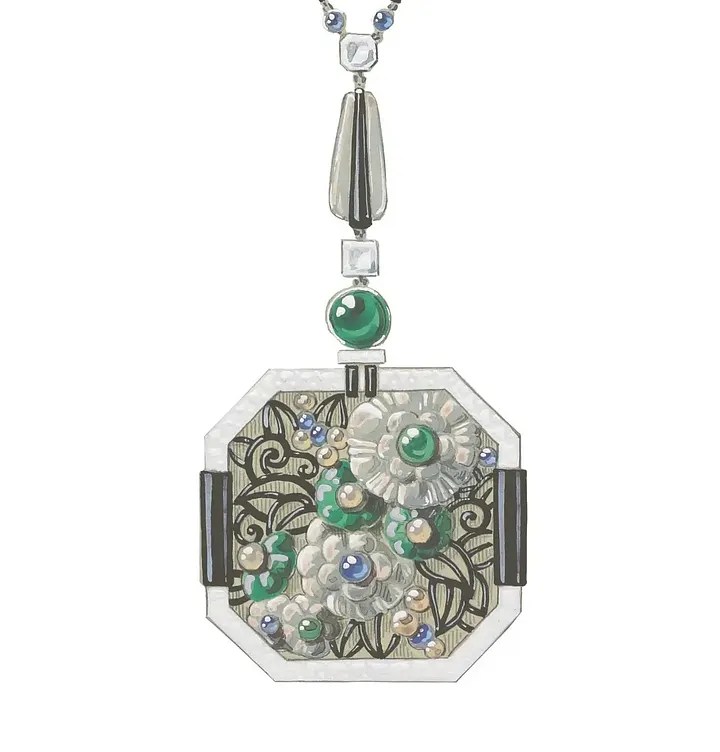
Gouché drawing av of the necklace. Photo: L’École Van Cleef & Arpels
Both: Lacloche Frères
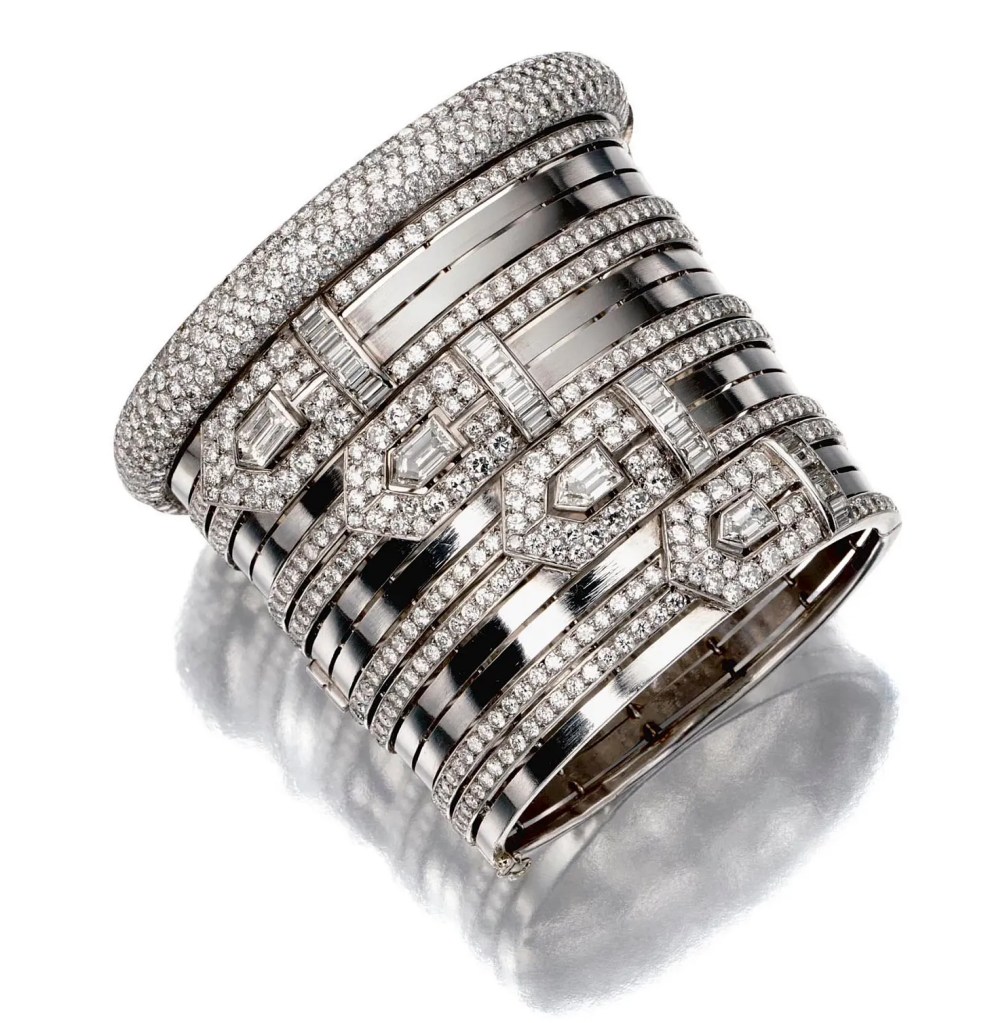
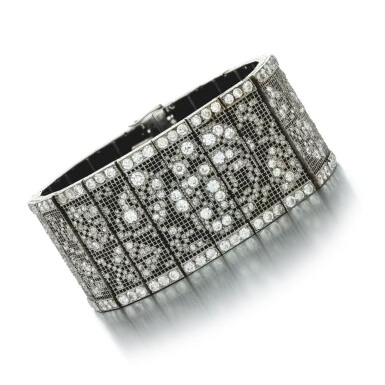
Diamond cuff composed of pierced bands highlighted at the front by brilliant-cut diamonds and applied with stepped epaulet-shaped motifs set with bullet-shaped and baguette stones, further enhanced by a pavé-set brilliant-cut diamond border, mounted in platinum, probably 1930s. Lacloche Frères.
Photo: Sotheby’s
They were the tastemakers for royals, the business owners who understood the global luxury market and the innovators who came to influence the entire jewellery industry. They were the Lacloche family!
French haute joaillerie history was built by several different astonishing jewellers and jewellery families like Cartier, Boucheron, Mauboussin, Chaumet and Van Cleef & Arpels to mention only some.
Perhaps a bit less known today, but still one of the more famous and distinguished family firms was Maison Lacloche Frères, built by the Lacloche brothers. Or rather the siblings, because there were also two sisters in the family company mix, Bertha and Emilie.
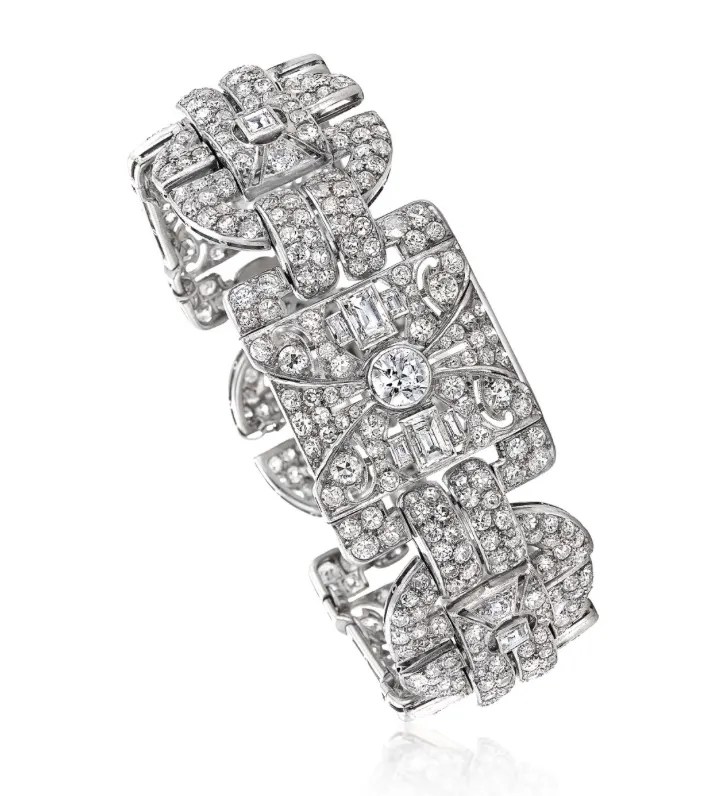
Bracelet with single, old, square and baguette-cut diamonds and platinum, circa 1930. Photo: Christie’s.
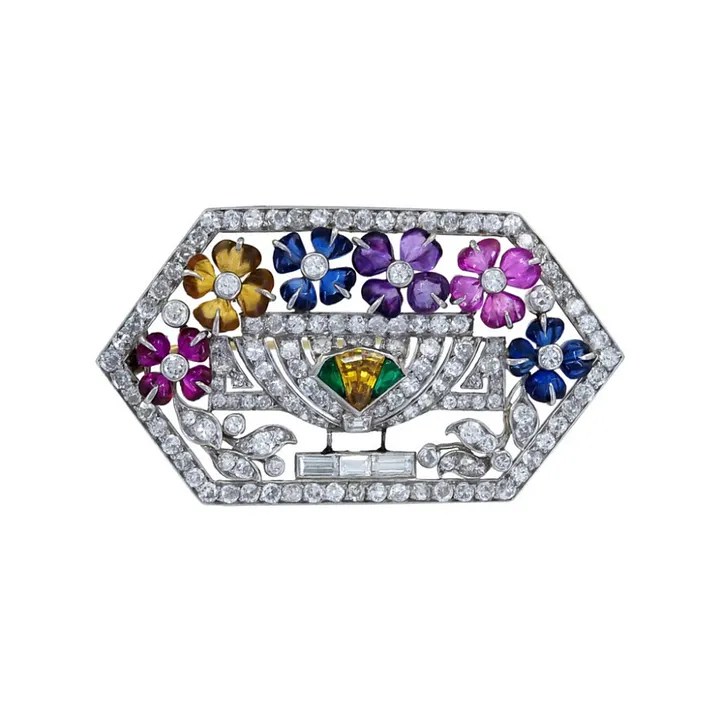
Hexagonal brooch with white and yellow diamonds, emeralds, ruby, citrine, sapphire, purple and pink amethysts mounted in platinum, circa 1930. Photo: 1stDibs
Both Lacloche Frères.
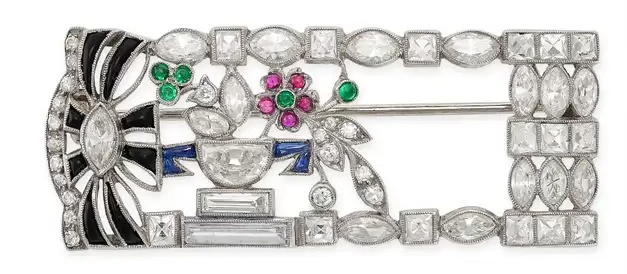
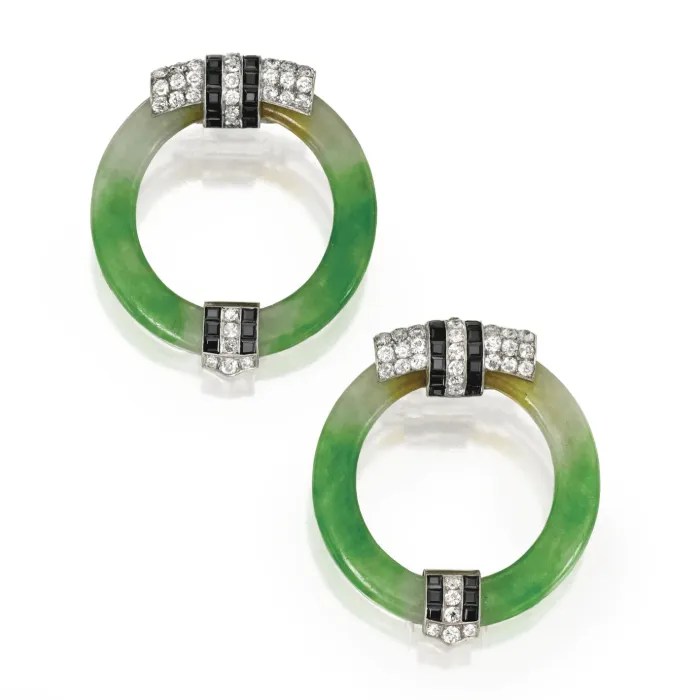
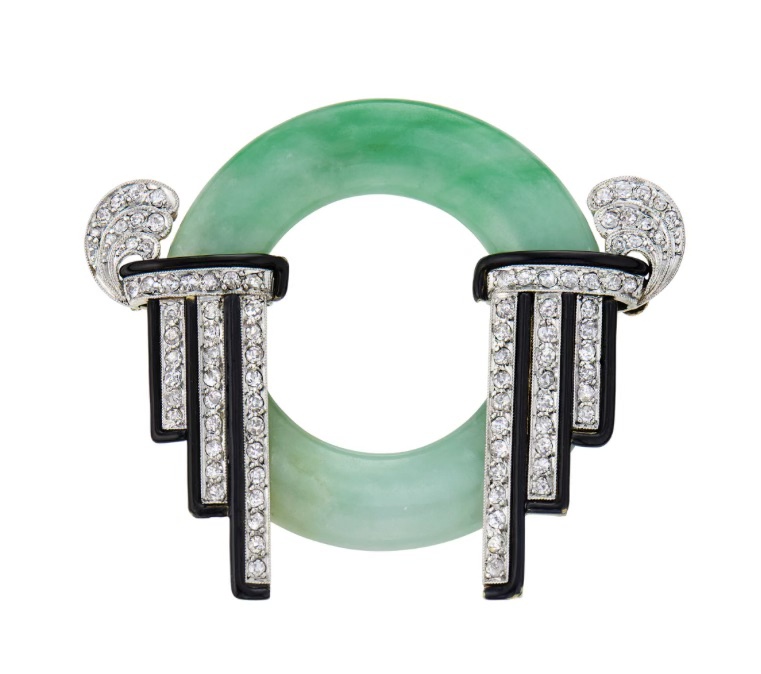
Pair of platinum, jade, diamond and onyx clip-brooches, circa 1920s-1930s.
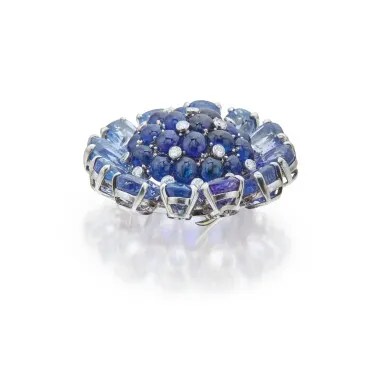
Sapphire and diamond clip-brooch designed as a flower head, the petals set with cushion-cut sapphires, the center decorated with cabochon sapphires, accented by old European-cut diamonds, circa 1955.
Photos: Sotheby’s Both Lacloche Frères.
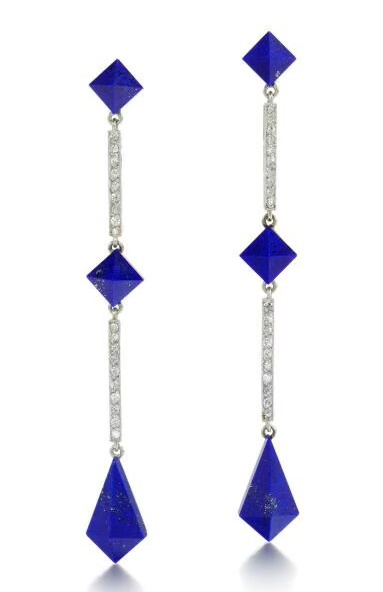
Originally from Belgium, the four brothers Léopold, Jules, Jacques and Fernand established their business, Lacloche Frères at the end of the 19th century. But the story begins with their father Hendricks Lacloche, who ran a rather successful textile business that probably laid the financial grounds for the jewellery branch.
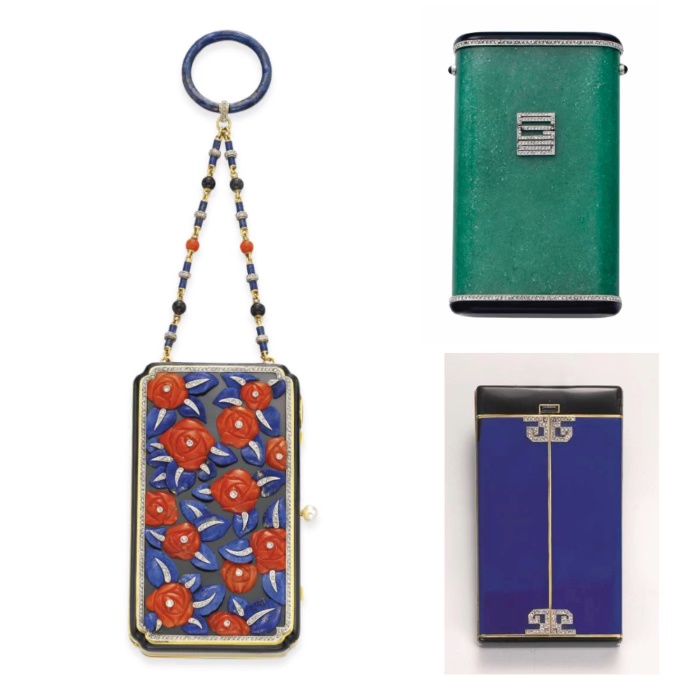
Beside magnificent jewellery the Lacloche house became known for its “nécessaire”, that small but very much needed things like, for example, cigarette cases, vanity cases and powder compacts.
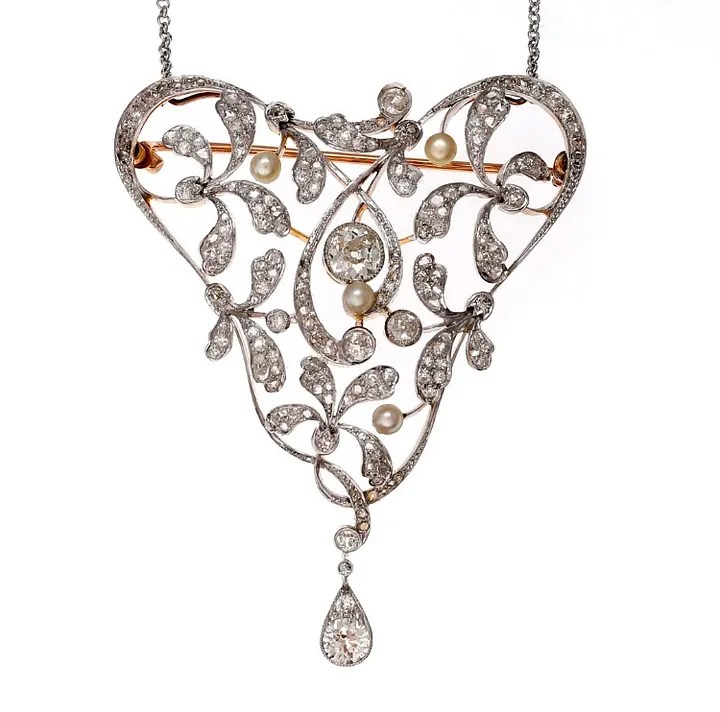
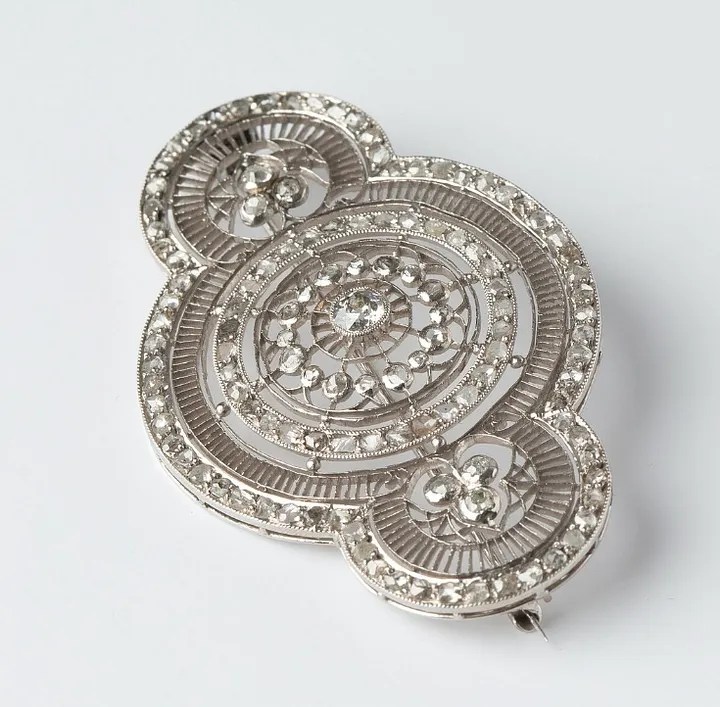
Art Nouveau pendant with diamonds. Photo: Baclis. / Belle Époque brosch.
Photo: Stockholms Auktionsverk Both Lacloche Frères
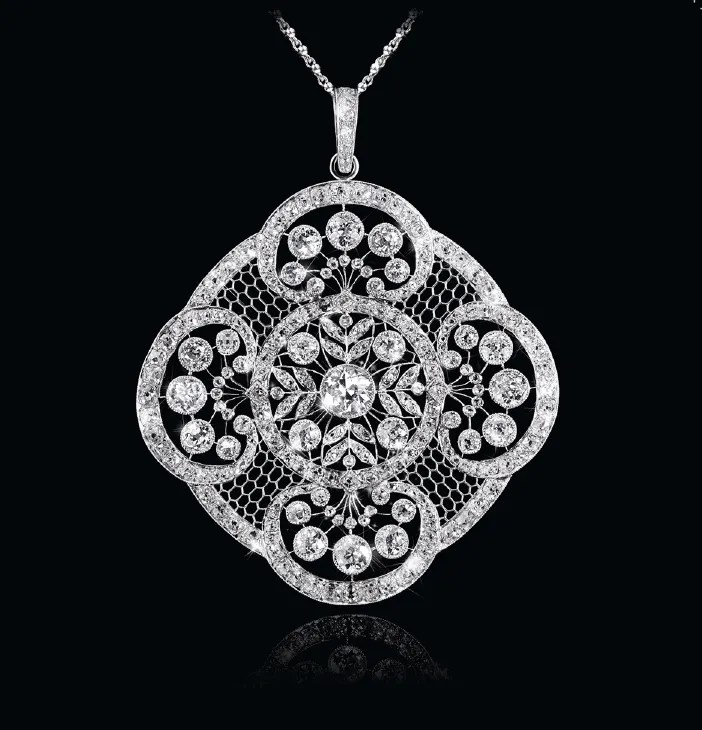
Pendant in platinum with diamonds, circa 1915. Photo: From the book “Lacloche Joailliers”.
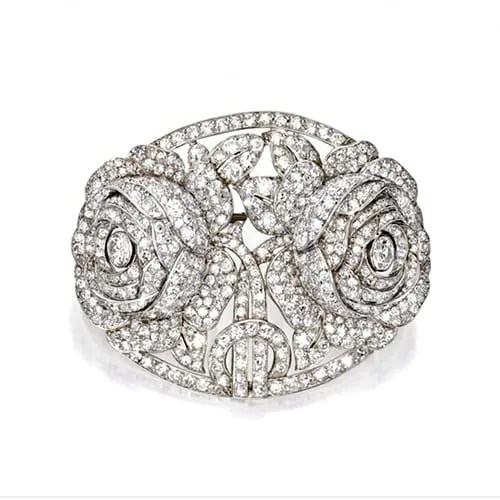
Oval-shaped plaque depicting two roses, set with old European, single and rose-cut diamonds, circa 1915.
Photo: Sotheby’s Both Lacloche Frères
Transitions meet a family business
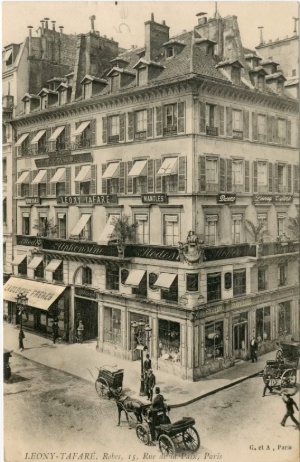
The Lacloche family were instrumental in defining the aesthetic transitions from Belle Époque romanticism to Art Deco modernism, but it is not easy to find the beginning of the thread in what would become this successful jewellery company. However, it seems that around 1892 Léopold and Jules started the family’s first jewellery store in Paris.
Around the turn of the century, Fernand travelled to New York with the fourth brother Jacques; who tragically died in a train crash in 1900; to explore new business opportunities in the American market. At this point it seems that Ferdinand had established a store in Madrid but closed it after the death of Jacques.
America had to wait, but just a few years in on the new century and during the coming thirty years, subsidiaries are opened in Madrid, Barcelona, Buenos Aires, Aix les Bains, Deauville, Trouville, Biarritz, Nice, Cairo, Monaco, San Sebastián, Ostend and perhaps most famously on 2 New Bond Street in London. Already by 1908, the company had seven stores in Europe.
The Agra
In 1904 Lacloche Frères bought the firm of the diamond merchant and goldsmith Edwin Streeter. A s a part of the inventory was the diamond that was supposed and believed to be the famous Agra.
The Lacloche family sold the diamond at a Christie’s sale in London on February 22, 1905. Even though not referenced by its renowned name; the stone was described as ”a magnificent rose-pink diamond of the highest quality, weight 31 13/32 carats”; it was sold for £5 100.
Another famed acquisition was when the Lacloche company bought the inventory and stock of the Fabergé’s London store in 1917. This after the Russian company’s assets had been repatriated by the Russian government.
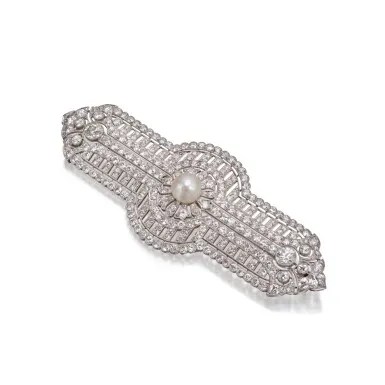
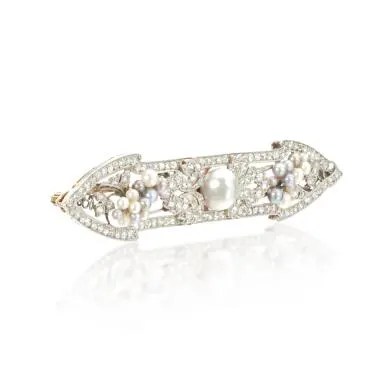
Pearl and diamond brooches, both circa 1910. Lacloche Frères.
Photos: Sotheby’s.
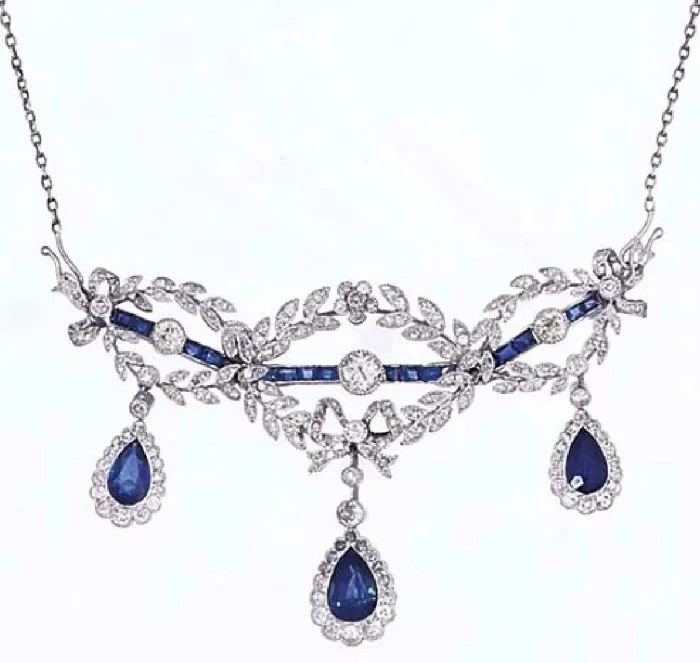
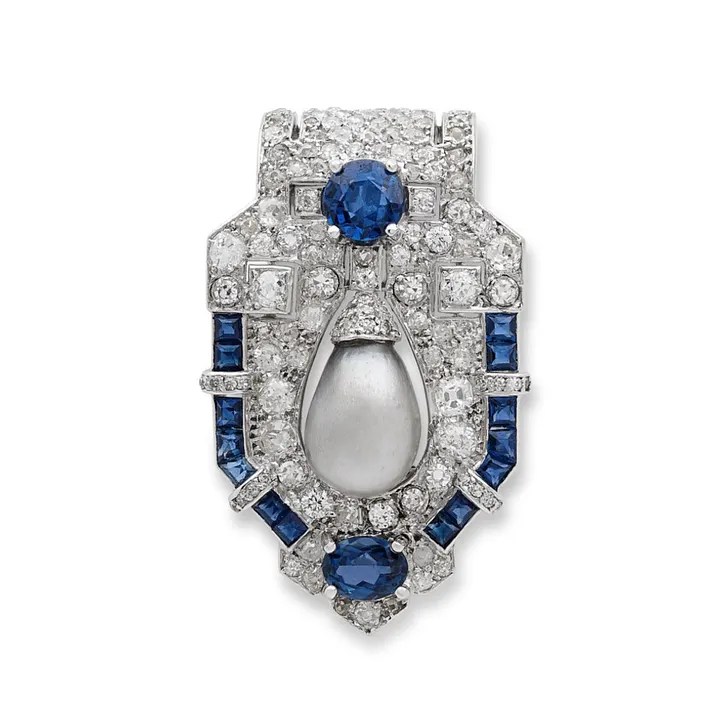
Belle Époque necklace with three old brilliant-cut diamond collets on a calibré-cut sapphire bar within an entwined diamond set garland border suspending three pear shaped sapphire and diamond cluster drops, on a detachable trace link chain, circa 1905. / Brooch with drop-shaped natural pearl mounted in platinum, round, oval-cut and calibré-cut sapphires, round, single-cut and old-cut diamonds, circa 1910.
Both Lacloche Frères Photos: Christie’s
Keeping time
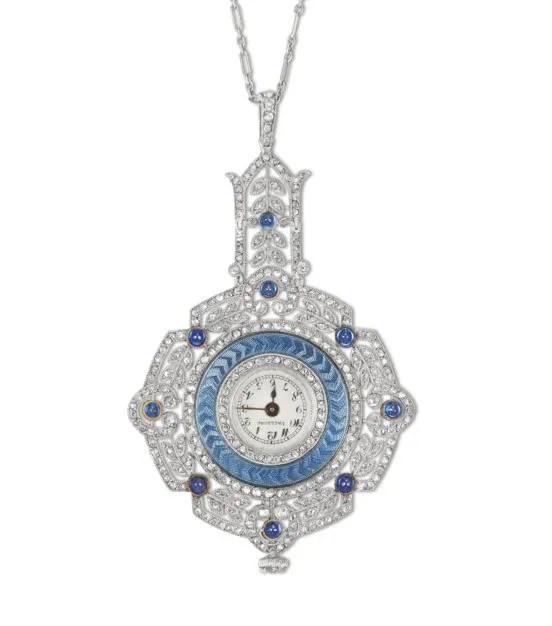
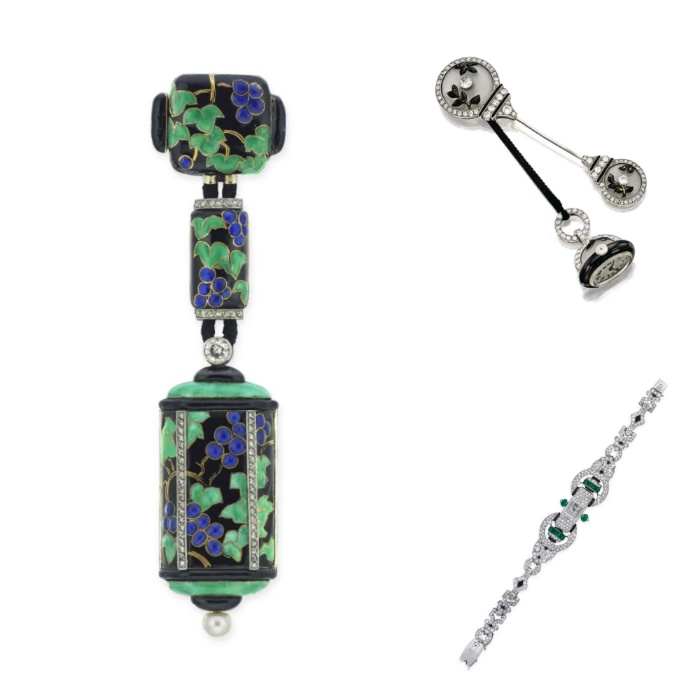
Already during La Belle Époque, Lacloche Frères became renowned for their exquisite miniature jewelled timepieces and other decorative objects.
It is worth mentioning that he company was a retail business, and never had its own workshop or created its own designs. During the years the house collaborated with prestigious and well-known workshops, suppliers and manufacturers like the Verger firm, Strauss, Allard & Mayer, Vacheron Constantin, Louis Girard, Georges L’Enfant, Lalique and others.
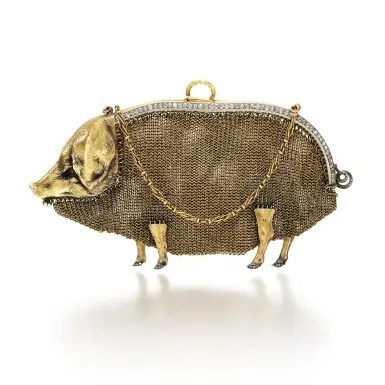
Lacloche also had an emphasis on artistic collaboration and employed renowned designers, artists, painters and enamellers such as Paul Brandt, Julien Duval, Paul Frey (who made Art Nouveau animal-themed gold handbags for Lacloche Frères, see examples last in this post) and Fernand Paillet.
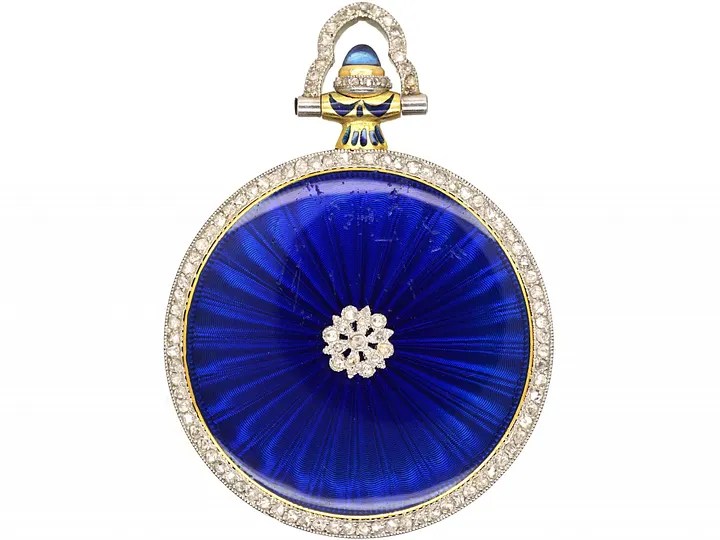
18 carat gold and platinum watch, circa early 1920s. Photo: The Antique Jewellery Company.
Pendant watch in platinum and gold with enamel, diamonds and sapphires. Photo: Benjamin Chelly
Both Lacloche Frères
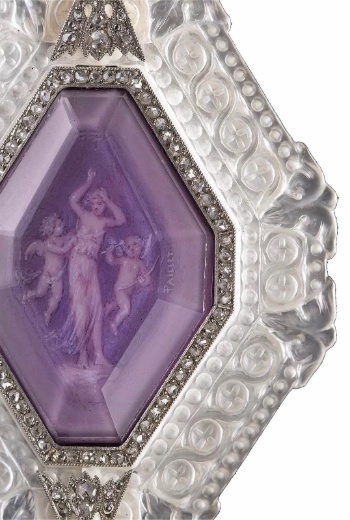
The painter, figurine artist and miniature portraitist Paillet, brought his exceptional artistic skills to the house’s timepieces, adorning them with portraits and decorative scenes. Mastery that elevated these everyday functional objects to works of art. During this period, the ability to add an artistic eye and beauty to these precise technical objects helped the family forge ahead in the competitive Parisian jewellery market.
Moving on
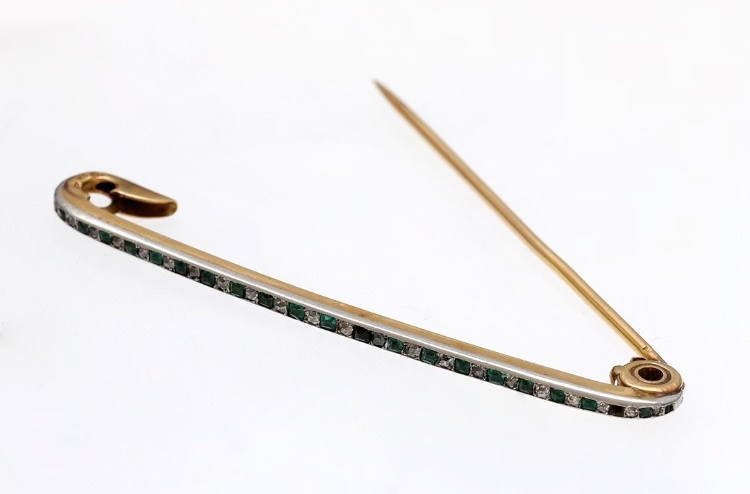
But perhaps more well known is though the firm’s works of the Art Nouveau and Art Deco periods. Especially the transition into the Art Deco period marked the most influential chapter in Lacloche’s history when their jewellery pieces were worn by everybody from the high society princesses to the new movie starlets. The house became pioneers in developing era-defining new looks and their signature design, the Jabot Pin, became a staple piece with the rich and stylish.
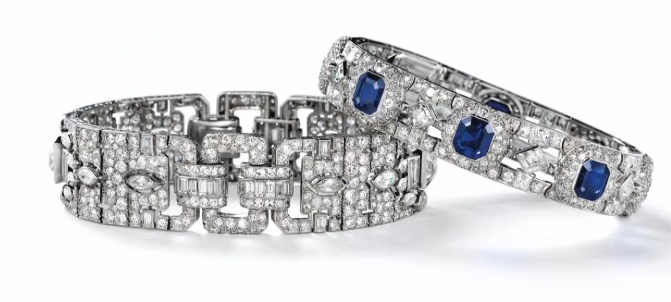
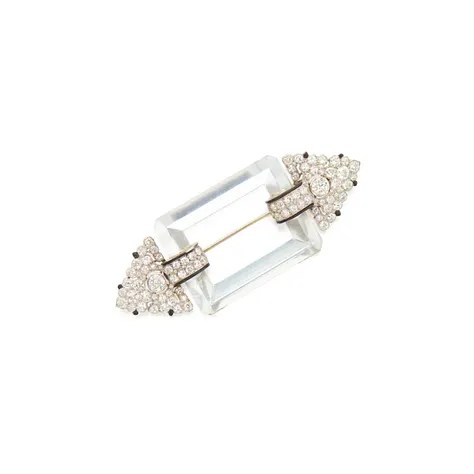
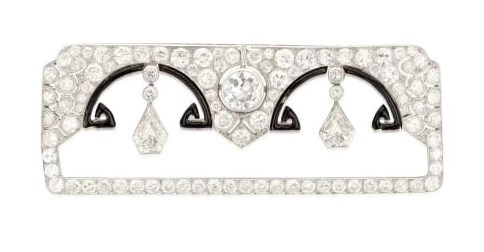
Carved rock crystal flanked by palmette motifs set with old European and single-cut diamonds, accented by black enamel.
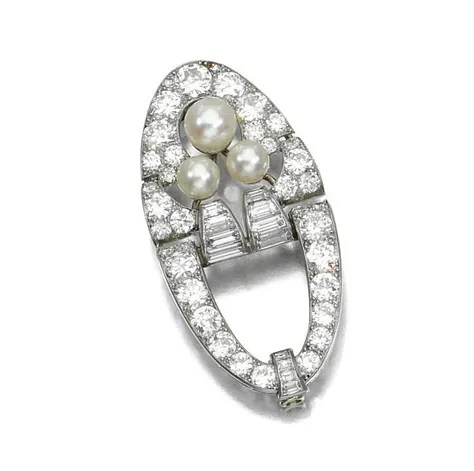
Cultured pearl and diamond brooch.
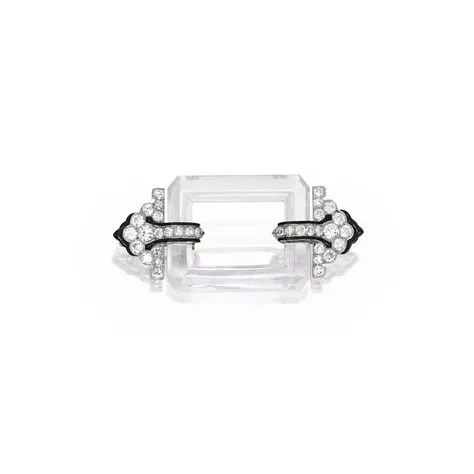
Platinum, rock crystal, enamel, diamonds.
All three, Lacloche Frères, circa 1925. Photos: Sotheby’s
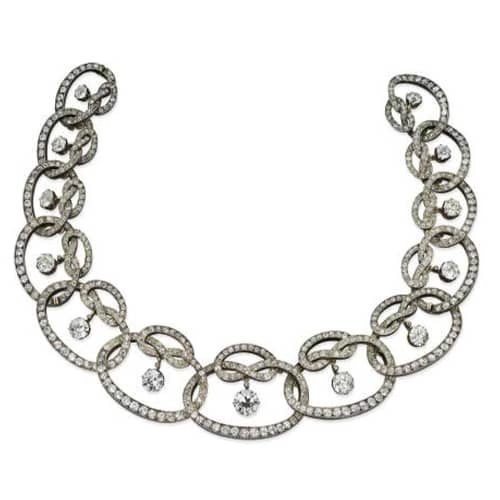
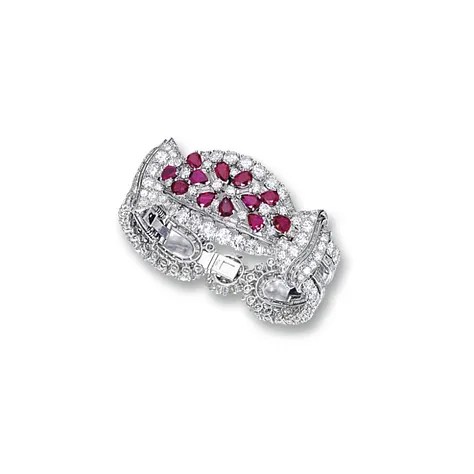
Bangle in white gold and platinum decorated with brilliant-cut and baguette diamonds, highlighted by twelve pear-shaped rubies. Photo: Sotheby’s
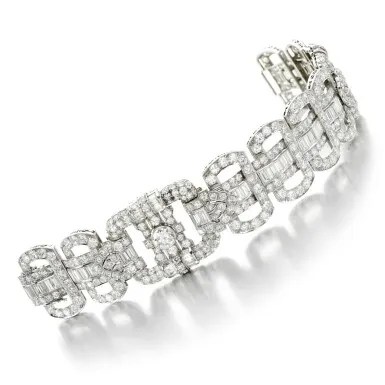
Diamond bracelet set with circular-, single-cut and baguette diamonds, circa 1925. Photo: Sotheby’s
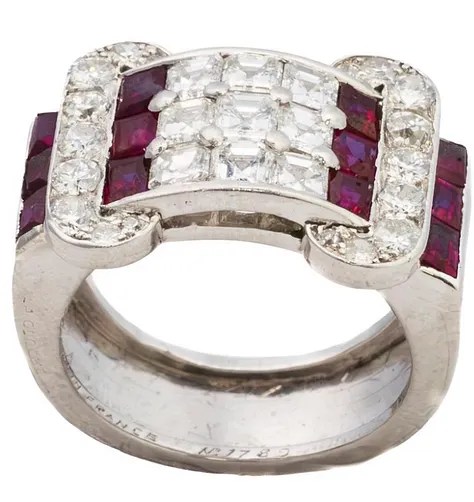
Ring in white gold with square-cut rubies and a central motif of baguette and round brilliant-cut diamonds, circa 1930s. Photo: 1stDibs.
All three Lacloche Frères.
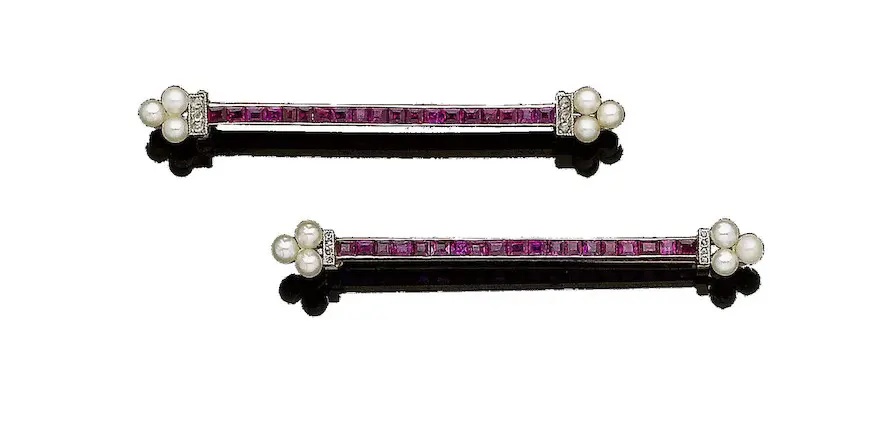
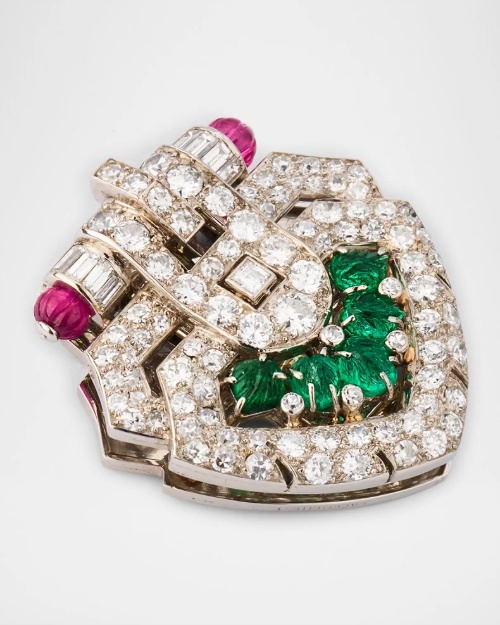
The brand’s reputation soared after the 1925 Exposition Internationale des Arts Décoratifs et Industriels Modernes in Paris, where their luxurious and innovative pieces received great acclaim. Their jewellery pieces that illustrated the fables of La Fontaine gave them the coveted Grand Prix award.
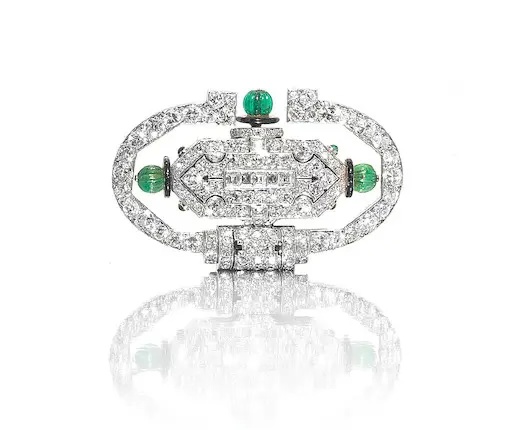
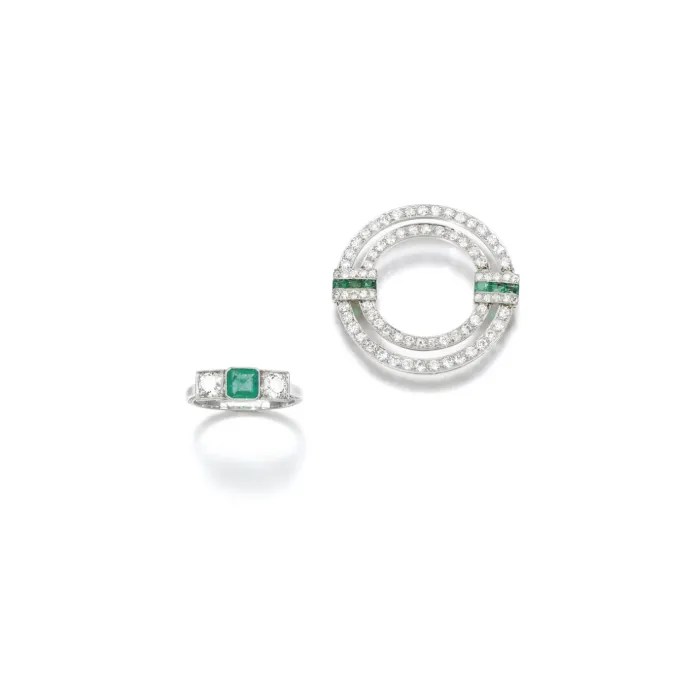
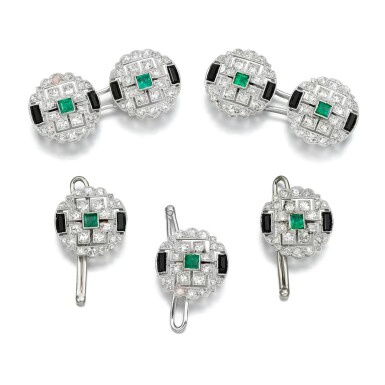
Circular brooch with circular- and single-cut diamonds and calibré-cut emeralds and ring with a square-cut emerald flanked by circular-cut diamonds.
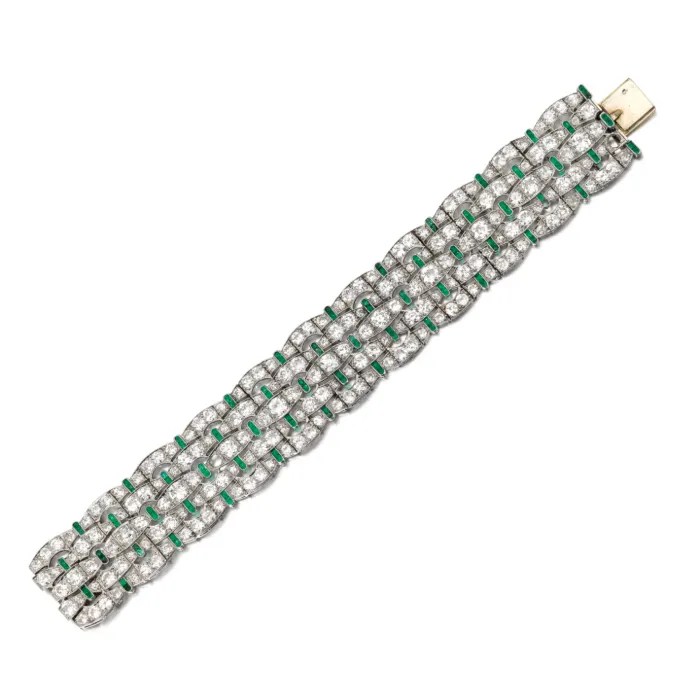
Bracelet composed of links arranged in a woven pattern, millegrain-set with circular- and brilliant-cut diamonds and highlighted with calibré-cut emeralds, circa 1920s.
Photos: Sotheby’s Both Lacloche Frères
Bold and brave
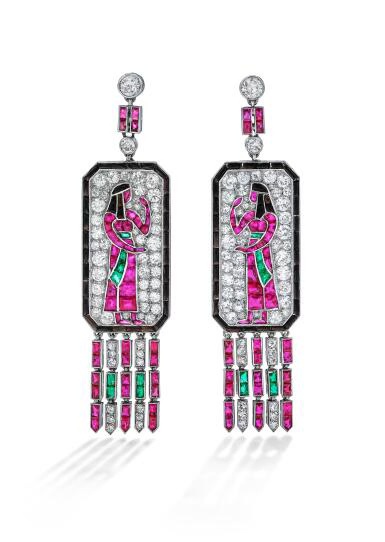
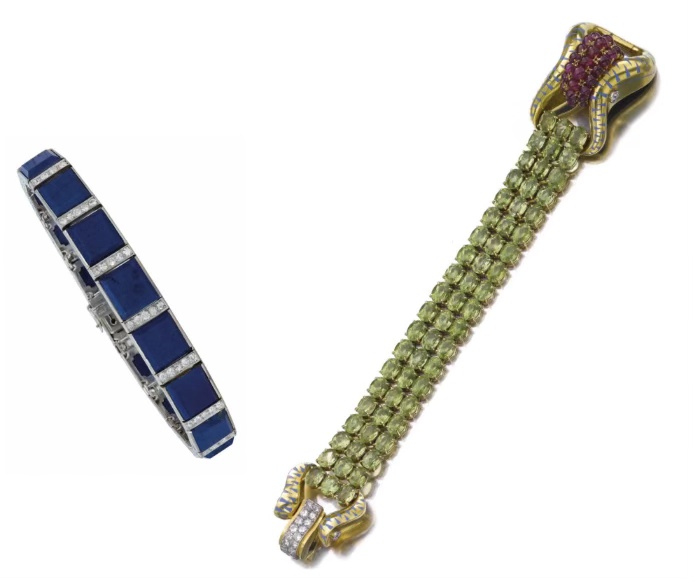
During this period Lacloche’s Art Deco pieces were characterized by bold geometric shapes, brave contrasting colours and streamlined aesthetics. Diamonds and platinum met jade, lapis lazuli, coral, onyx and many, many other beautifully coloured stones. The house produced diamond bracelets with angular lines, necklaces featuring large coloured gemstones set in symmetrical patterns and elaborate tiaras that embodied the period’s architectural sensibilities.
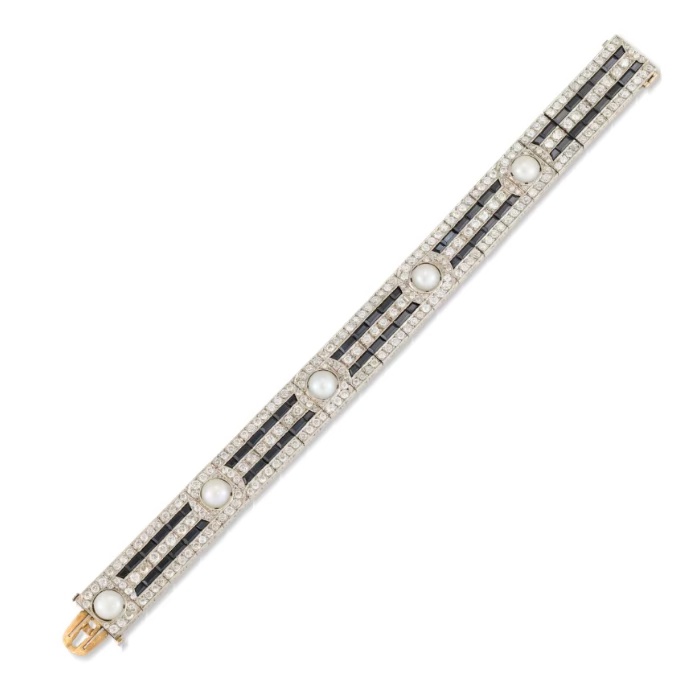
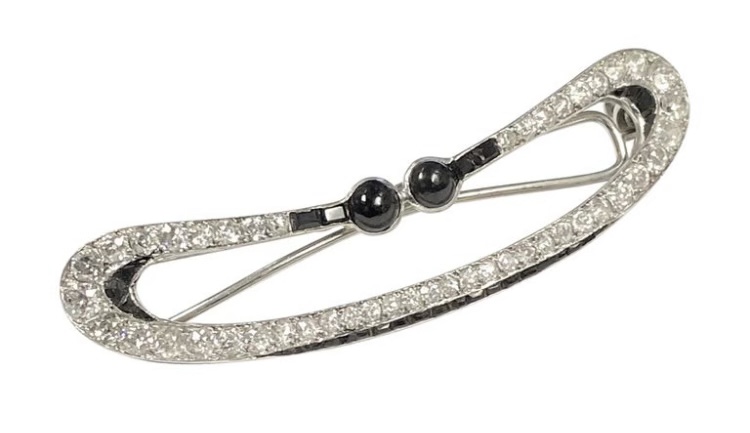
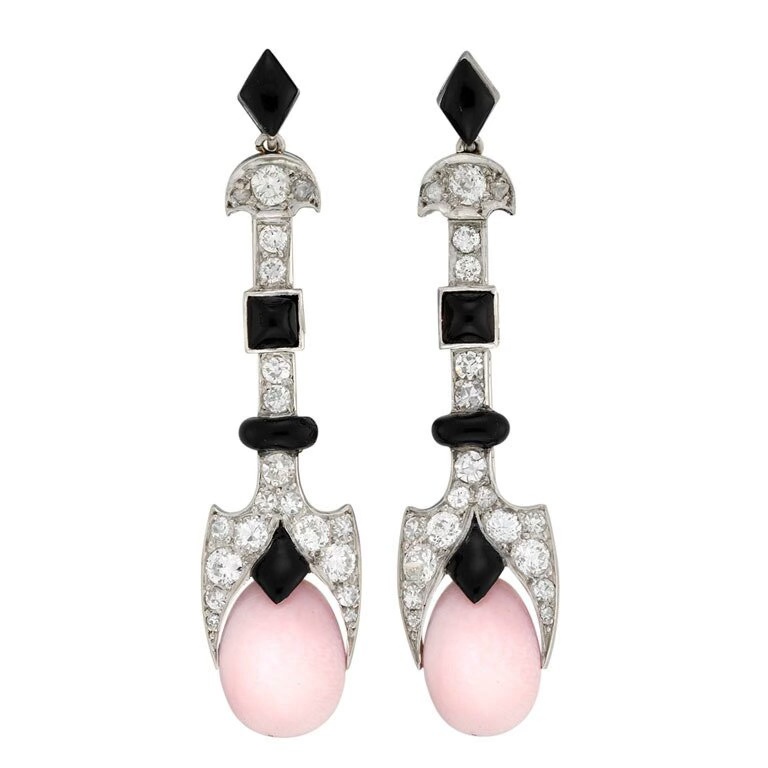
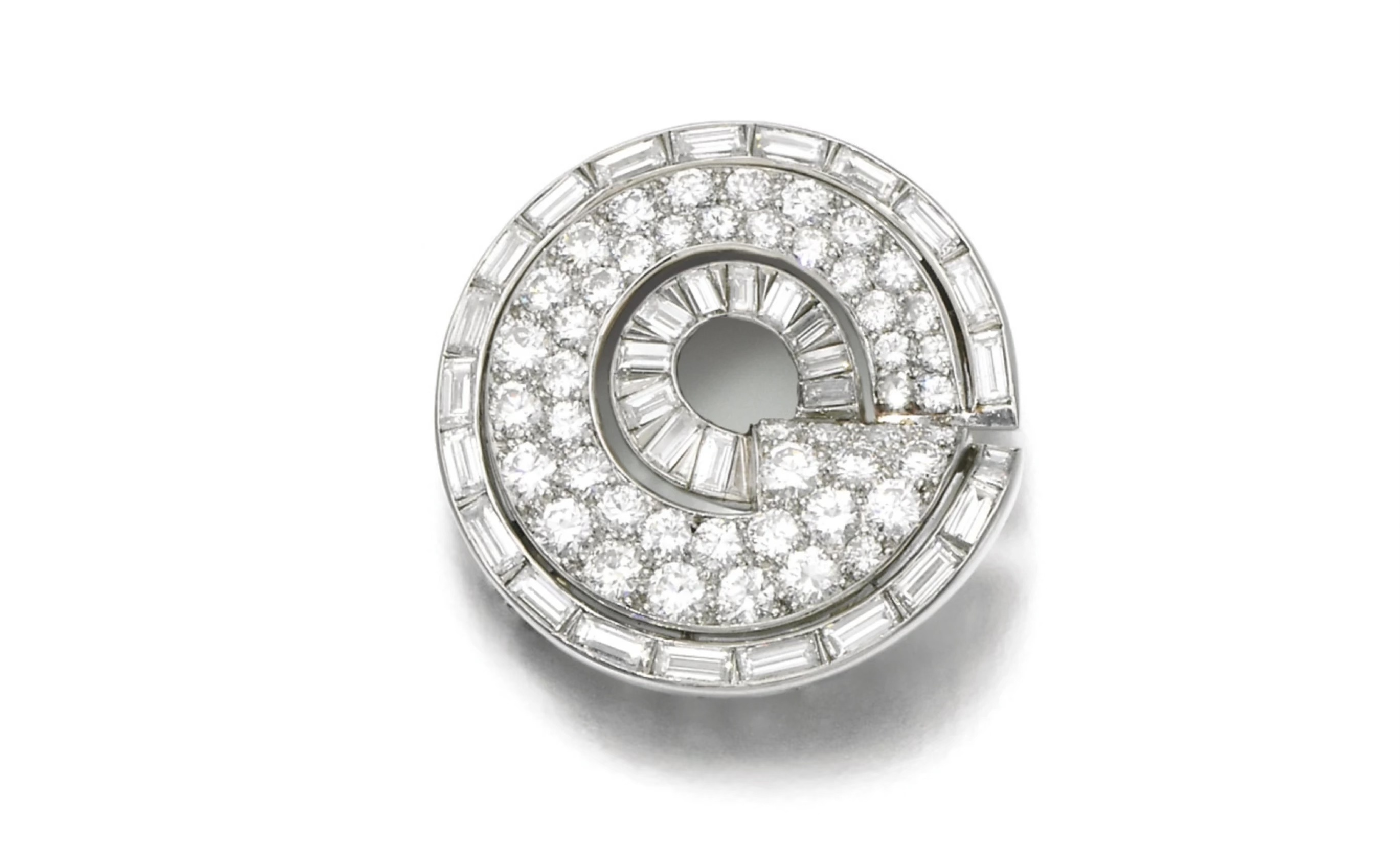
Often the pieces during this time, were inspired by modern city life but also Eastern artistic elements; Chinese or Japanese. The antic motifs made highly popular by the Egyptian revival, when King Tutankhamun’s tomb was found, were also widely and often seen.
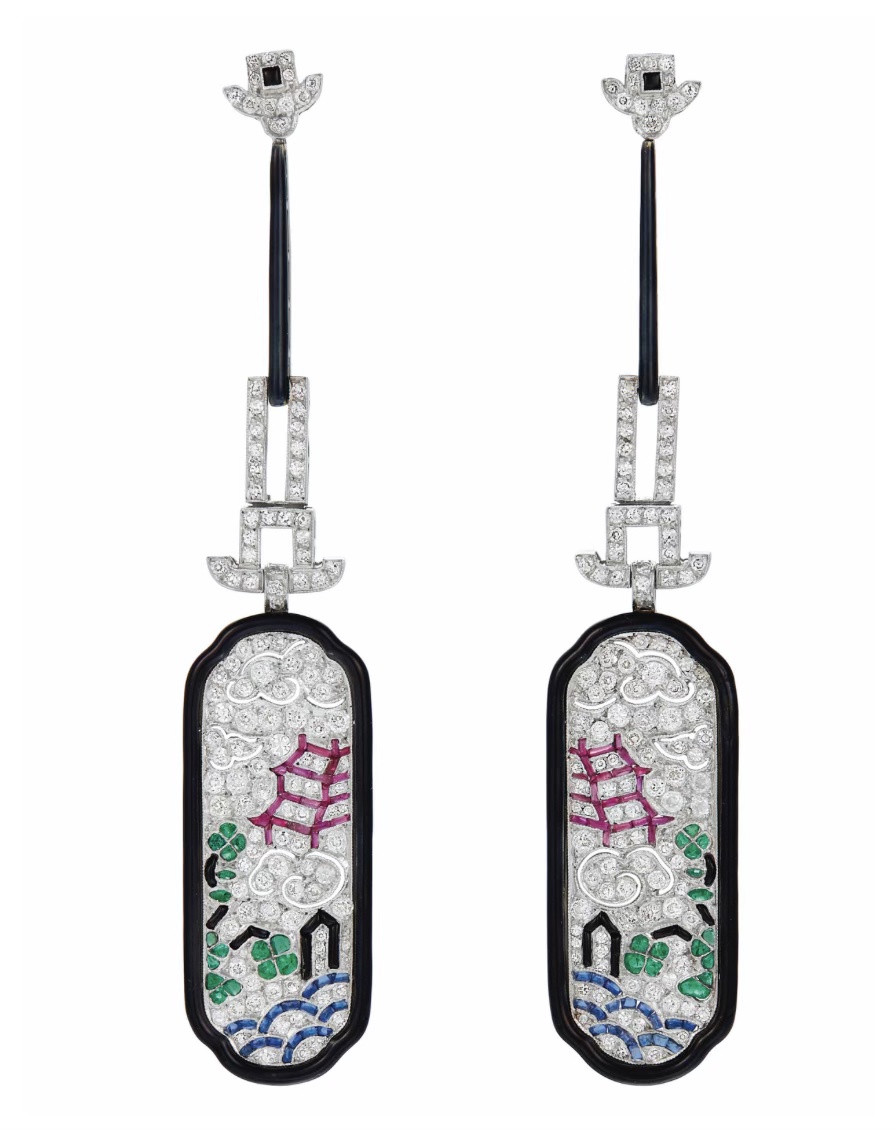
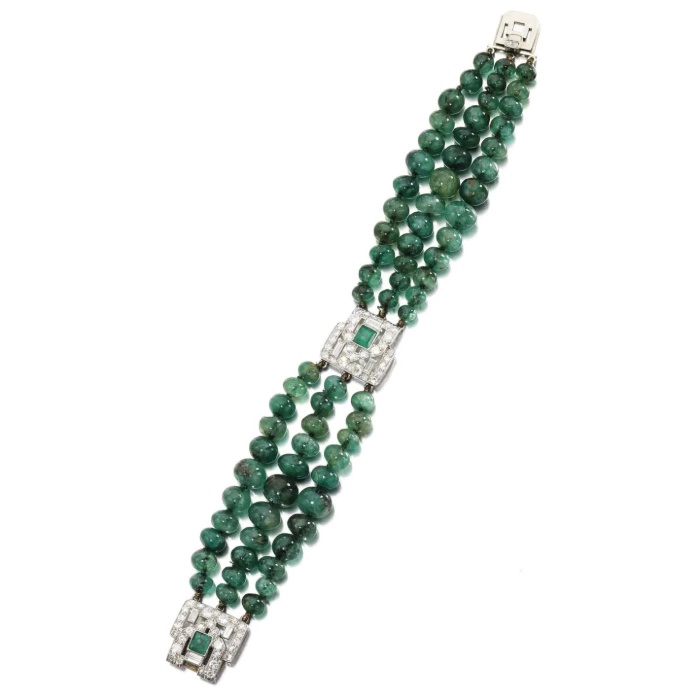
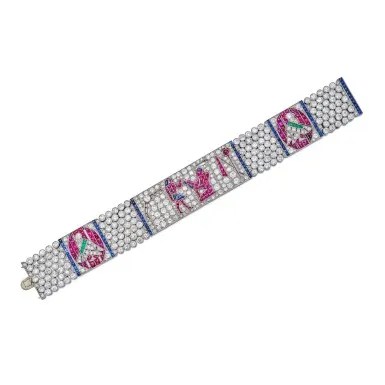
Bracelet with old European and single-cut diamonds, accented by buff top rubies, emeralds and sapphires, circa 1925.
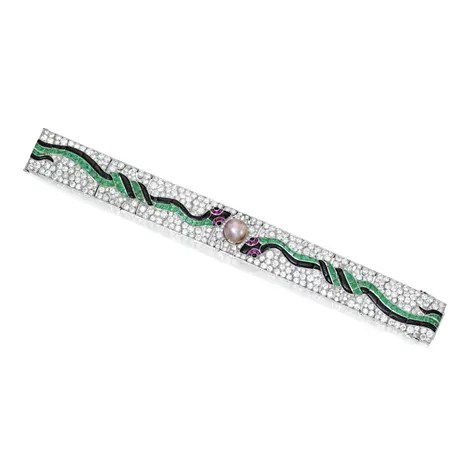
Bracelet with two snakes set with buff-top emeralds and rubies, pavé-set with old European and single-cut diamonds and applied with black enamel, circa 1927.
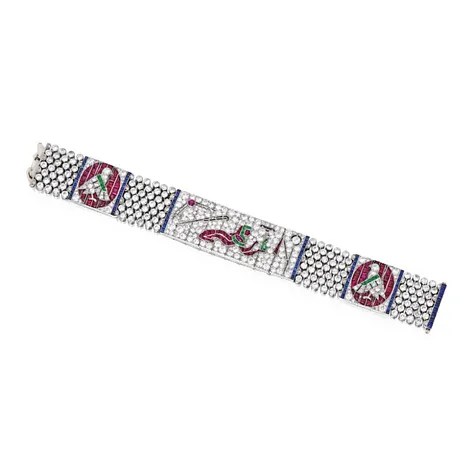
Bracelet with three panels within buff-top calibré-cut sapphire borders, set throughout with round, old European and single-cut diamonds and decorated with buff-top calibré-cut emeralds and rubies, circa 1925.
All three Lacloche Frères. Photos: Sotehby’s
The Halo of Westminster
One of Lacloche’s most spectacular and famous commissions was the Westminster Halo Tiara, an Art Deco masterpiece created for Loelia Ponsonby, Duchess of Westminster. The tiara was set with Queen Charlotte’s [of Great Britain and Ireland] historic Hastings and Arcot diamonds. (These diamonds were later replaced by Harry Winston with smaller diamonds, 1 400 diamonds in total.)
The piece was designed as a halo to be worn over the crown of the wearer’s head and extending outwards in the manner of a traditional Chinese headdress. It exemplified the house’s ability to work with historic gems while creating thoroughly modern design.
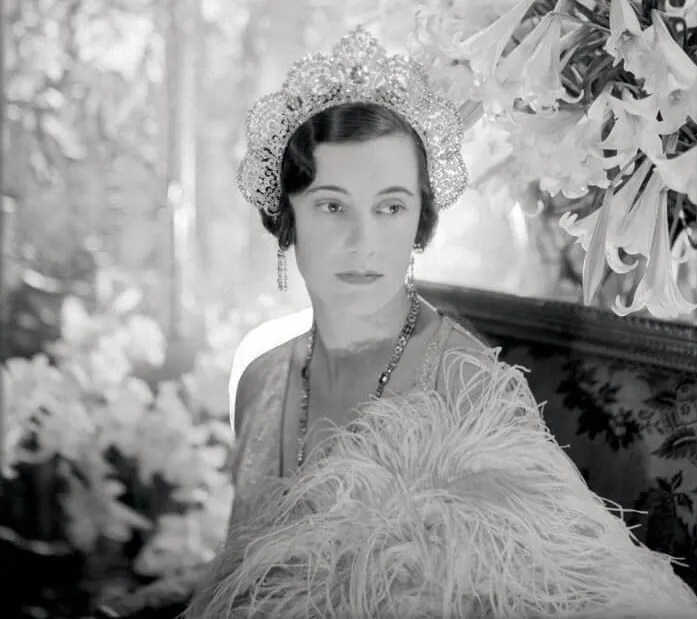
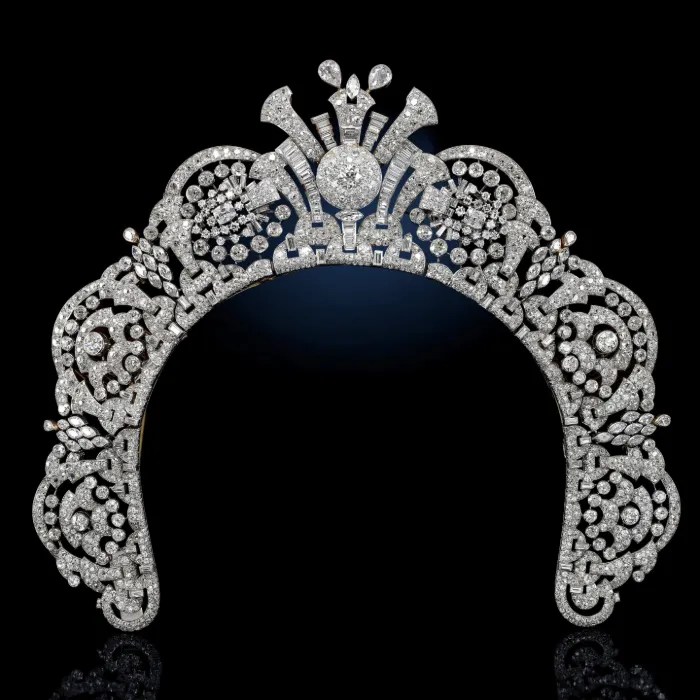
Loelia Ponsonby, Duchess of Westminster, wears the Westminster Halo Tiara. Photo: The Cecil Beaton Studion Archive at Sotheby’s. In June 1959, the tiara was bought by Harry Winston who removed, cut, re-set and sold the three principal diamonds. Photo: Sotheby’s
Another direction and another Jacques
Eventually Fernand’s sons, Henri and Jacques opened a successful office on Fifth Avenue in New York City with many ties to the new and upcoming clientele of Hollywood. Unfortunately, the Great Depression and subsequent economic upheavals had a severely bad impact on the business. It is also said that the two brother’s bad gambling habits had, by 1930, accumulated so much debt it caused Lacloche Frères into bankruptcy (or liquidation) in 1931.
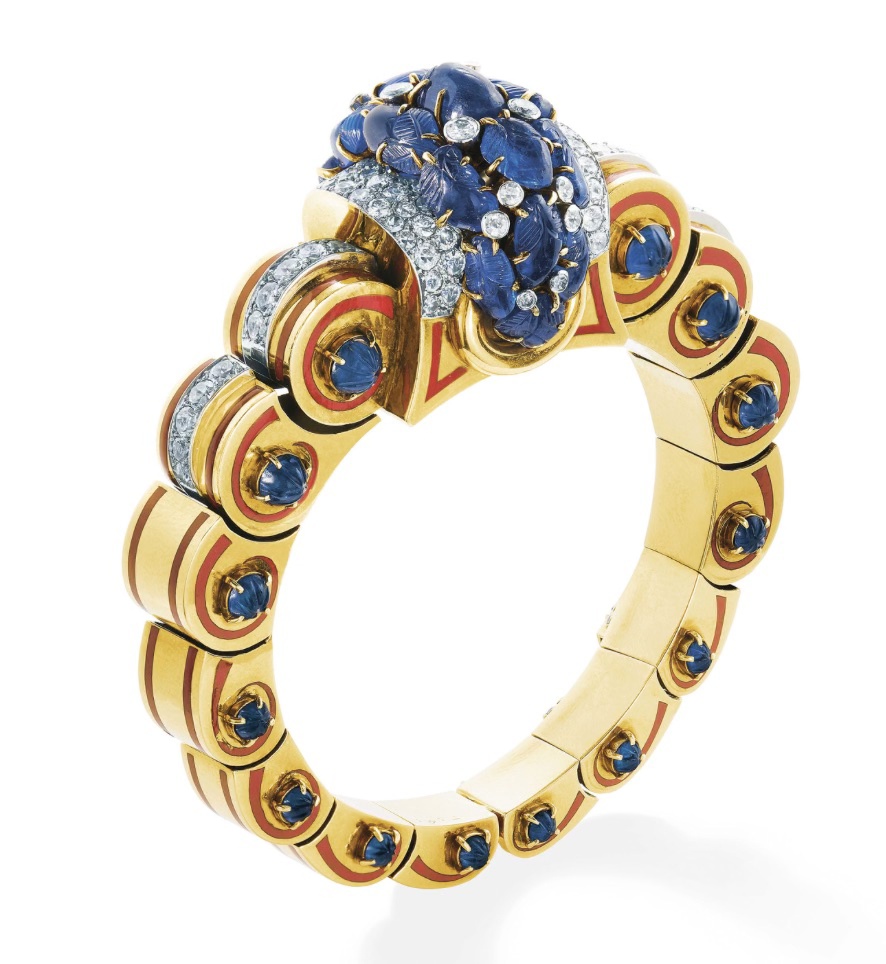
Luckily, the dead Jacques Lacloche’s son, also called Jacques, opens a new business in London with the name Lacloche Frères around 1936. (The third ‘Jacques’ in the family if I have counted correctly and this Jacques had already run the London business since 1920.)
Shops in Place Vendôme and in Cannes followed and restored the company’s reputation. This specific Jacques’s designs were also displayed and received praise at the 1937 Exposition Internationale des arts et techniques.
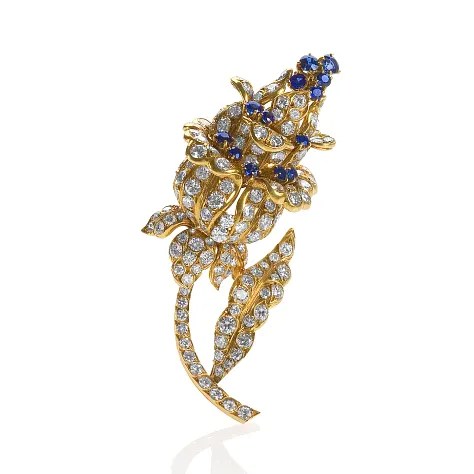
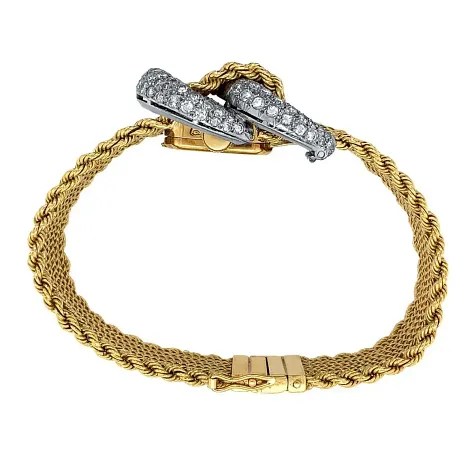
18 karat gold, sapphire and diamond brooch, circa 1950s.
18 karat gold and diamond watch, circa 1940s.
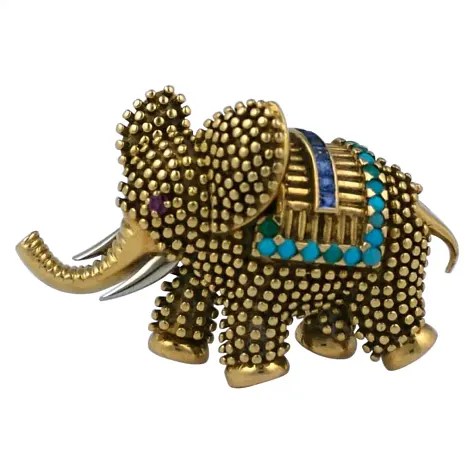
Elephant clip brooch in 18 karat yellow and white gold with cut sapphires and Persian turquoise cabochons, circa 1950’s.
All three Lacloche Frères. Photos: 1stDibs
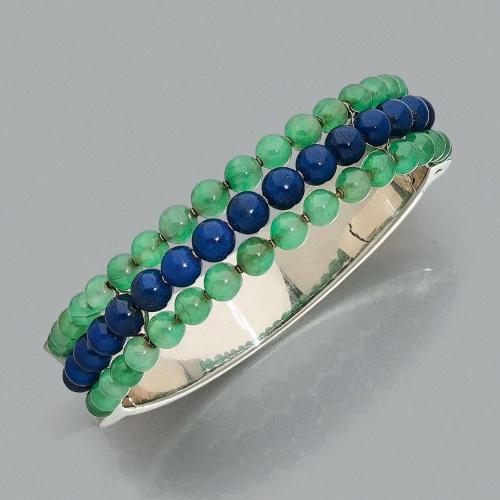
Jacques Lacloche also created jewels that Prince Rainier of Monaco gave his young bride Grace Kelly at their wedding in 1956, a diamond clip set with a sapphire and a pair of sapphire- and diamond ear clips.
Around 1967 the shop at the Place Vendôme location closed. The Cannes location is then renamed Galerie J. Lacloche Édition and includes and features also other jewellery designers. Jacques Lacloche dies in 1999.
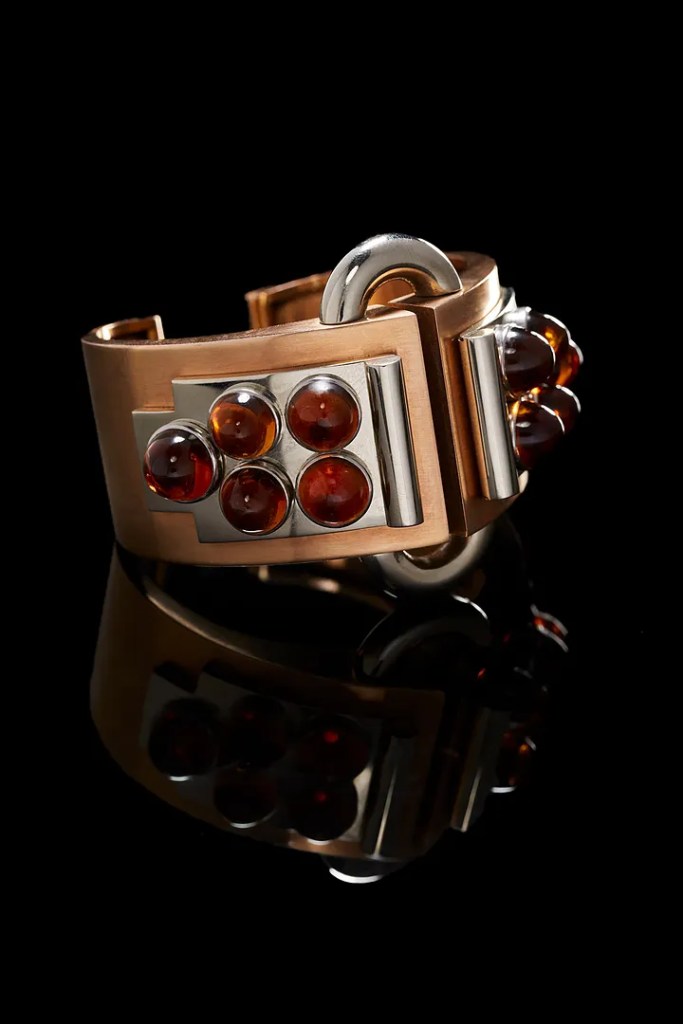
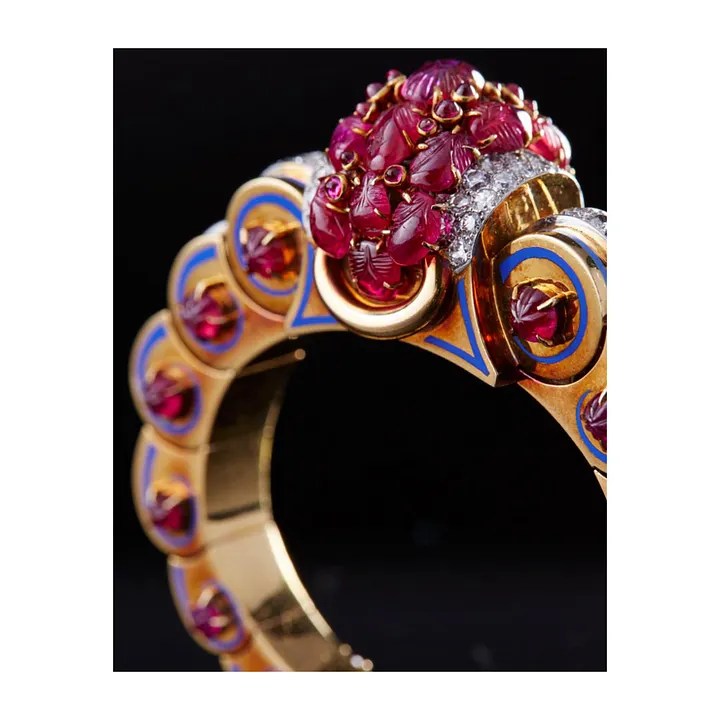
White and gold, silver cuff bracelet with topaz cabochons, circa 1937.
Bangle in gold, enamel, and with carved rubies by Lucien Girard, circa 1938.
Both, Lacloche Frères Photos: Benjamin Chelly
In recent years, there has been a resurgence of interest in Lacloche’s artistry. A 2019 exhibition at the L’Ecole des Arts Joailliers, titled Lacloche Joailliers 1892-1967, helped reintroduce their work to a broader audience. It showcased the technical brilliance of their designs as well as their creativity, beauty and modernity.
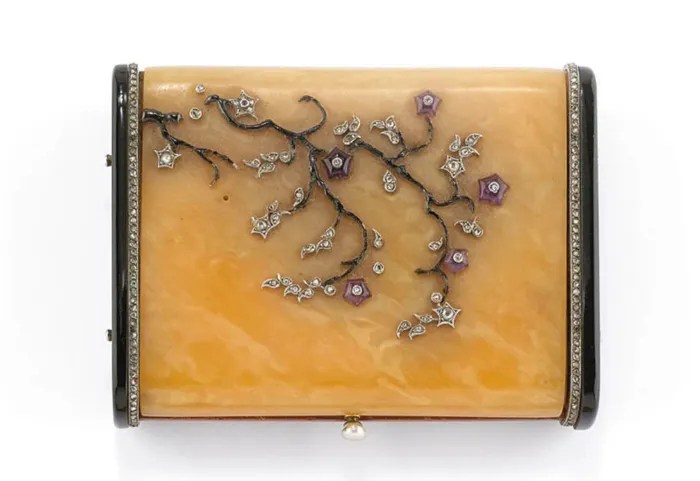
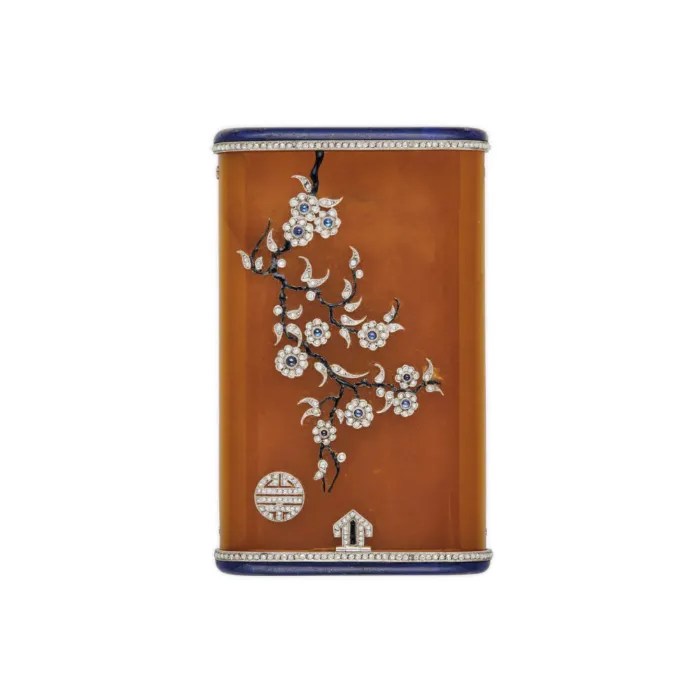
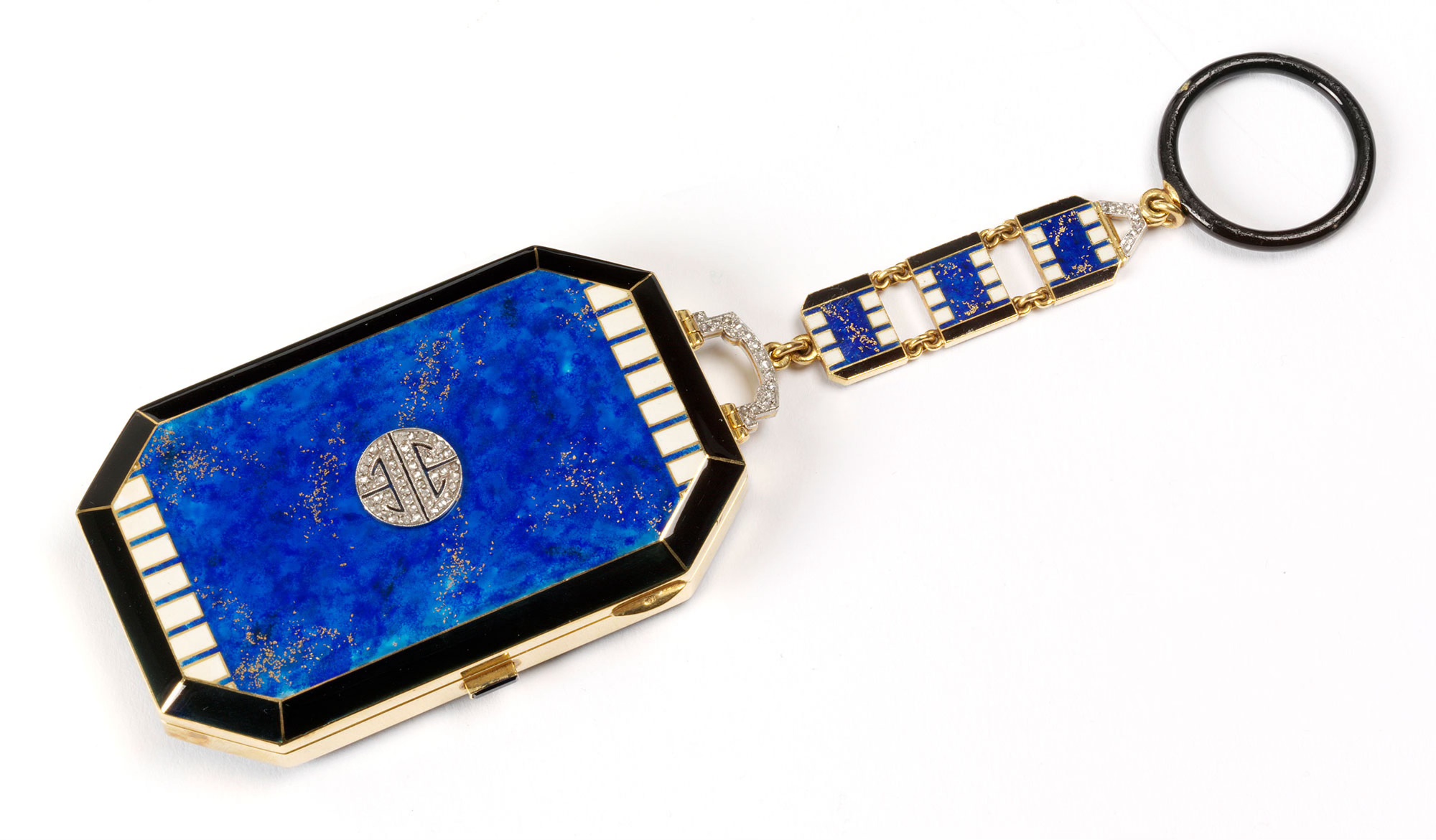
Vanity case, circa 1904-1906.
Art deco case with rounded rectangular outline, amber, rose-cut diamonds, lapis lazuli, circular cabochon sapphires, black enamel, platinum and 18 karat gold, circa 1925.
Both Lacloche Frères Photos: Christie’s
Want more info?
The book Lacloche Joaillers by Laurence Mouillefarine and Veronique Ristelhueber gives you more information on the history of and the jewellery by Lacloche Frères.
You can also watch this online talk, from the Lacloche Jewelers exhibition, in 2022, with Nicolas Luchsinger, President of Van Cleef & Arpels Asia Pacific, Director of the « Heritage » collection and Mathilde Rondouin, Art Historian and Teacher from L’ÉCOLE Asia Pacific.
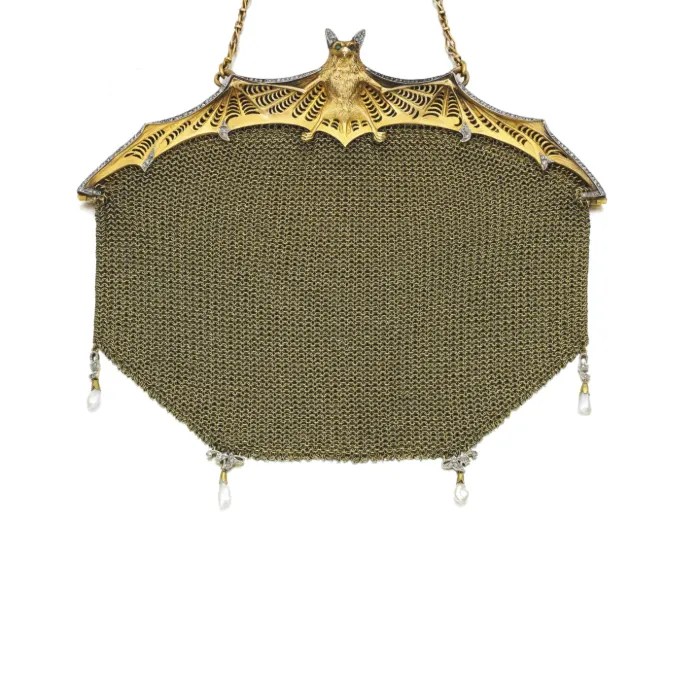
Evening bag with clasp modelled as a bat with outstretched wings, set with rose diamonds, its eyes set with faceted emeralds, the bag of mesh design supporting pendants set with rose diamonds and pearls, circa 1905.
Ruby and diamond evening bag, circa 1905.
Both Lacloche Frères Photos: Sotheby’s
©SlowClapStories
Originally published on Substack at Slow Clap Jewels. Read the newsletter here.


You must be logged in to post a comment.