…and designer who made jewellery into wearable works of art
Raymond Templier’s significant departure from traditional jewellery design, in the 1920s, reflected a rapidly changing world and came to drive jewellery straight into new and exciting times.
Born in Paris, Raymond Templier (1891-1968) came from a distinguished lineage of jewellers and joined the family business in 1919. Before that, Templier studied at the L’École Nationale Supérieure des Arts Décoratifs from where he graduated in 1912.
His grandfather Charles Templier established the family jewellery business, together with his cousin Louis, on rue de Rivoli in Paris in 1849. The business was later taken over by Raymond’s father, Paul Templier (1860-1948).
Already, in those days, the company was often seen at national and international exhibitions and in 1907 Paul Templier became President of the Chambre Syndicale de la Bijouterie et de la Joaillerie Orfevrerie.
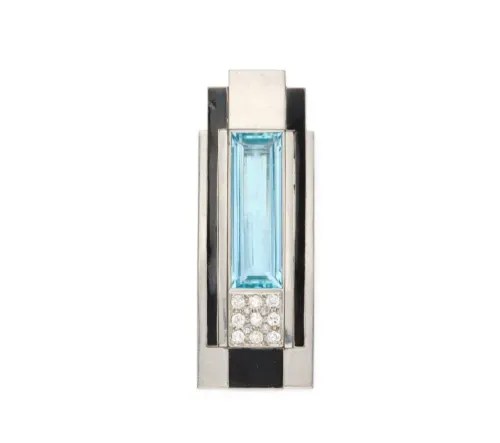
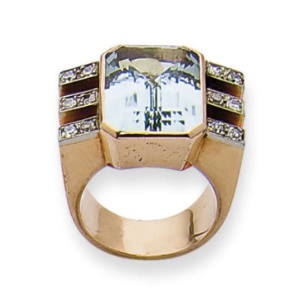
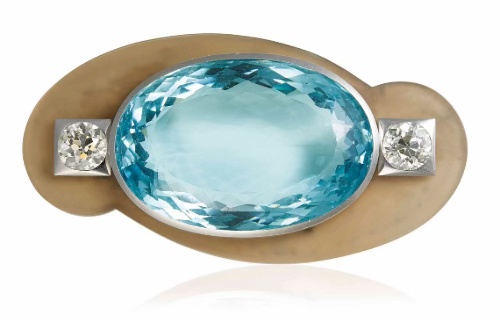
Brooch with geometric design, with a rectangular-cut aquamarine in center, applied with black enamel, accented by old European- and single-cut diamonds, circa 1929. Photo: Sotheby’s
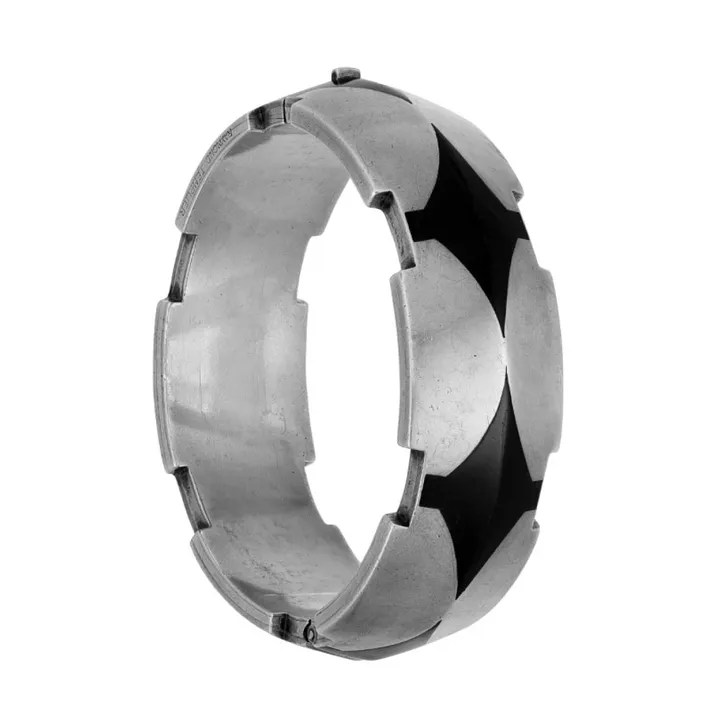
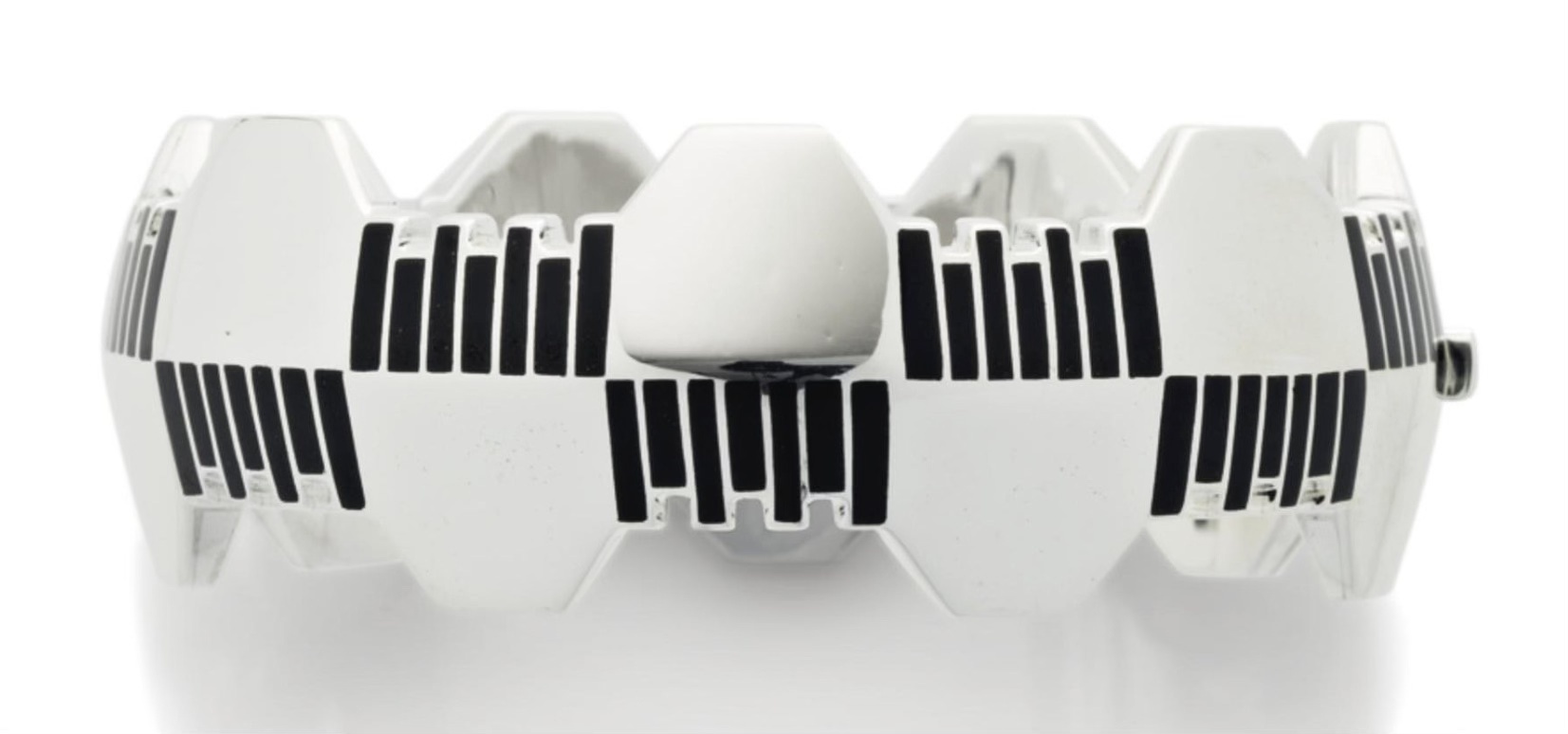
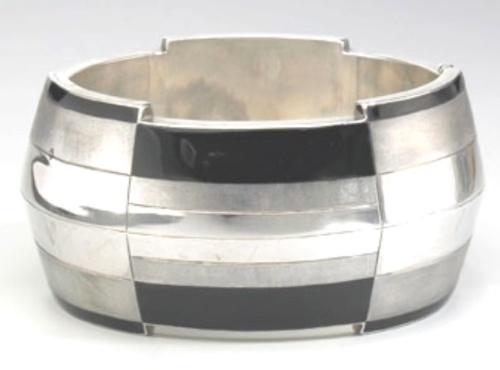
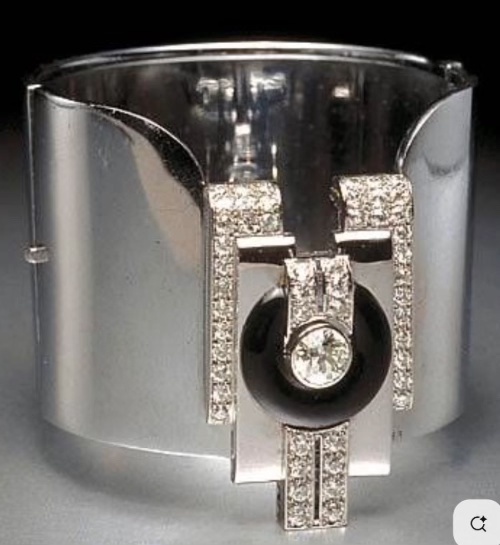
Black lacquer bracelet, sterling silver, circa 1927. Photo: Christie’s
Finding his ways
Growing up the way he did, in this creative environment, Raymond Templier developed his appreciation for both the craftsmanship and the design process. Learnings that would profoundly influence his future career.
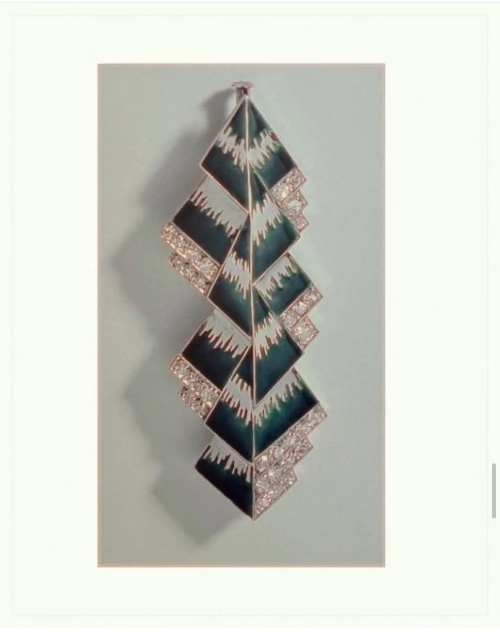
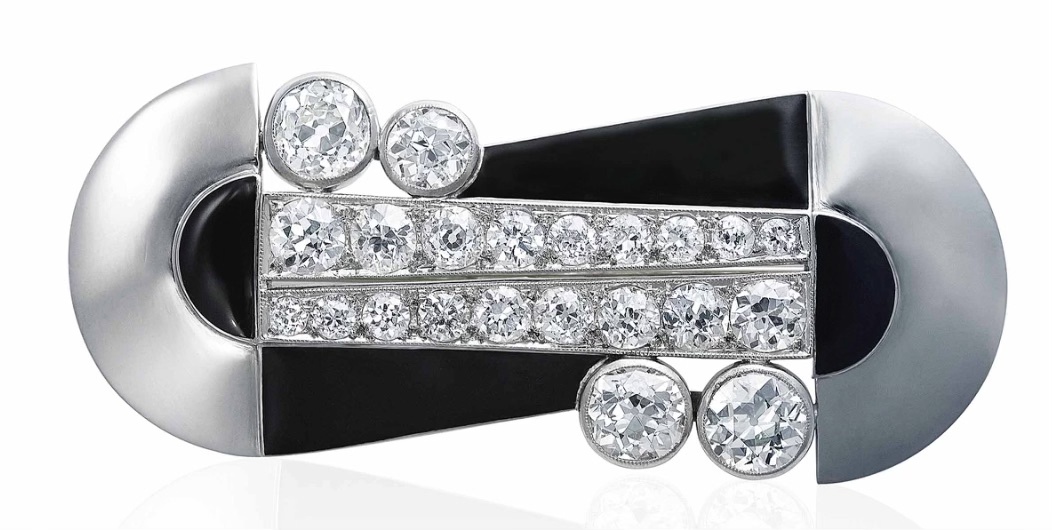
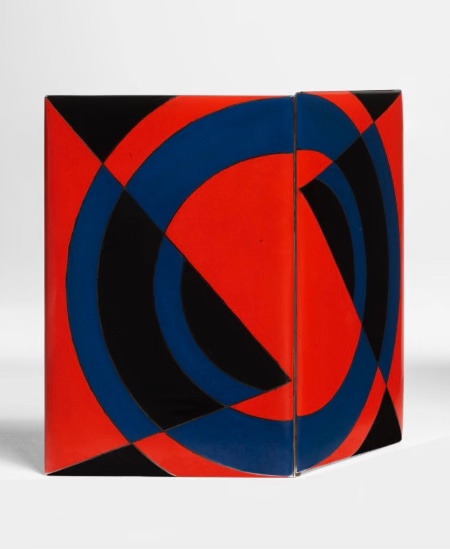
But rather than continuing with the traditional jewellery style of the time, Templier began developing his own distinctive aesthetic and embraced the modernist principles with its industrial and mechanical aesthetics of the early 20th century. His creations became minimalistic, geometric pieces with clean lines inspired by the Cubist and Constructivist art movements. The forms were abstract, with distinct and pronounced industrial influences. A style that would soon establish Raymond Templier as a pioneer of modernist jewellery design.
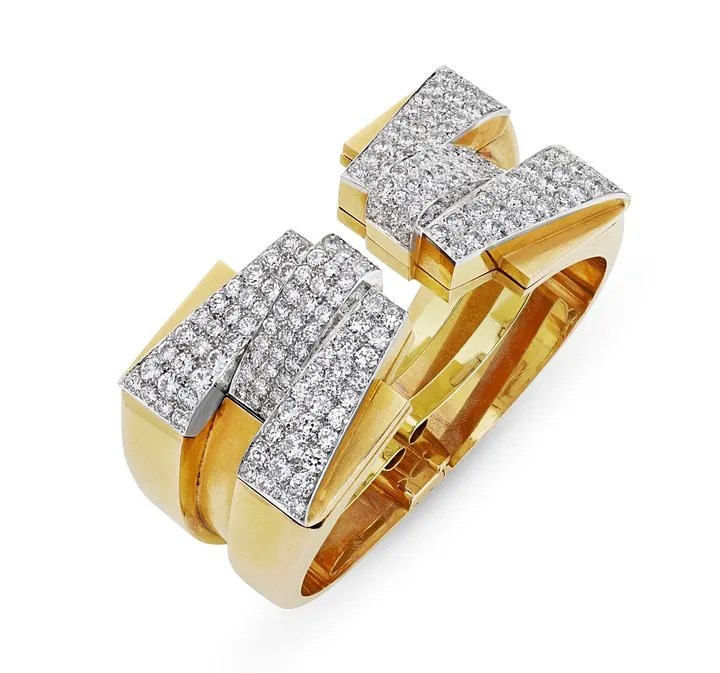
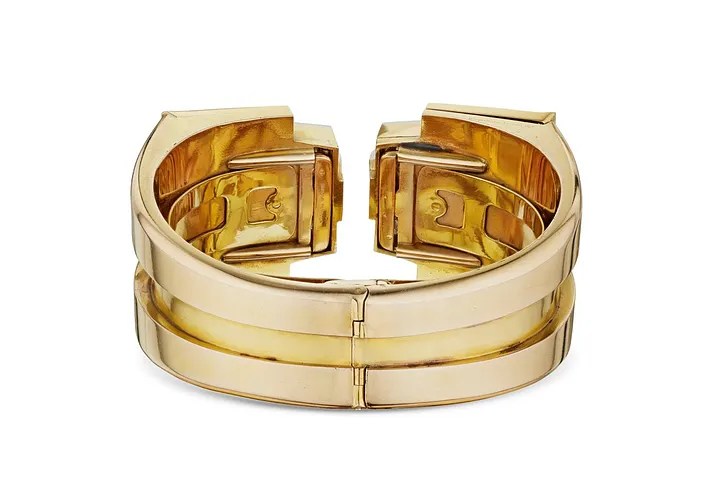
Combination cuff bracelet, old and round diamonds, 18K yellow gold and platinum, circa 1938. Photos: Christie’s
All those Salons
As early as 1911, Raymond Templier exhibited at several important ’salons’, for example Salon d’Automne. The same year he also became a member of the Conseil Superior des Arts Decoratifs.
All through to the late 1930’s Templier would be a part of all the many, many existing exhibitions and in 1937, at the L’Exposition Internationale des Arts et Techniques dans la Vie at Moderne in Paris, he served as Vice President of Category 55, the jewellery category.
But it was when he participated in the landmark L’Exposition Internationale des Arts Décoratifs et Industriels Modernes in 1925, that his work for the first time gained significant recognition and made its mark. At the exhibit he, for example, showed a malachite and diamond bracelet which visitors would come to describe as that it looked like if it was spinning. This barcelet, and his other contributions, were widely acclaimed and from now on Raymond Templier’s reputation was the one of a leading figure in design.
His jewellery together with his avant-garde artistic vision would push the roaring, bejewelled Art Deco and the more streamlined Art Moderne movements forward.
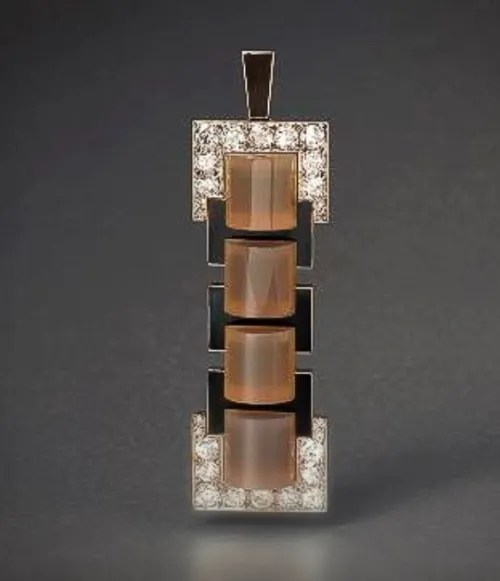
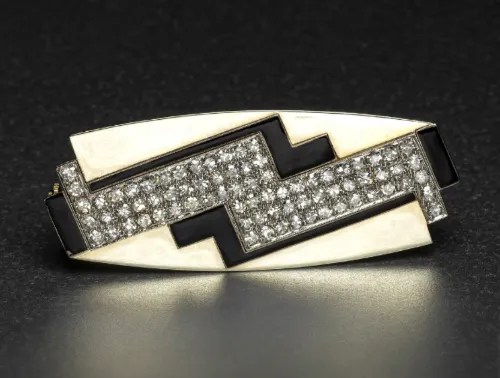
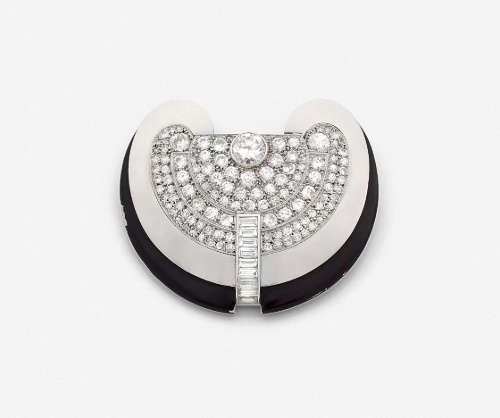
Platinum, lacquer, diamond and chalcedony pendant/brooch, circa 1929.
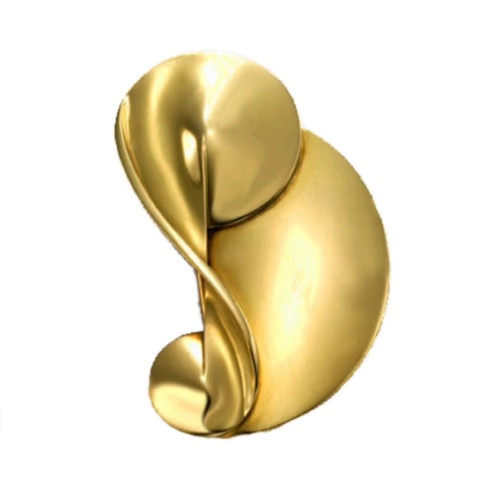
Brooch in gold with diamonds and onyx.
Both photos: Peter Edwards – 20th Century Jewels
The “rapture” of jewelry design
When Art Nouveau’s ornate, naturalistic and flowing designs had to leave way for Art Deco, Templier’s thoughts on design and work represented a dramatic departure. A departure, in line with the times and also a start on something completely new: A bold embrace of and emphasis on geometric forms, symmetry and abstraction.
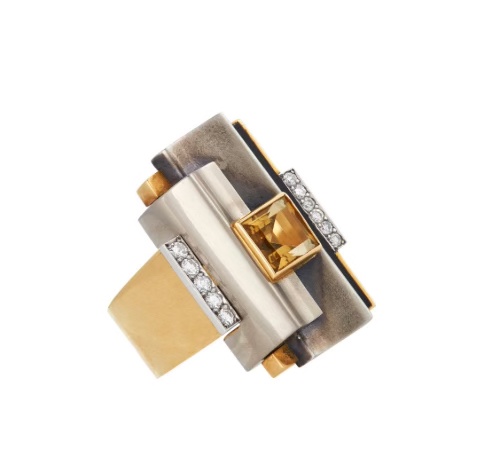
Raymond’s angular shapes like triangles, rectangles and “stepped” forms were arranged in dynamic compositions that reflected the machine age’s rhythm and energy.
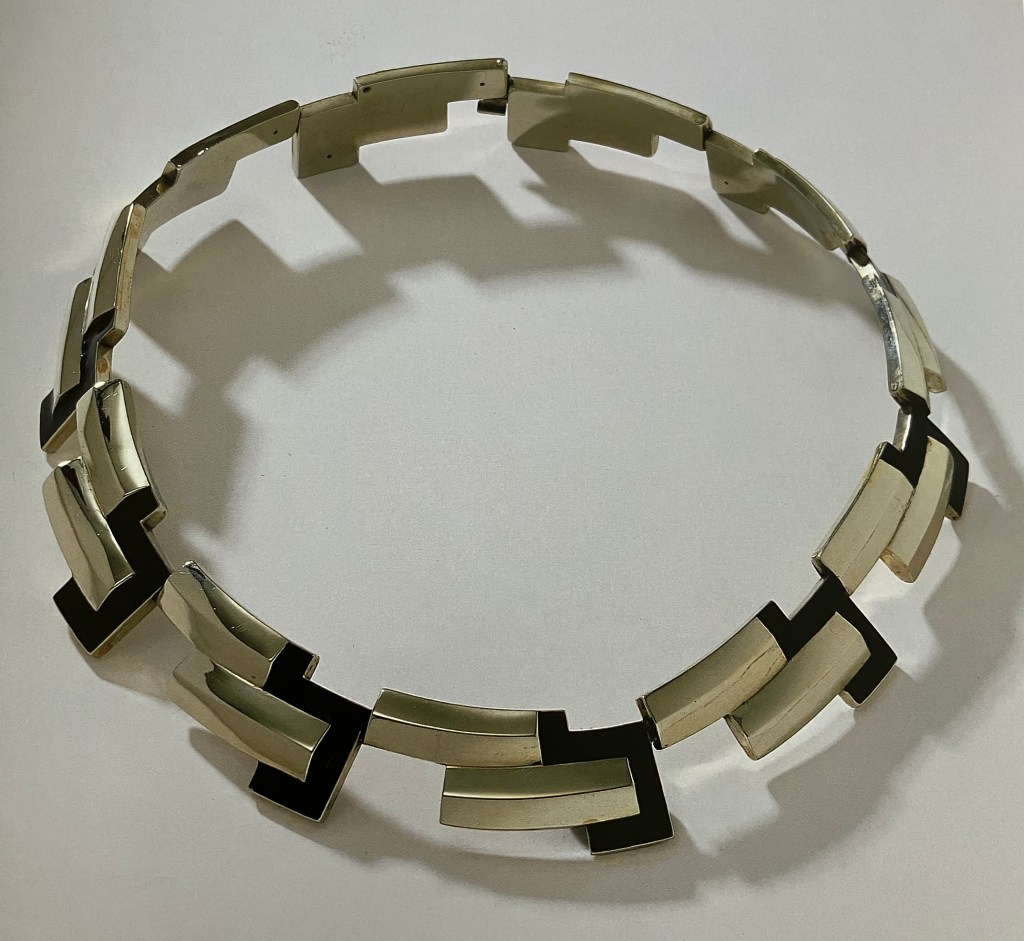
What made Templier’s work particularly revolutionary was perhaps his clear ability to translate architectural and industrial concepts and technology into wearable jewelry. The many modern skyscrapers in New York, the automobiles, turbines, printing presses, radio waves, propellers on boats and planes and all the other new machinery gave him inspiration. Many of his pieces almost looked like they were made in an industrial production process. They resembled miniature architectural models or mechanical components, and featured smooth planes of precious metals inset with diamonds and other gemstones.
Raymond Templier:
“As I walk in the streets I see ideas for jewellery everywhere, the wheels, the cars, the machinery of today, I am ready to respond to all of them.”
Materials
The bold, structured, sleek and uncomplicated Templier designs were largely crafted in silver, white gold or platinum and set with cool-toned gems such as aquamarines as well as decorative stones such as lapis lazuli, onyx and coral.
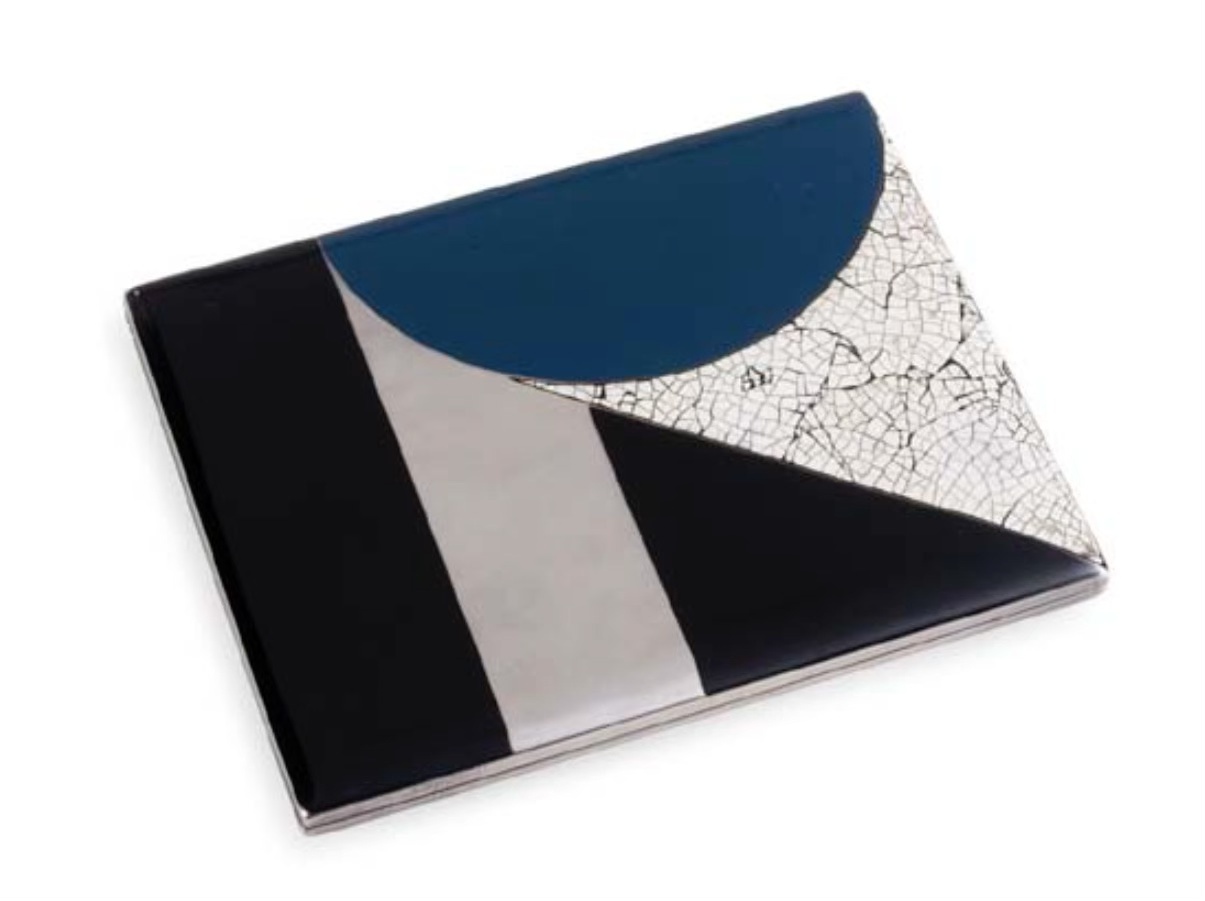
Templier also used enamel to add colour when necessary and the “coquille d’oeuf “ decorative technique (“egg shell”, i.e a Vietnamese lacquer technique) that was popular with several of his contemporaries during the 1930s such as Gérard Sandoz. (See it, for example, on his cigarette cases.)
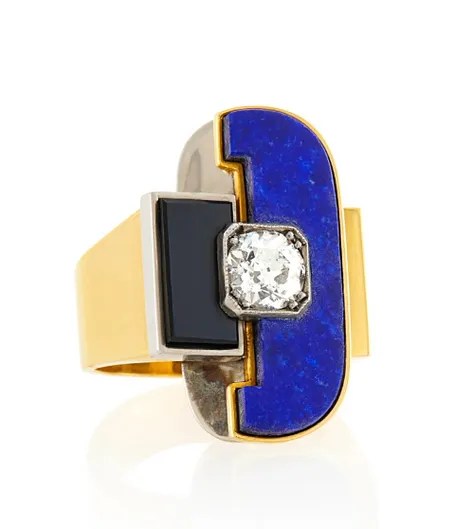
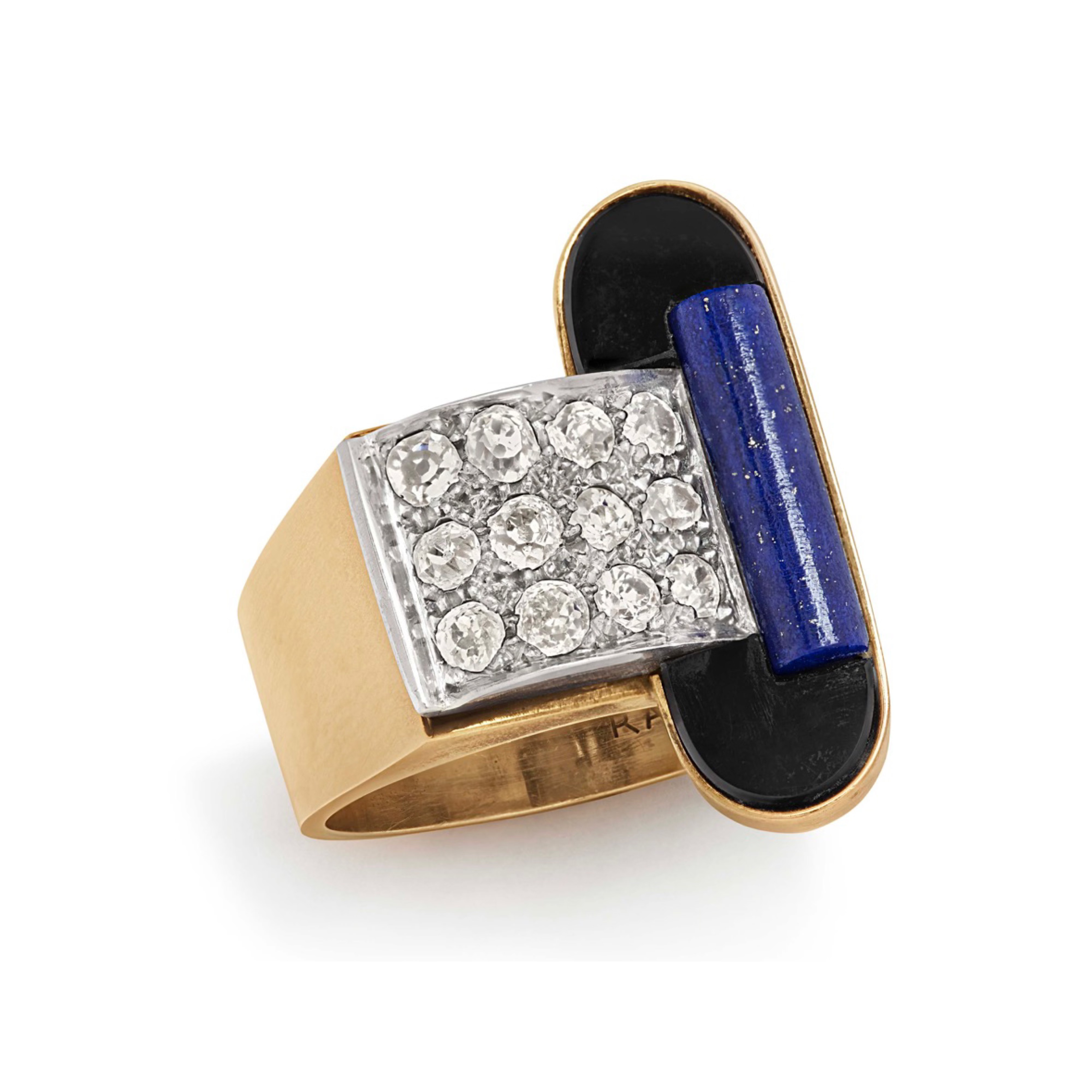
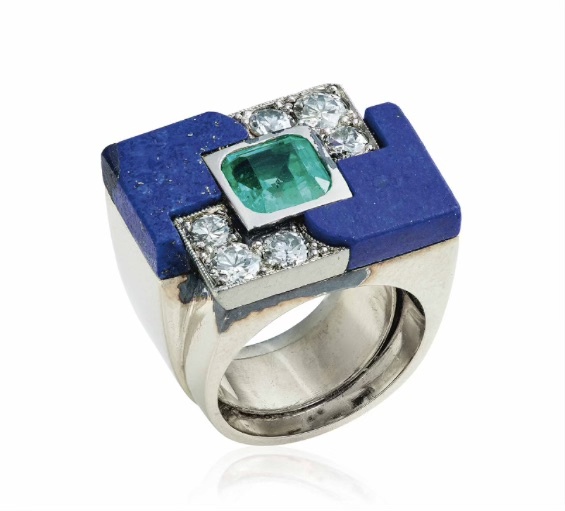
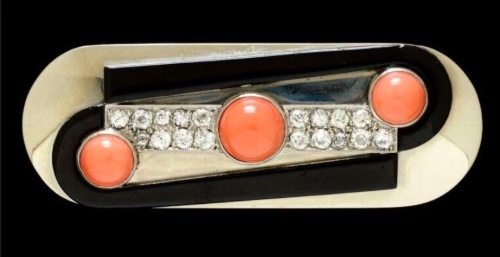
Two-colour gold, diamond, lapis and black onyx ring. Photo: Doyle
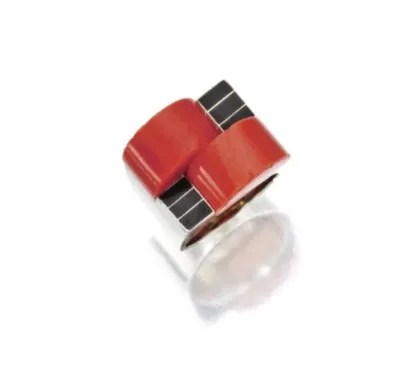
Coral and black enamel ring, 1929. Photo: Sotheby’s
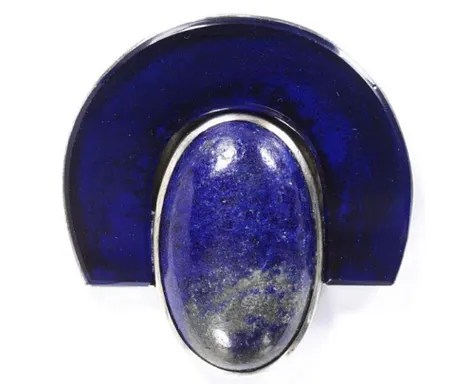
Brooch set with lapis lazuli., 1934. Belongs to the collection of V&A Museum.
Juxtaposition but always functional
Form and function was ususally more important and paramount than precious stones in Raymond Templier’s work but at the same time they were also there to bring light to the jewels. It is said that Raymond used diamonds the way an architect uses windows; to bring light into the functional form.
Hence, were diamonds strategically placed to accentuate rather than dominate the design. This represented a significant shift from traditional jewellery, where the value was primarily determined by the size and quality of the gemstones.
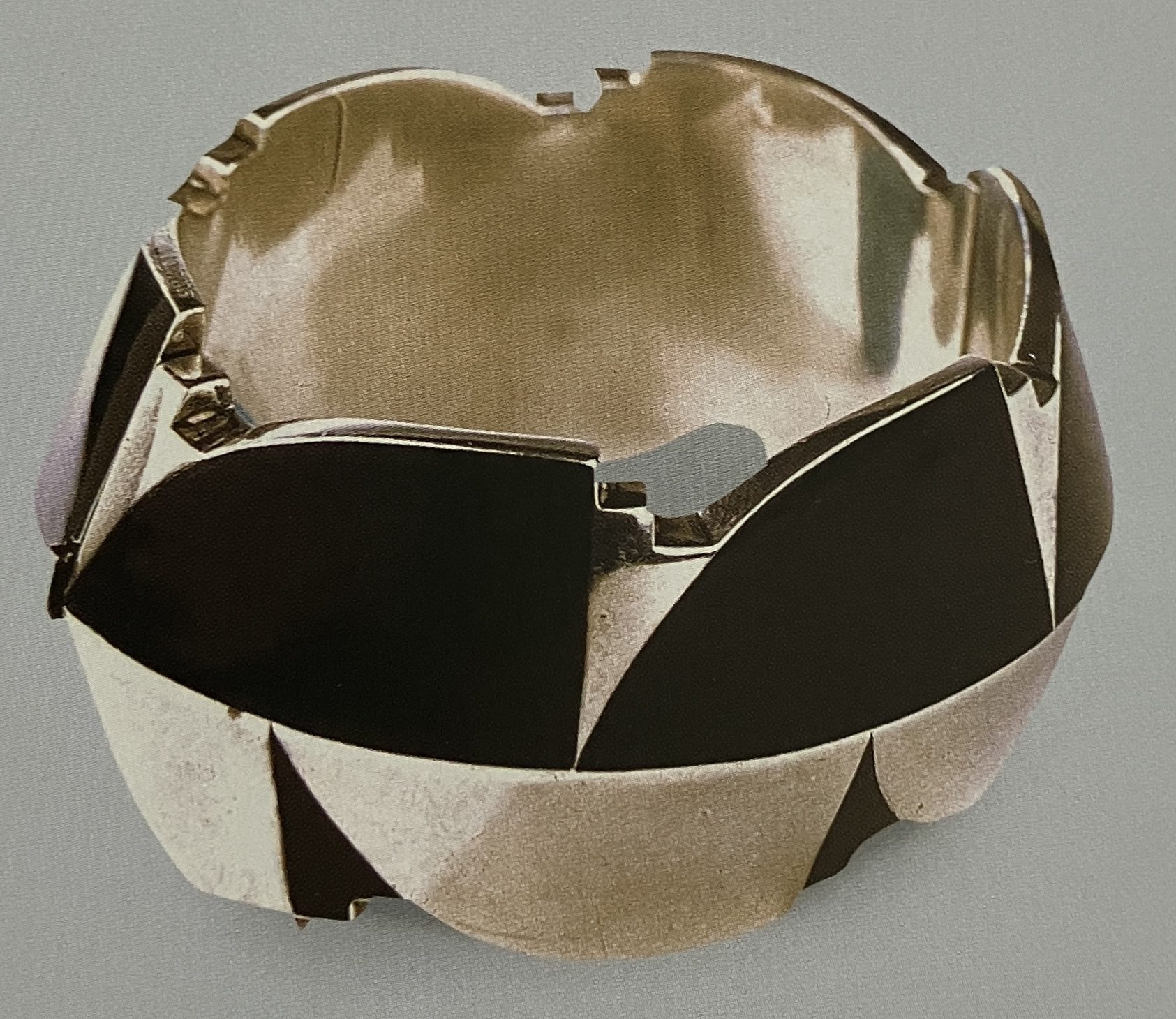
Juxtaposition and diametrical opposites were also important in Raymond Templier’s jewellery. Black met white, light tones fought darker ones, matte against gleam, a frosted look versus a polished one.
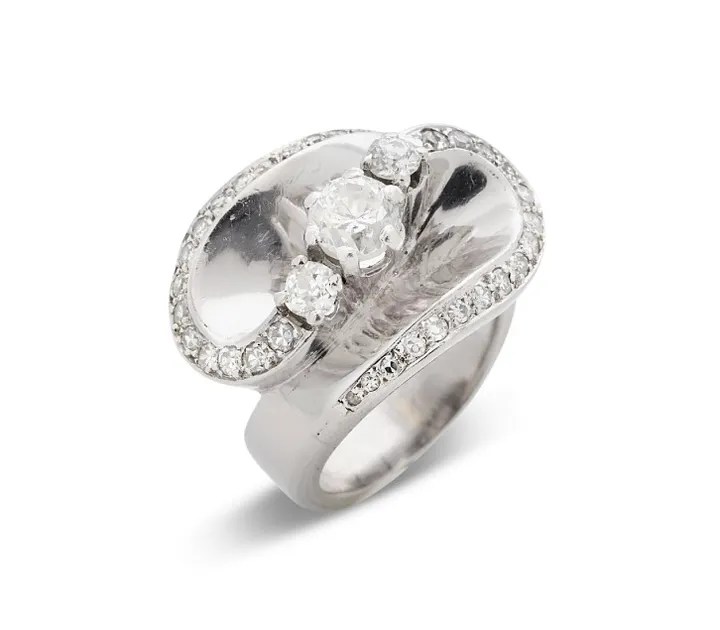
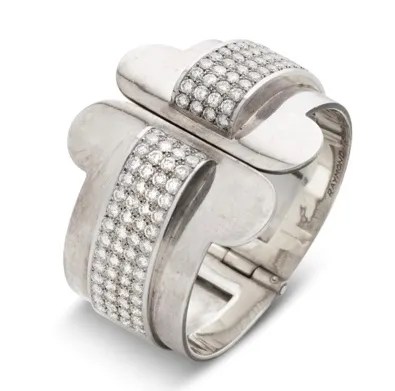
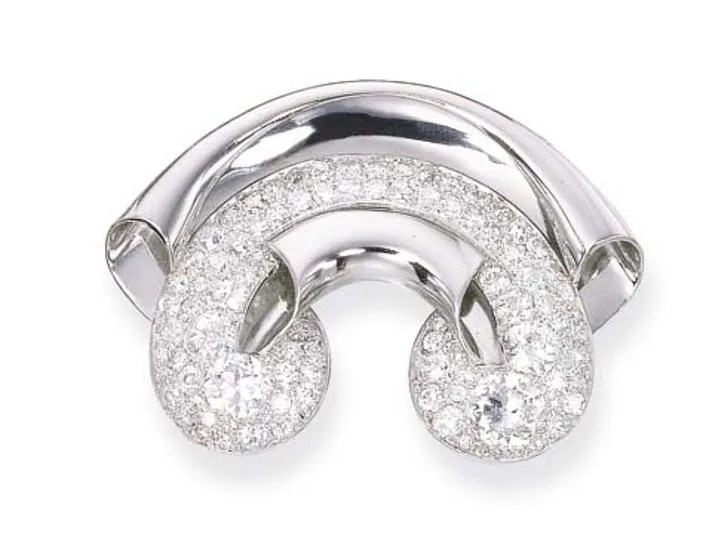
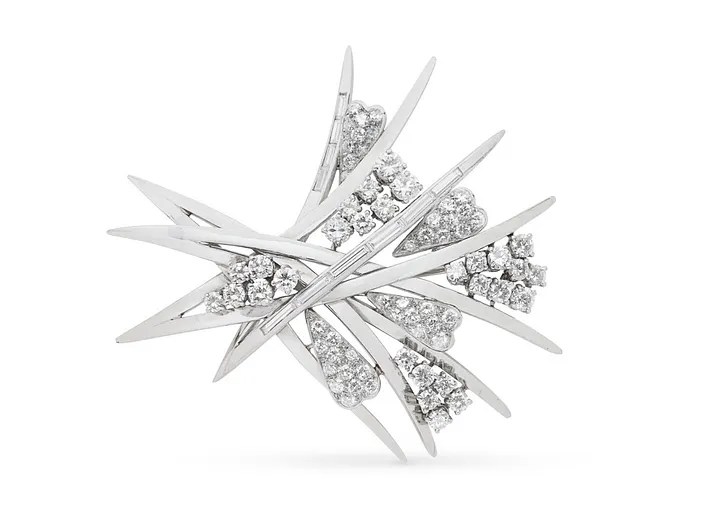
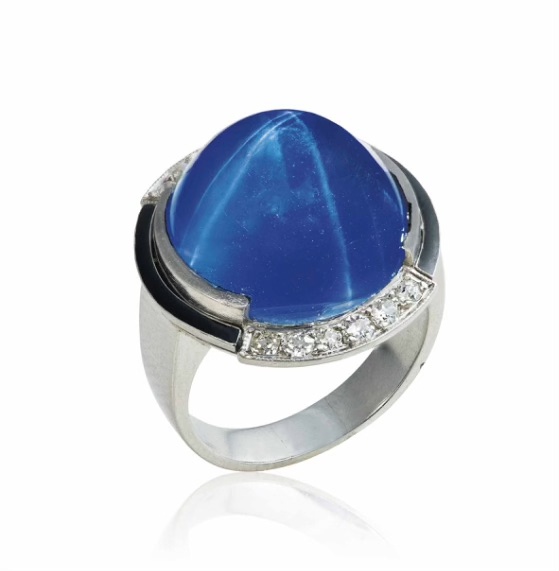
Platinum ring with old-cut, single-cut and circular-cut diamonds.
Manchete bracelet with diamonds.
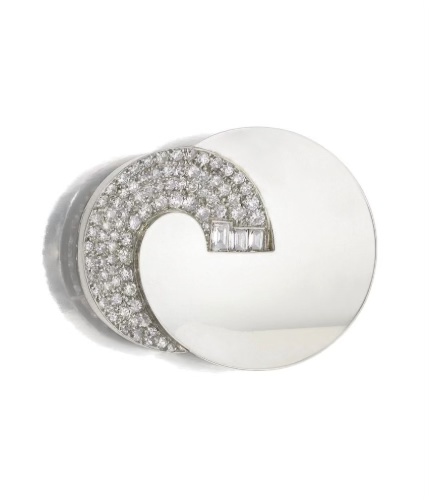
Brooch with pavé-set diamonds and platinum scrolling crescent, circa 1935.
Brooch with round brilliants, old and baguette-cut diamonds, platinum and 18K white gold, circa 1955.
All four photos: Christie’s
Raymond Templier:
“A piece of jewellrey should be viewed as a series of volumes in space and should be vivible from every possible angle. A piece of jewellery is is the balancing of volumes and planes that offers up different rhythms to the light, so that the light can play with them. A piece of jewellery is is above all light and shadow, not just sparkle.”
From idea to moveable pieces
In 1919, Raymond Templier began his 36-year long studio collaboration with the company’s chief draughtsman Marcel Percheron who translated Raymond’s sketches into jewellery pieces. The jewellery pieces were then made by Théodore Lambert.
During the 1920’s, 1930’s and 1940’s transformable jewels were in vogue and Templier was fascinated with the possibilities with jewellery that had detachable elements and parts that could be changed. A fashionable dress clip with parts that could be joined and, hocus pocus, turned into a brooch! Adaptable bracelets with reversable display parts, a diamond side for evening and a more mundane side for day, or with a detachable gemstone clip to add glam.
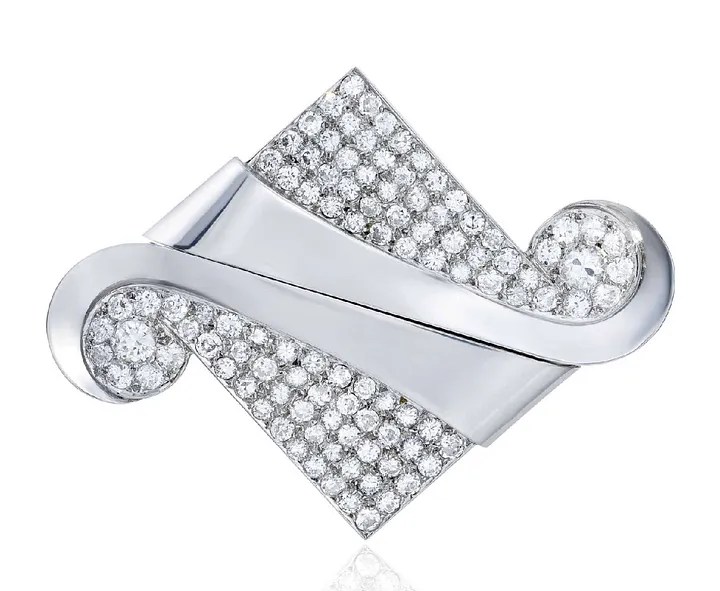
Double brooch with circular-cut diamonds, platinum and gold, detachable to wear as two clips, circa 1936. Photo: Christie’s
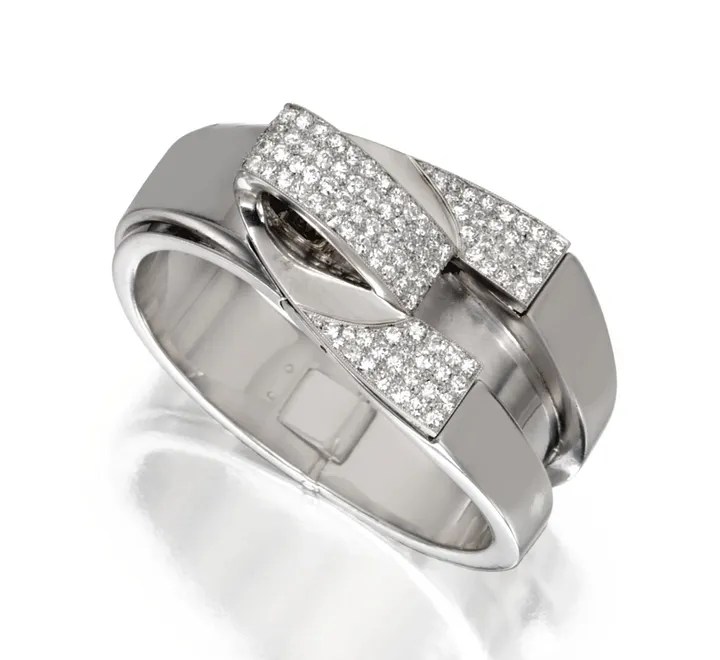
Hinged sculptural bangle supporting a detachable diamond-set clip of oval shape with two arms affixed at the opening set with old European-cut, round and single-cut diamonds, circa 1935. Photo: Sotheby’s
Founding father of UAM
In 1929, Templier played a big part in founding the Union des Artistes Modernes (UAM) together with some of the most important, most progressive and forward-thinking designers of the time.
Members were, amongst others: Helen Henry, René Herbst, Francis Jourdain, Robert Mallet-Stevens, Jean Puiforcat, Pierre Chareau, Jean Prouvé, Charlotte Perriand, Charles Édouard Jeanneret (Le Corbusier), Pierre Jeanneret, Robert Mallet-Stevens, Jean Despres, Gerard Sandoz and Jean Fouquet.
The UAM advocated breaking from the past and creating works with less expensive materials but with more outrageous and innovative designs across all design disciplines.
Taking over
Raymond Templier’s professional life changed in 1935 when his father Paul retired, and he took over the running of Maison Templier. This transition gave him greater control over the company’s direction and allowed him to further implement his modernist vision.
During Raymond’s leadership the firm continued to exhibit widely and create striking collections of jewellery as well as accessories (particularly the cigarette cases, today often popular collectibles) but also – because Templier was a great sport fan – sporting trophies for skiing, boxing, basket ball and posters for tennis tournaments, like Roland-Garros.
Raymond himself retired in 1965 and the following year donated design sketches and several jewellery pieces to the Musée des Arts Décoratifs’ exhibition Les Années ’25’: Art Déco/Bauhaus/Stijl/Esprit Nouveau. He was made Chevalier de la Legion d’Honneur, France’s highest order of merit in 1938.
Today his work forms part of the permanent collections of some of the world’s most important museums including the Victoria and Albert Museum, Metropolitan Museum of Art in New York and the Musée des Arts Décoratifs.
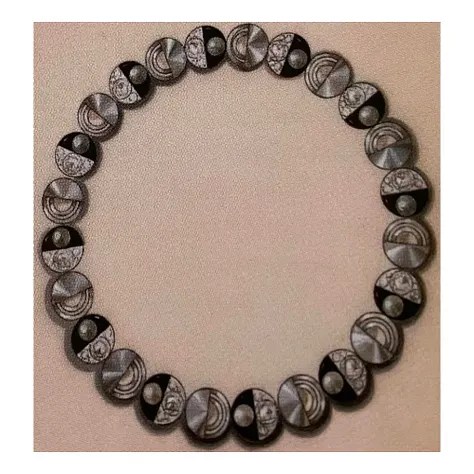
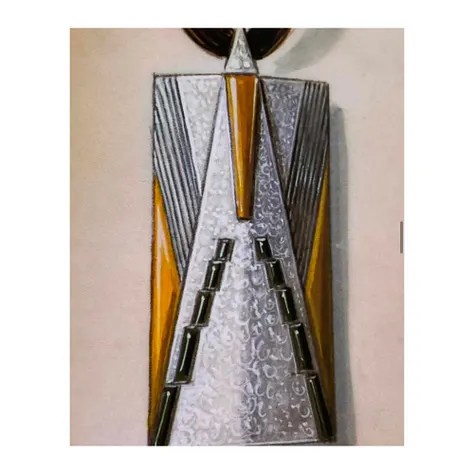
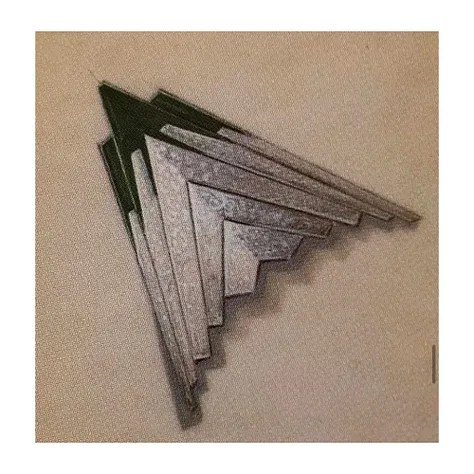
Sketches for jewellery pieces by Raymond Templier. Photos: Musée des Arts Décoratifs
When Raymond Templier died in 1968, he left behind a body of work that fundamentally changed how jewellery could be conceived and created. He transformed its design into a medium for expressing the modernist ideals of his time and in doing so, he helped elevate jewellery design to the status of fine art.
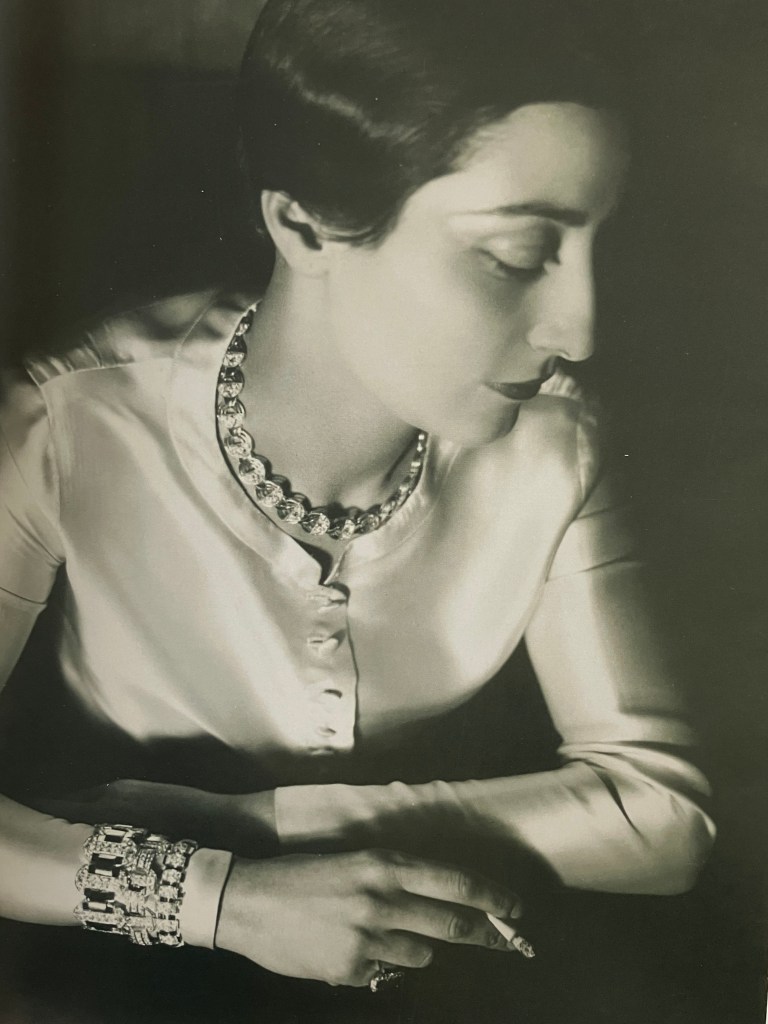
©SlowClapStories

Originally published on Substack at Slow Clap Jewels. Read the newsletter here.
 Slow Clap Stories
You must be logged in to post a comment.