…the Swedish way
Royal jewels often have an exciting history and significant economic value but, above all, they are very much real glam! Here’s some about these small beauties a.k.a the Swedish Crown Jewels.
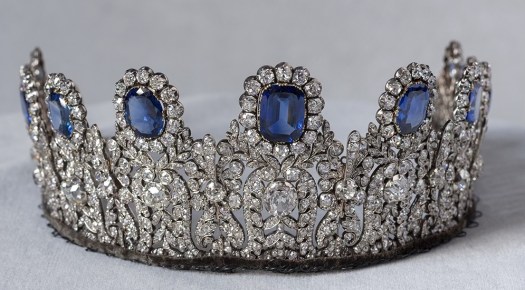
Leuchtenbergska safirdiademet
(The Leuchtenberg Sapphire Diadem) was inherited by Queen Josefina of Sweden from her mother Augusta Amalia, Duchess of Leuchtenberg.
The jewelry set was probably created by Marie-Etienne Nitot in Paris. The diadem is divided into eleven parts to obtain a flexible shape.
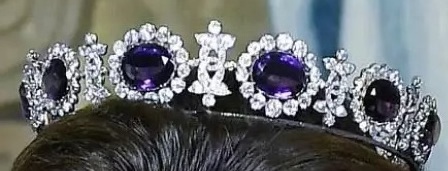
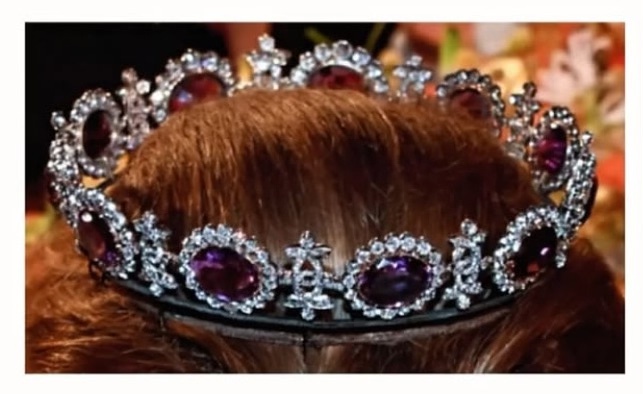
Ametistgarnityret
(The Amethyst set) or Queen Josefina’s amethysts is a jewelery set made of amethysts and brilliants set in silver and gold.
The set was probably made in Paris around 1805 for the French empress Joséphine. The set was then passed down to her granddaughter Queen Josefina of Sweden.
The set includes a tiara that used to be a necklace, bracelets, earrings and two brooches.
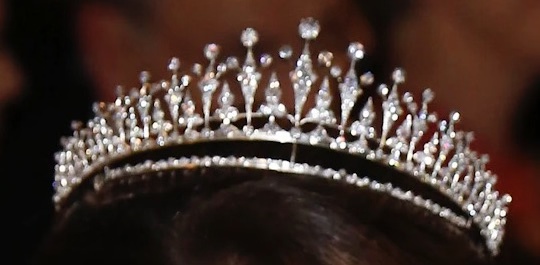
Drottning Silvias stråldiadem
(Queen Silvia’s tiara) is a tiara that Silvia wore for the first time in the mid-1980s. The piece is made of brilliants and is privately owned by the royal family. The tiara can also be worn as a necklace.
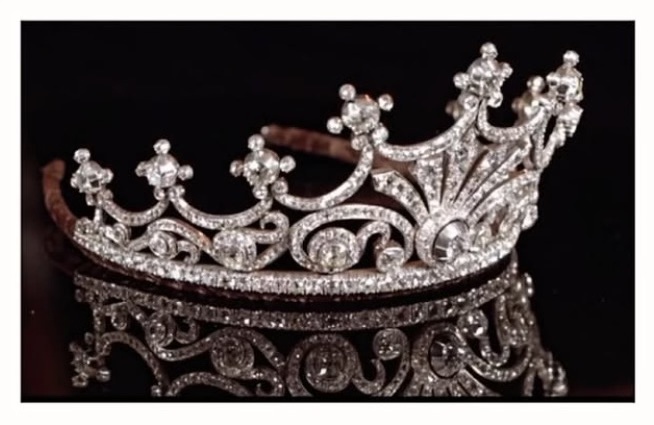
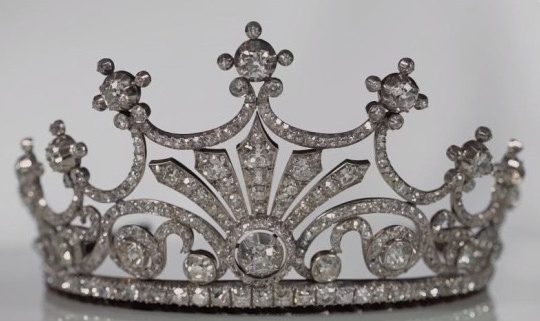
Drottning Sofias diadem
(Queen Sofia’s diadem) accompanied Queen Sofia to Sweden from Germany (then Duchy of Nassau) when she married Crown Prince Oscar II in 1857.
The fan-shaped diadem is believed to have originally been a jeweled comb that was reworked in the late 1800s.
In English, the jewelery is called The Nine Prog Tiara.
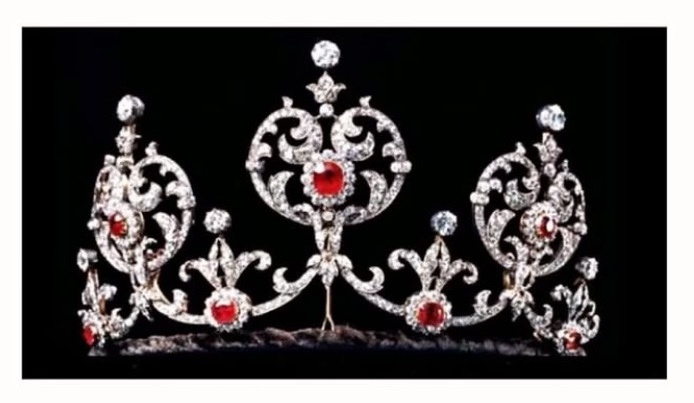
Kronprinsessan Margaretas rubindiadem
(Crown Princess Margareta’s ruby diadem) came to Sweden when the Swedish crown prince Gustav VI Adolf married the British princess Margareta in 1905.
The bride, Princess Margaret of Great Britain and Ireland (Princess Margaret of Connaught), received the ruby diadem as a gift from her uncle and aunt, King Edward VII and Queen Alexandra.
The diadem is made of diamonds and rubies and can be converted into a necklace.
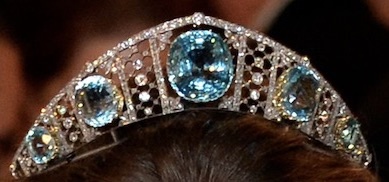
Prinsessan Margaretas akvamarindiadem
(Princess Margaret’s Aquamarine Diadem) originally belonged to Crown Princess Margaret of Sweden.
The diadem in Russian kokoshnik model consists of five large aquamarines surrounded by brilliants.
The diadem was given to Crown Princess Margareta of Sweden as a wedding present by her parents when she married the Swedish Crown Prince Gustaf VI Adolf in 1905.
Margaret was the daughter of Prince Arthur, Duke of Connaught and Strathearn and Louise of Prussia. Her grandmother was Queen Victoria of Great Britain.
The diadem is owned by the Swedish king’s sister Margaretha, who received it as a wedding gift in 1964.
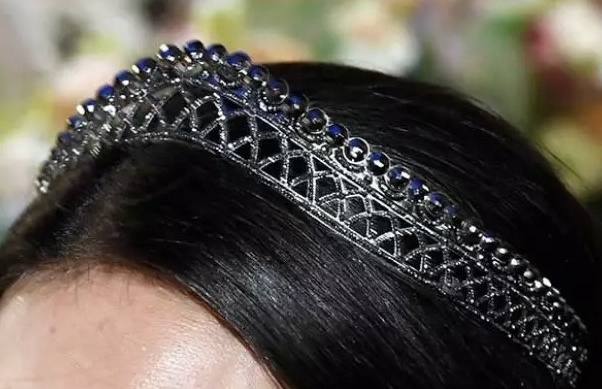
Lilla ståldiademet
(The little steel tiara) consists of a tiara and a steel hair comb. Information states that it is part of ‘Ståldiademet’ (‘The Steel Tiara’). More further down.
It is said that Queen Silvia of Sweden found the diadems hidden in an old cupboard in the royal Swedish castle.
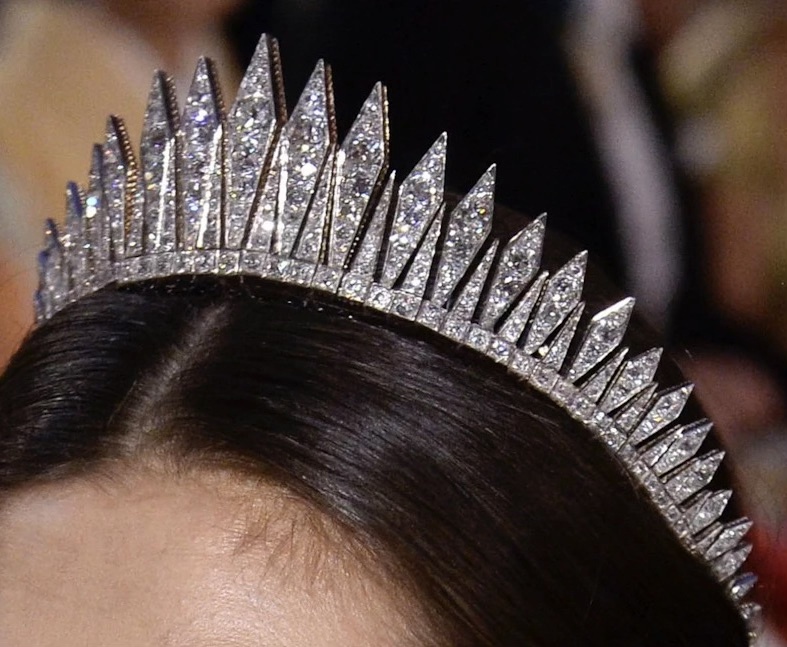
Stråldiademet
(The Radiant Diadem) is made of diamonds and came, in 1881, with Gustaf V’s wife Victoria of Baden to Sweden.
The design of the jewelry can be derived from the fact that during this time people were fond of the headdress of the Russian national costume, the kokoshnik, therefore this type of diadem is also called “tiara russe”.
According to Queen Victoria’s will in 1930, the tiara should primarily be worn by the country’s crown princess.
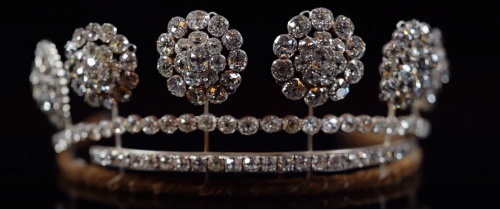
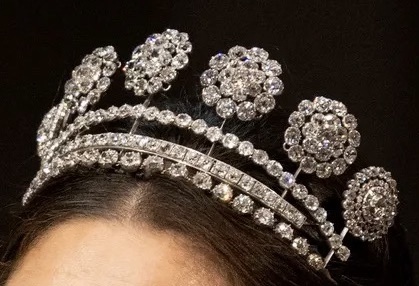
Fyrknappsdiademet
(The Four Button Diadem) consists of bows/buttons in a star design. These four diamond rosettes were converted into a diadem for the Norwegian state visit to Sweden in 1959. It was then worn by Princess Margaretha at the gala dinner.
There is also a diadem with six buttons/bows; Karl-Johan-diademet (The Karl Johan diadem) which is also called Sexknappsdiademet (The Six button diadem).
These six buttons are designed as flowers with small leaves. They can be traced to King Karl XIV Johan who had these diamond rosettes attached to Erik XIV’s royal crown from 1560 before his coronation in 1818.
Together, the above-mentioned diadems are called the Rosette diadems or the Button diadems.
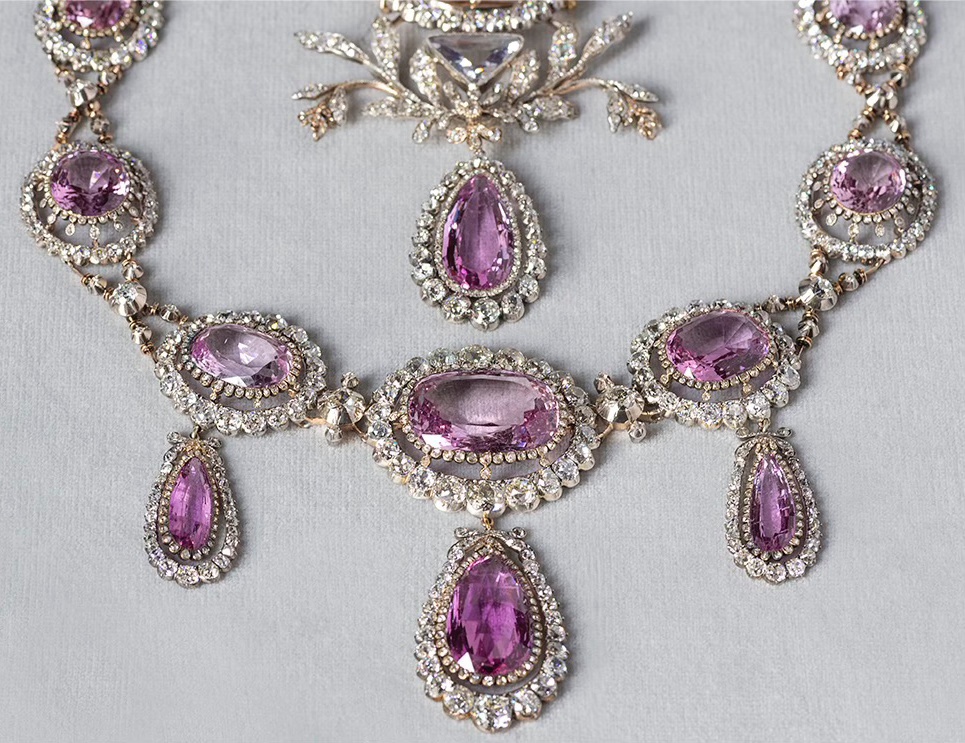
Rosa ädeltopasgarnityret
(The Rose topaz set) consists of a necklace, brooch and a corsage made of brilliants and pink topazes. It came to Sweden with Victoria of Baden, Queen of Sweden from 1907.
The jewelry has its origins in Russia where the jewelry was ordered by the Dowager Empress Maria Fyodorovna for her daughter Maria Pavlovna as a gift when she gave birth to her daughter Augusta in 1811. Augusta, in her turn, received the jewelry set as an inheritance or gift when she married the future Emperor William I of Germany in 1829.
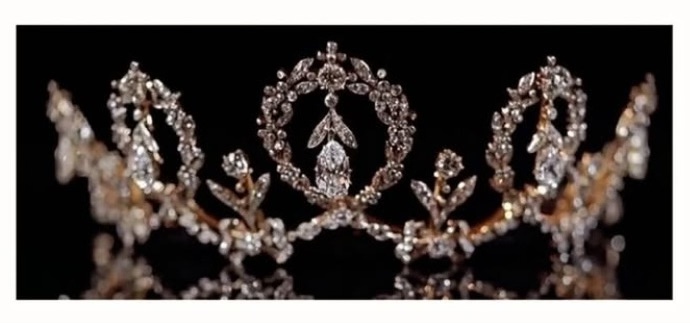
Prinsessan Sibyllas diadem
(The Princess Sibylla’s Diadem), possible to convert into a necklace, is made of brilliants and designed as five wreaths. In each wreath is a diamond clasp and between each wreath is a diamond rosette with a flower.
The diadem came to Sweden with Princess Margaret of Great Britain and Ireland (Princess Margaret of Connaught) when she married the Swedish Prince Gustaf Adolf in 1905.
The diadem was made in 1904 by the British court jeweler Garrard & Co and was a wedding gift from the Crown Princess’s parents, the Duke and Duchess of Connaught.
The reason it is called “Sibylla’s diadem” is because Princess Sibylla of Sweden was fond of it and wore it on several occasions.
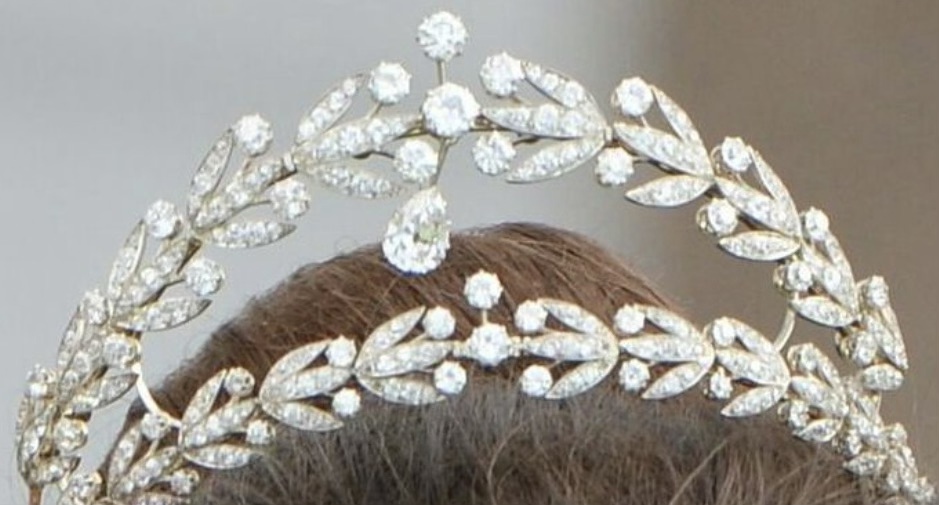
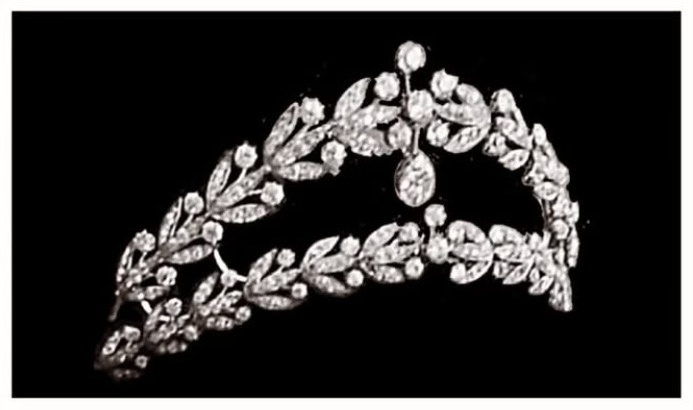
Prinsessan Lilians diadem
(Princess Lilian’s Tiara) was formerly a necklace given to Princess Margaret of Great Britain and Ireland by her husband’s grandmother Queen Sofia. The diadem was then inherited by Margareta’s son Prince Bertil of Sweden.
The jewelry was made by Boucheron in Paris and the material is silver, gold and diamonds. It can also be worn as a necklace.
The design resembles a laurel wreath and in English it is also called “Laurel wreath diadem”.
Princess Lilian bequeathed the tiara to its current owner, Crown Princess Victoria of Sweden.
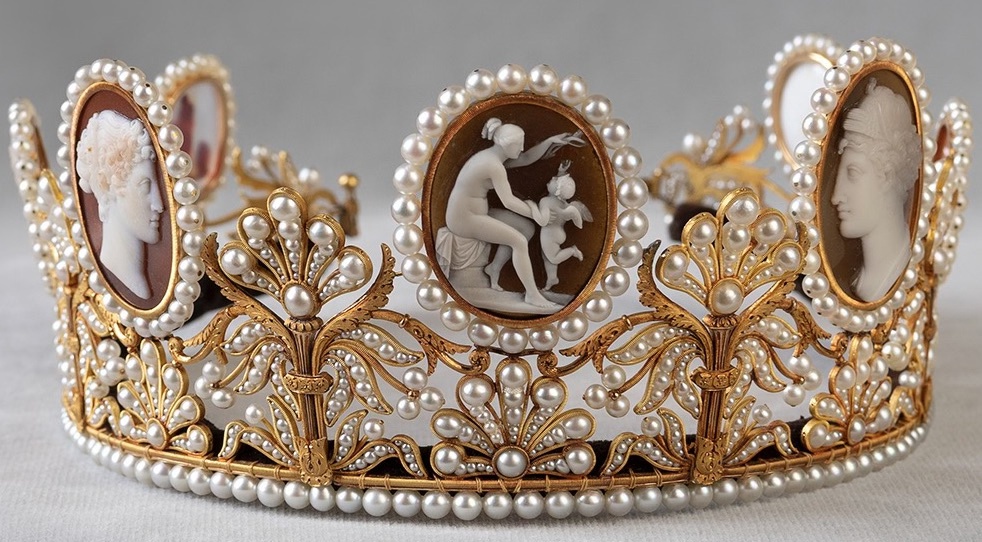
Kamégarnityret
(The Cameo Set) consists of diadem, necklace, earrings, brooch and two bracelets. The set is made in several materials such as gold, pearls, brilliants and large cameos.
The set was a gift from Emperor Napoleon I to his wife Joséphine de Beauharnais around 1805 and was inherited by Empress Joséphine’s granddaughter, Queen Josefina, married to Oscar I of Sweden.
Both Queen Silvia of Sweden and Crown Princess Victoria have worn the tiara when they married in 1976 and 2010, respectively.
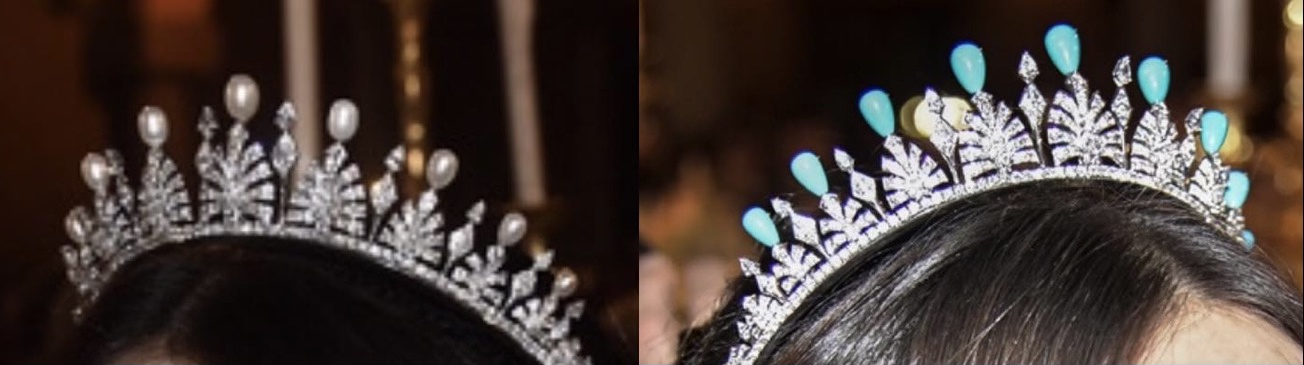
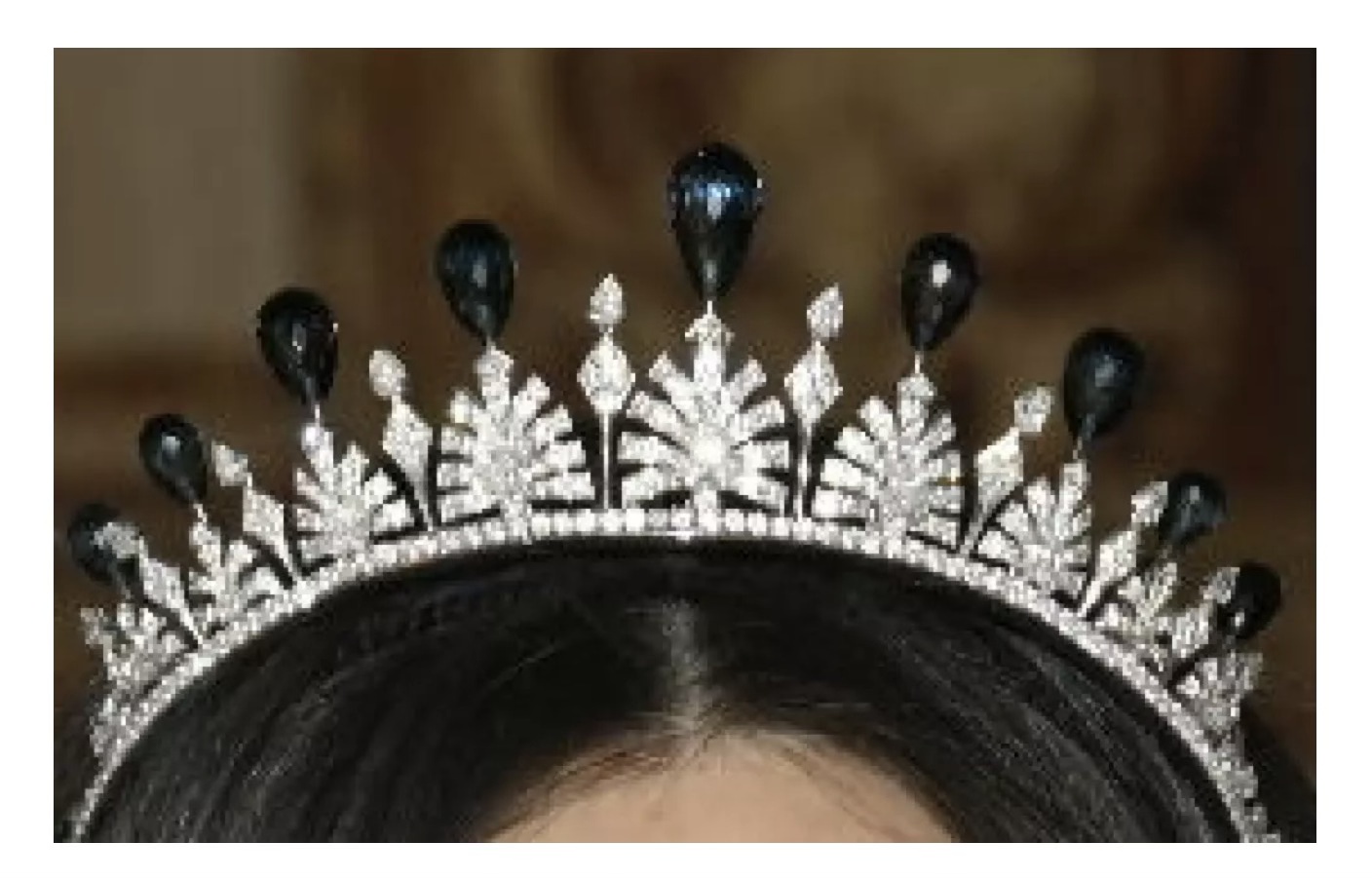
Prinsessan Sofias diadem
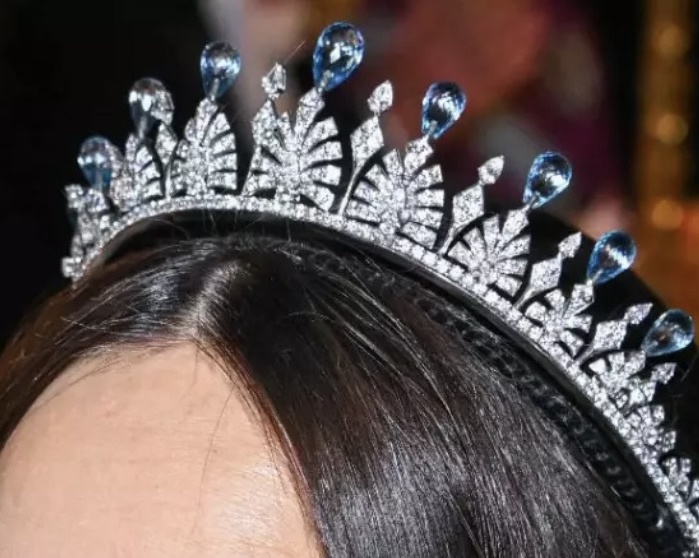
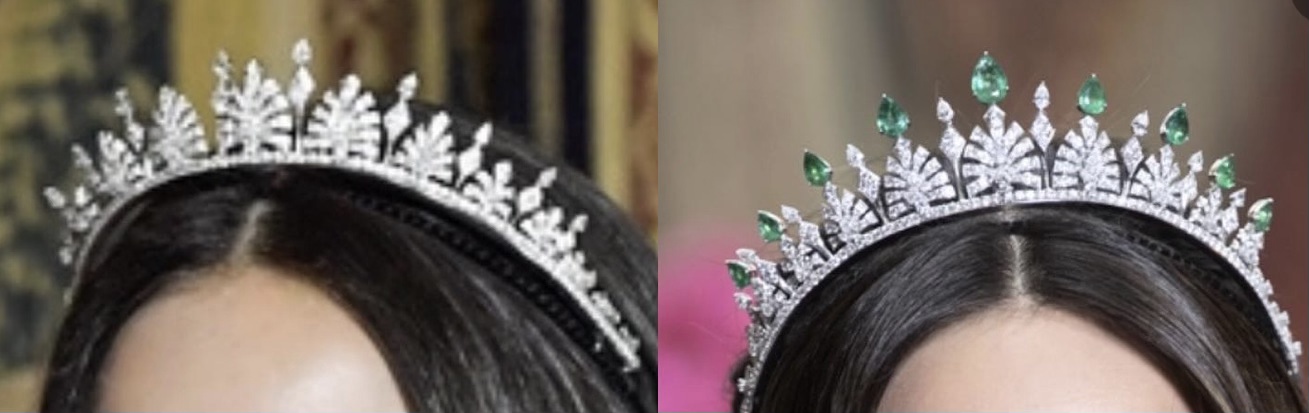
(Princess Sofia’s tiara) is diadem with diamonds and emeralds.
The diadem was a gift to Princess Sofia from King Carl XVI Gustaf of Sweden and Queen Silvia when she married Prince Carl Philip, 2015.
The diadem’s emeralds can be removed and the diadem used with only diamonds. Princess Sofia has also varied the tiara by fitting pearls, turquoises and topazes instead of the emeralds on different occasions.
Ståldiademet
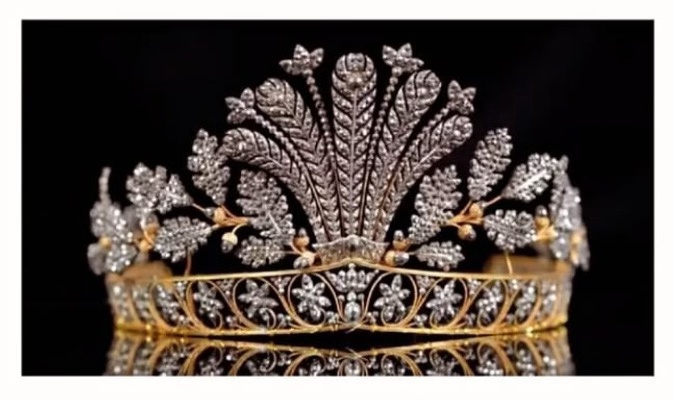
(The steel tiara) is made of steel and gilded brass. It is said that Queen Silvia of Sweden found the diadem hidden in an old cupboard in the Swedish royal castle.
The first documented wearer of the tiara was also Queen Silvia during an Austrian state visit in 1979.
In English, the tiara is called the Napoleonic Cut-Steel Tiara.
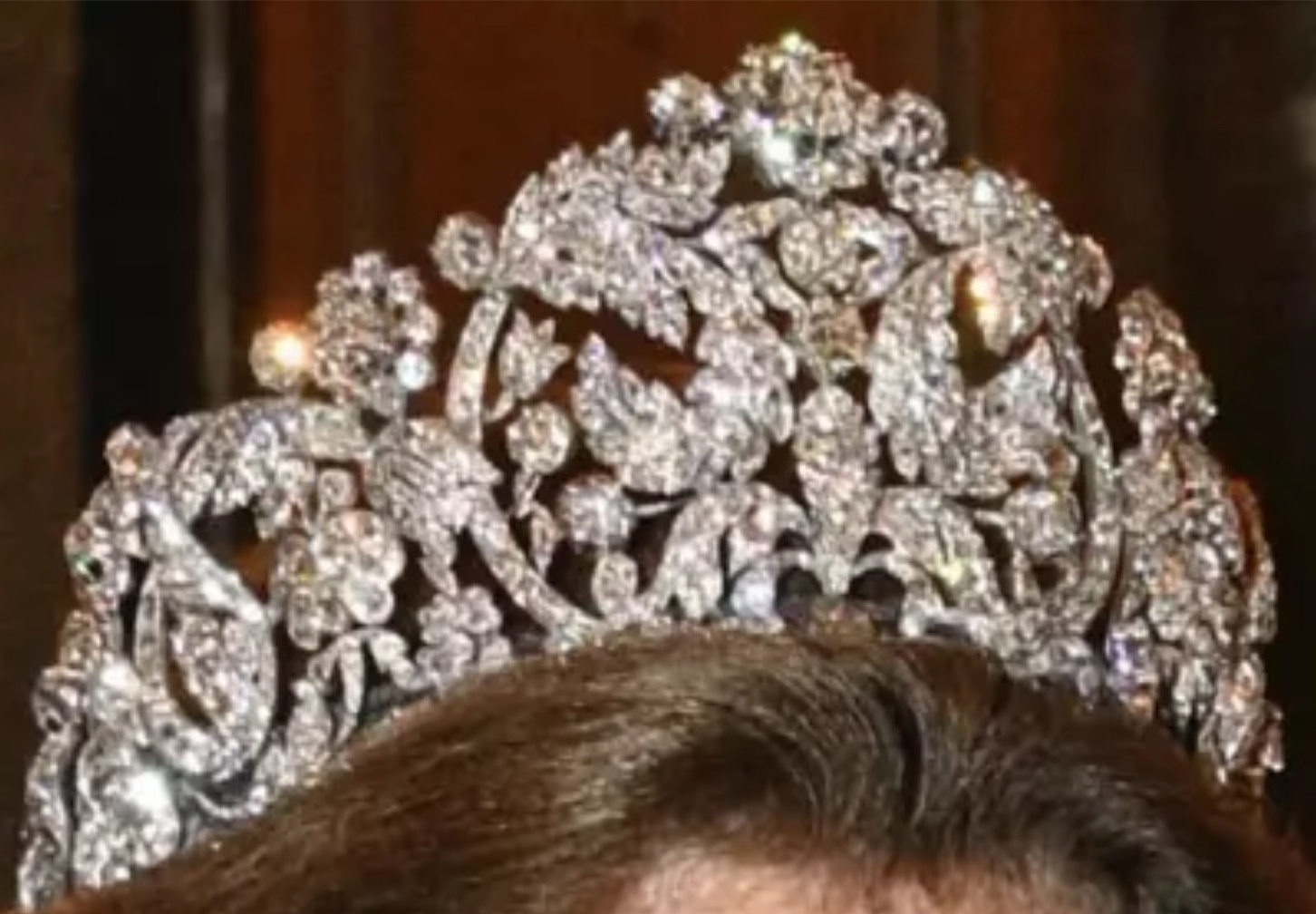
Kröningsdiademet
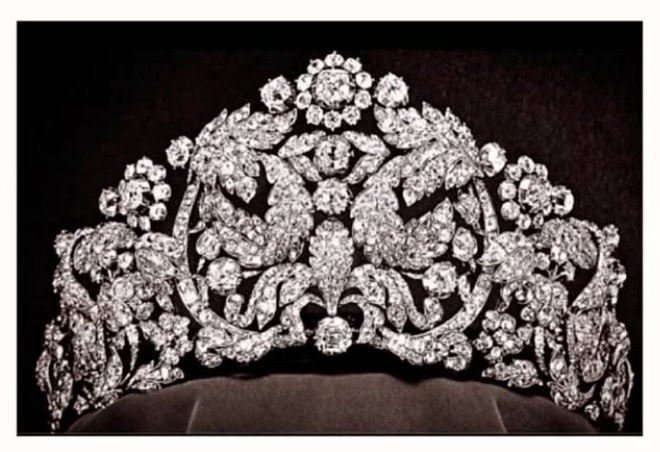
(The Coronation Diadem), or the Brazilian Diadem, belonged to Empress Amalie of Brazil and as sole heir, her sister, Queen Josefina of Sweden, inherited the piece in 1873.
The diadem consists of brilliants set in silver and gold, nine articulated parts with a maximum height of 12 cm and a length of 50 cm. Its weight is approximately 800 grams.
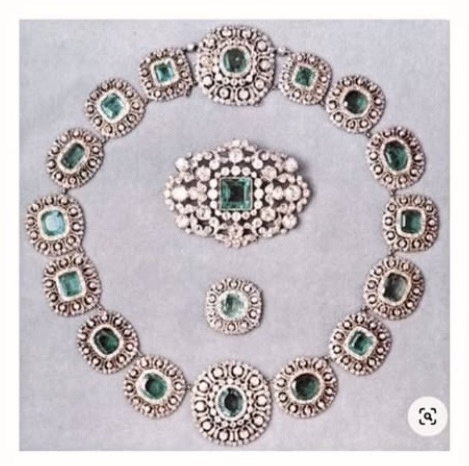
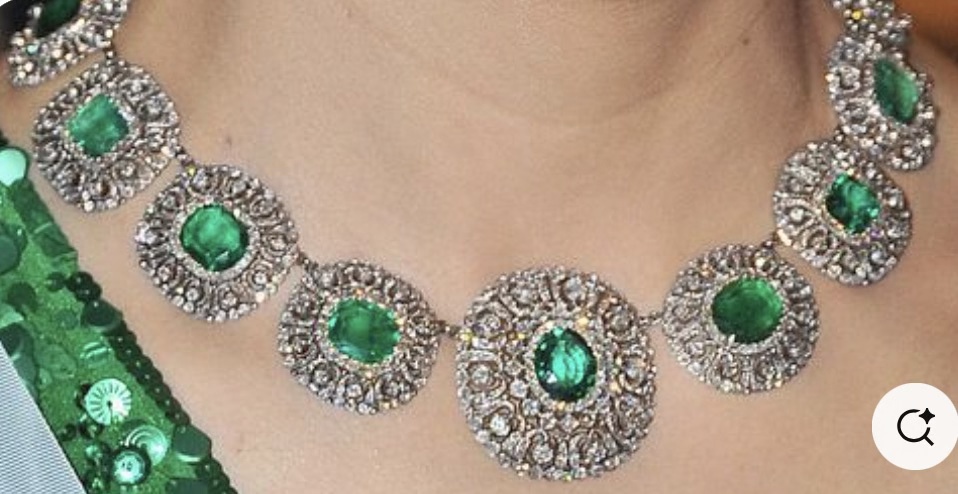
Bernadotteska smaragdsetet
(The ‘Bernadotte emerald set) is a so-called jewel belt of brilliants and emeralds. The large brooch included is originally a belt buckle.
Today, the necklace consists of 16 jewel rosettes that were arranged for Princess Sibylla.
And for last, a tiiiny bit of a cheat…
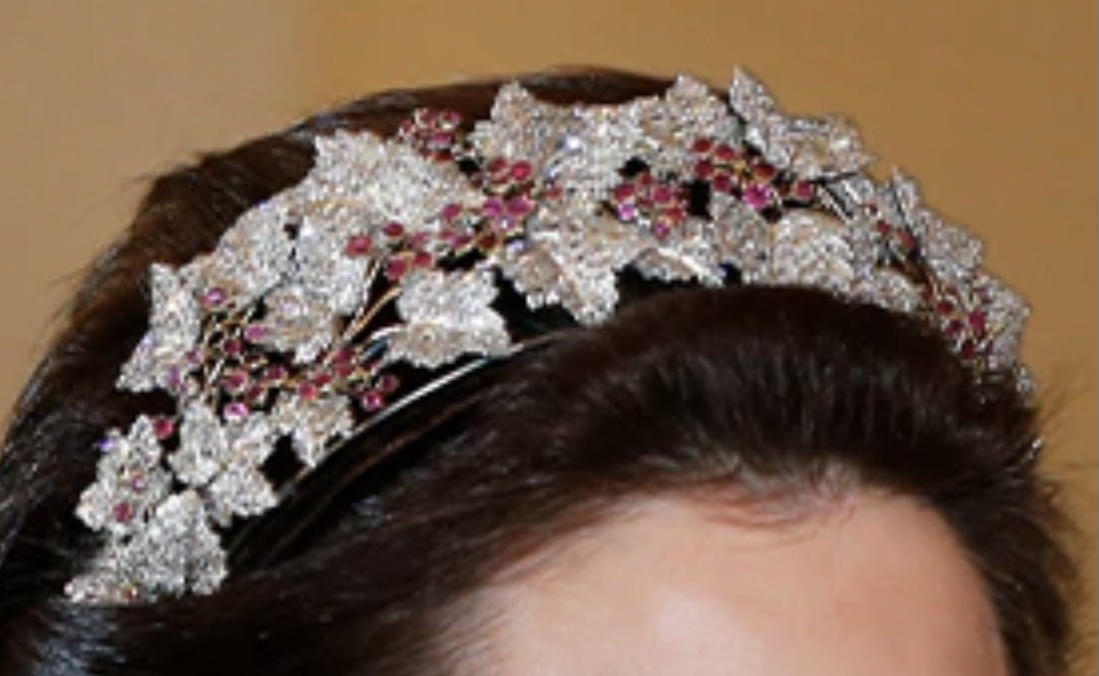
Det danska rubinsetet
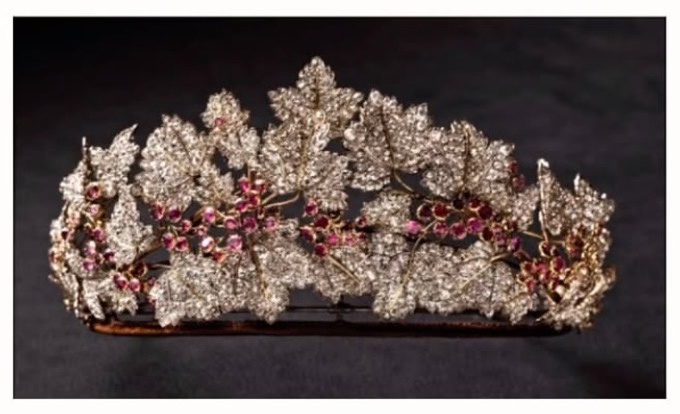
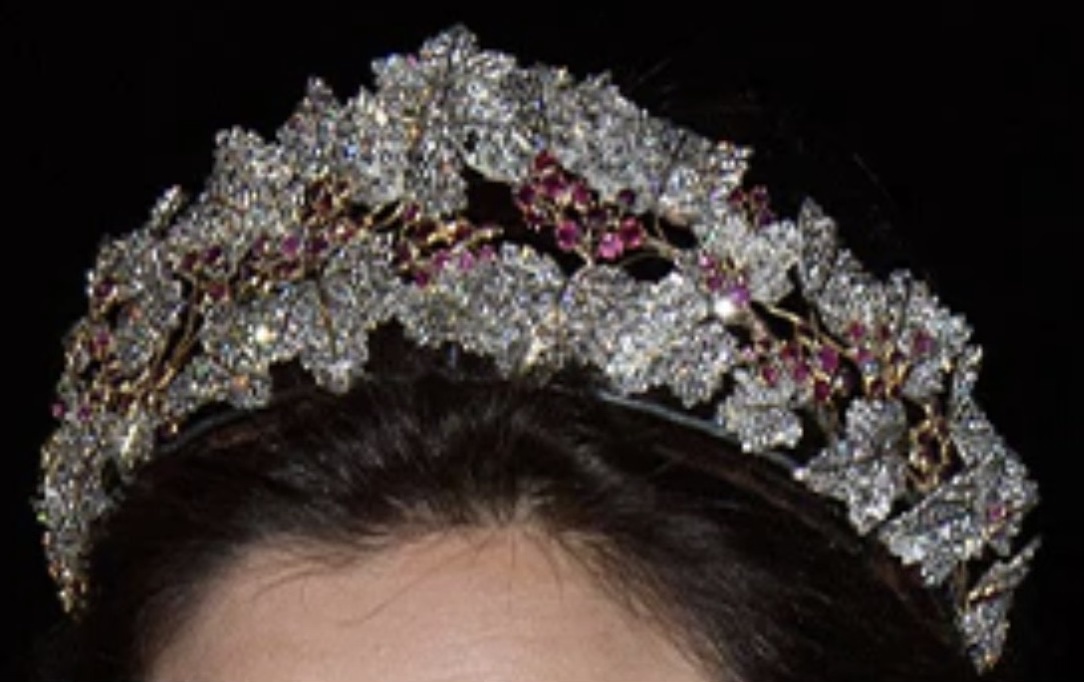
(The Danish ruby set) belongs to Queen Mary of Denmark but was for a long time part of the Swedish royal jewels.
The diadem came to Sweden with Désirée Clary, in Sweden and Norway called Queen Desideria. Désirée had previously been engaged to Napoleon but later married Jean Baptiste Bernadotte, Karl XIV Johan, who became King of Sweden in 1818.
When Désirée died in 1860, her daughter-in-law Josefina of Leuchtenberg inherited the diadem.
Queen Josefina in turn bequeathed the rubies to her granddaughter Lovisa, daughter of King Charles XV. Lovisa, later Louise, took the jewelery with her to Denmark when she married the Danish Crown Prince Fredrik VIII in 1869.
When Swedish Princess Ingrid, daughter of Gustaf VI Adolf, married Danish Crown Prince Frederik, she received the rubies as a wedding gift from Christian X and Queen Alexandrina. Again, the rubies were worn by a princess from the Bernadotte family.
It was Queen Ingrid who redesigned the set and, among other things, had the two laurel wreaths put together so that the diadem took on more of a crown shape.
All photos borrowed online.
©SlowClapStories

Originally published on Substack at Slow Clap Jewels. Read the newsletter here.


You must be logged in to post a comment.