Maison Fouquet

Modernists, makers and masters

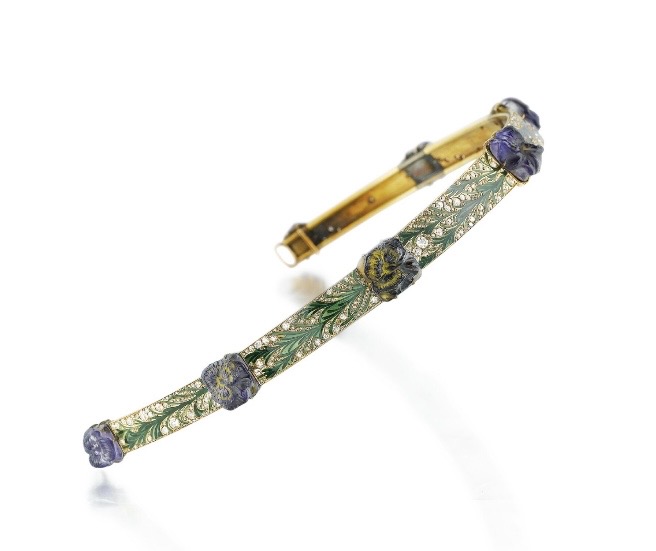
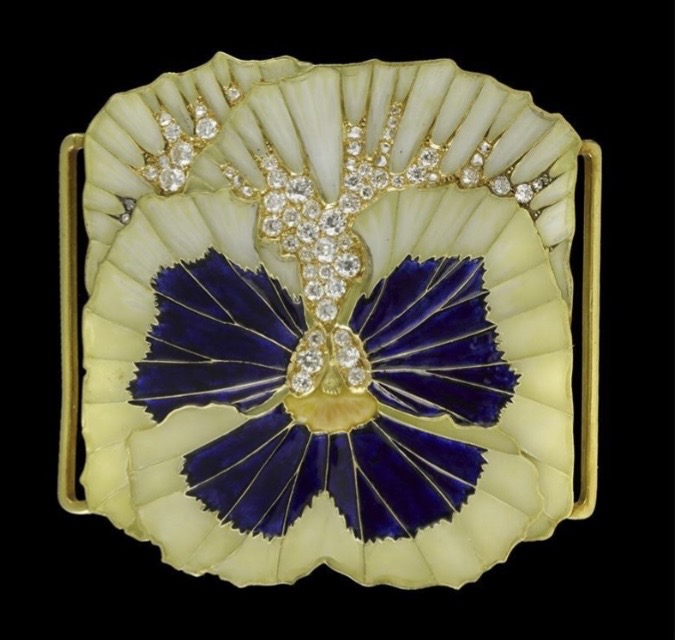
To the left: Cabochon sapphires, circular-cut diamonds, onyx curved panels, circa 1920.
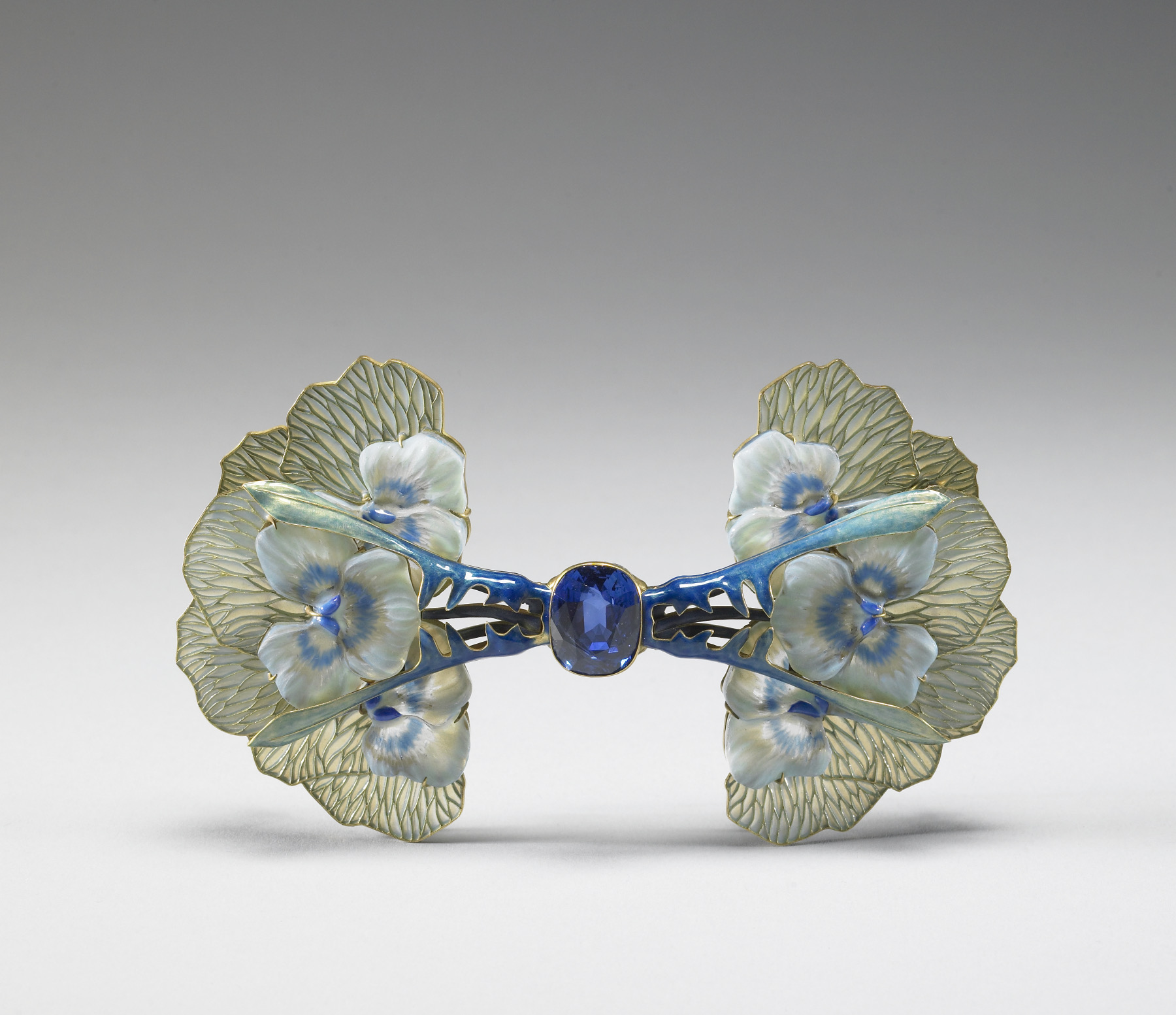
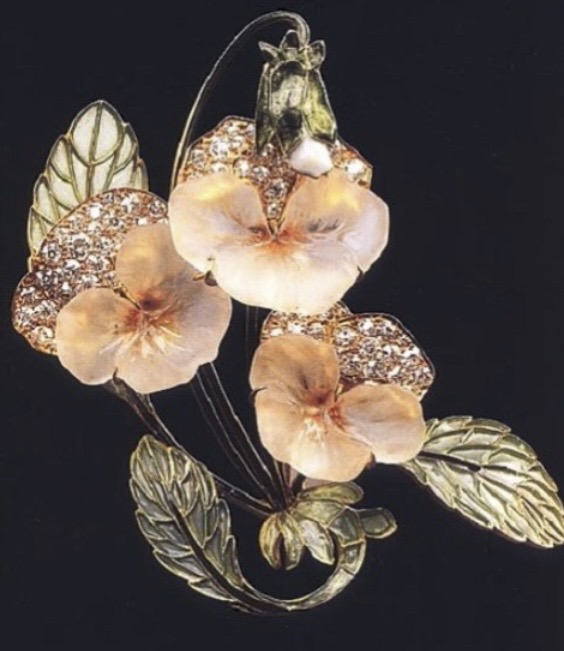
Photo: Christie’s To the right: Brooch in gold with translucent openwork acid-etched enamel with inclusion of silver, river pearls and rose-cut diamonds, circa 1905-1910.
Photo: Musรฉe des Arts Dรฉcoratifs Both jewellery pieces Maison Fouquet.

Jean Fouquet art deco necklace with aquamarines, diamonds and coral, circa 1935. Photo: Christieโ€™s

When it comes to jewellery design, few names resonate with the term โ€œheavyweightโ€ as well as Maison Fouquet. The artistic contributions of the father-and-son duo Georges Fouquet and Jean Fouquet, though different in aesthetics, revolutionized the art of jewelry design.

Pendant in platinum, enamel, diamonds and black onyx with a cabochon star sapphire and platinum chain, circa 1927-1929. Photo: From the book Art Deco Jewelry

The Fouquet name represents a remarkable legacy of artistic innovation and craftsmanship. Georges Fouquet and Jean Fouquet shared a common thread of innovation and excellence in craftsmanship and even though they worked across two distinct artistic movements (the first as a master of art nouveau and the latter of art deco) they basically “formed” the world of jewellery in the late 19th and early 20th century. Through their jewellery and nonconventional ideas and notions when it came to decorative arts they both came to define the artistic movements of their respective eras.

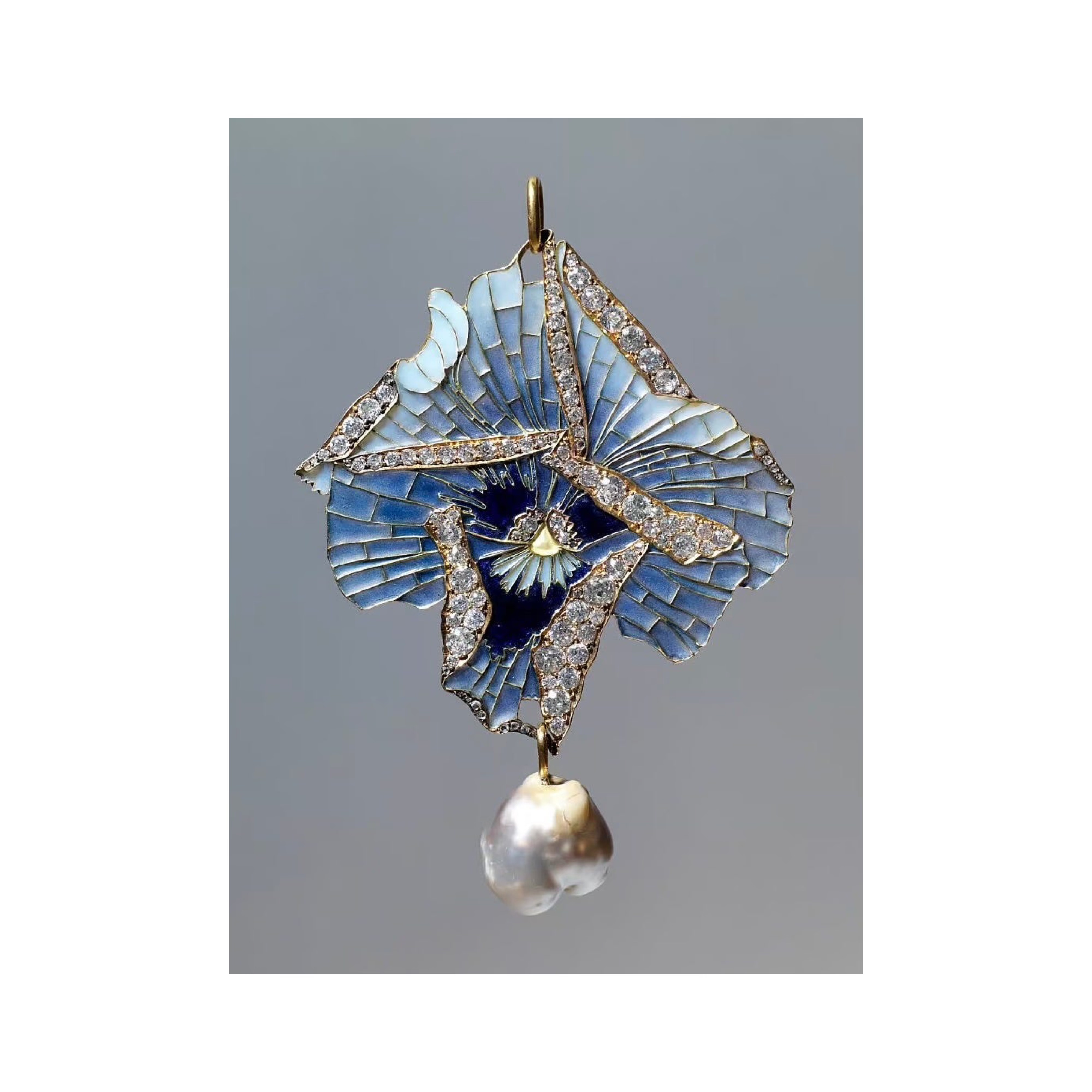
Art nouveau jewellery piece by Georges Fouquet, circa 1900. Photo: Christieโ€™s

Georges Fouquet โ€“ pioneer in two aesthetic movements

Georges Fouquet (1862-1957) emerged as one of the most influential jewelers of the art nouveau period. His father Alphonse Fouquet (1828-1911) opened his boutique 1862 on rue du Temple in Paris and Georges joined him in the family business and workshop in Paris 1891. Succeeding Alphonse in 1895, Georges quickly became renowned for his quite audacious, intricate and nature-inspired designs that pushed the boundaries of traditional jewellery conventions.

Art nouveau jewellery pieces by Georges Fouquet. Photos: Christie’s

Art nouveau jewellery pieces by Alphonse (monkey), circa 1890s and Georges Fouquet, circa 1900. Photos: Christie’s

Collabs

Always looking for originality Georges Fouquet often commissioned ideas from artists from outside the jewellery world.
Collaborating with Czech artist and illustrator Alphonse Mucha (1860-1939) โ€“ who also designed the new Paris boutique in 1901 โ€“ he created some of the most striking jewelry pieces of the era, characterized by organic natural motifs, flowing lines and an interplay of materials like enamel and ivory, mother-of-pearl and gemstones.

โ€œCascadeโ€ pendant, Maison Georges Fouquet, circa 1900. Design by Alphonse Mucha. Photo: Petit Palais Musรฉe des Beaux-Arts de la Ville de Paris

Art nouveau jewellery pieces by Georges Fouquet. All above photos: Christie’s

Art nouveau brooch by Georges Fouquet. Photo: Christie’s

Art nouveau jewellery pieces by Georges Fouquet, circa 1900 and 1901. Photos: Christie’s

Necklace by Georges Fouquet, circa 1905. Photos: Christieโ€™s

The early 1900s

Fouquet and Muchaโ€™s long collaboration and close teamwork was showcased at the Exposition Universelle in Paris in 1900 and their quite theatrical lines of jewellery became an iconic representation of the art nouveau style.
The jewellery were almost wearable sculptures and the French actress Sarah Bernhardt was one of those who loved to wear them. (Perhaps/probably inspired by Alphonse Mucha who was her creative director.)
One of Georges Fouquetโ€™s most celebrated jewellery pieces were a exotic, serpent-themed necklace designed especially for her.

Diamond- and pearl pendant by Alphonse Fouquet, circa 1890s. Photo: Christieโ€™s
Diamond brooch by Alphonse Fouquet, circa 1890s. Photo: Christieโ€™s
Citrine and diamond pendant, Maison Georges Fouquet, 1920. Photo: Bonhams

But the art nouveau lost its appeal and perhaps here we see the real greatness of Georges Fouquet. As style changed he was ready to move with the times and rose as a powerful and creative force when it came to drive and steer the jewellery industry into the new art deco movement.

To the left: Brooch with aquamarine, onyx, and diamond. Photo: Sotheby’s
To the right: Bracelet in platinum with rectangular cut-corned aquamarine, rectangular cut-corned onyx and circular-cut diamonds. Photo: Christie’s Both pieces Maison Fouquet .

Platinum brooch with rectangular-cut aquamarine with circular-cut diamonds and cabochon purple sapphire and black enamel. Maison Georges Fouquet, circa 1925. Photo: Sotheby’s

Georges Fouquet about why he worked with artists from outside the jewellery world:
โ€œThe architect will supply general lines, levels and overall construction; the sculptor will supply his knowledge of relief; the painter, the shimmering play of colours.โ€

Platinum bracelet with cabochon sapphires, rectangular-shaped emeralds and round diamonds. Maison Georges Fouquet, circa 1922. Photo: Christie’s

New roaring times

In 1925 Georges Fouquet became the president of the admission committee for jewellery at the Exposition des Arts Dรฉcoratifs et Industriels Modernes. In this role he opted for jewellers with a new and original vision. He also hand-picked the Swedish-French architect and designer Eric Bagge to design the jewellery pavilion at the Grand Palais. Bagge also came to design jewellery for the Maison Fouquet, for example pendants, in platinum with onyx, crystal and diamonds, exhibited at the 1925 Exposition.

Necklace by Georges Fouquet, circa 1920s. Photo: Christieโ€™s

Rock crystals the Maison Fouquet way. Photos: Christie’s, Sotheby’s and Wartski.

Jewelry piece by Georges Fouquet, circa 1925. Photos: Christieโ€™s
Jadeite and pink sapphire bracelet, Maison Georges Fouquet, circa 1930. Photo: Sothebyโ€™s

Watch from Maison Georges Fouquet, circa 1925. Photos: Sotheby’s

Watch by Georges Fouquet, circa 1925. Photos: Christieโ€™s

Free-thinking artists and innovative expo

Fouquet continued to work and collaborate with new and innovative thinking artists when it came to designing the companyโ€™s statement pieces. Amongst them were the French painter and commercial poster artist Adolphe Jean-Marie Mouron (perhaps more known as Cassandre), the sculptor Jean Lambert-Rucki, the architect Georges-Henri Pingusson and the painter Andrรฉ Lรฉveillรฉ.

To the left: Geometric bangle bracelet, set with single-cut diamonds and variously-cut lapis lazuli, coral, amethyst, and aquamarine panels. One half of the bracelet within a gold border and the other in platinum. Maison Fouquet, designed in 1925 by Alphonse Mouron, more widely known as Cassandre.
To the right: Cabochon emerald, rectangular-shaped orange topazes, old and single-cut diamonds, black enamel, 18K yellow gold and platinum. Maison Fouquet, design by Andrรฉ Lรฉveillรฉ, circa 1925. Both photos: Christieโ€™s.

To the left: Coral, onyx and diamond pendant. Later chain. Designed by Eric Bagge for the Maison Fouquet for the Exposition des Arts Dรฉcoratifs et Industriels Modernes in 1925. Photo: Sothebyโ€™s
To the right: Gold brooch by Maison Georges Fouquet. Designed by Jean Lambert-Rucki, 1937. Photo: Musรฉe des Arts Dรฉcoratifs

Necklace by Georges Fouquet, circa 1925. Photo: Christieโ€™s

Archive donation

Georges Fouquet donated his archive to Musรฉe des Arts Dรฉcoratifs. Click the link to see his sketches. The museum paid a tribute to all of the three Fouquet family members in 1984.

Baubles by the Maison Georges Fouquet. Photos: Christie’s, Sotheby’s and Fereshteh Broumand

The hexagonal onyx plaque pendant is set with a cabochon emerald, with diamond-set corners and pendant hoop. Added is a diamond and enamel-set chain. Maison Georges Fouquet, circa 1925. Photo: Christie’s

Georges Fouquet, June 1929:
โ€œIt is incontestable that in a certain number of years our jewels will be sought after for collections and museums where they will have their place.โ€

Bracelets by Georges Fouquet, circa 1930. Photo: Christie’s

Bracelets by Jean Fouquet, circa 1931. Photo: Christieโ€™s
A pair of ear pendants with moonstone, enamel and diamond. Maison Georges Fouquet, cirka 1925. Photo: Christieโ€™s
Bracelets by Jean Fouquet, circa 1957. Photo: Christieโ€™s

Jean Fouquet โ€“ the art deco innovateur

Jean Fouquetโ€™s (1899โ€“1984) first plan was not to become a jeweller. Instead he studied literature and contributed, for example, to Lโ€™Esprit Nouveau, the magazine co-founded by famous architect Le Corbusier.
Jean is also said to have wanted to become a lawyer, was a Communist, writer of detective stories and loved to entertain his friends with songs. In short; an idealistic, creative, optimistic but especially innovative dreamer.
Eventually he joined the family business, even though he was not directly involved in running the Maison of Fouquet, and his designs created between 1925 and 1931 were among the most audacious and innovative of the period.

Necklace in ebony, chrome-plated metal and gold, circa 1931. Photo: From the book Art Deco Jewelry

In 1925, Jean Fouquet won an award at the Exposition des Arts Dรฉcoratifs et Industriels Modernes. During the years between 1926 and 1928, he exhibited at the Sociรฉtรฉ des Artistes Dรฉcorateurs and later at exhibitions of the Union des Artistes Modernes

Ring Jean Fouquet. Photo: Peter Edwards โ€“ 20th Century Jewels

To the left: Cuff bracelet in grey and yellow gold and diamonds, Jean Fouquet, circa 1927. Photo: The Brandt Foundation
To the right: Bracelet in grey gold, platinum, diamonds black enamel and cabochon jade, Jean Fouquet, 1926. Photo: Virginia Museum of Fine Arts

The Modernist

Jean carried on the family tradition and legacy but with his own distinctive modernist approach. He became a leading figure of the art deco movement, known for his bold designs that contrasted sharply with the fluid, nature-inspired early aesthetics of his father. (Even though he visited this artistic taste to some degree later in life.)
With an innovative mix of architecturally precise, clean lines together with bold colorful geometric patterns, he fully embraced new materials and forms.

Bracelet framed with boules in chromed metal. Jean Fouquet, 1931. Photo: Christieโ€™s
This bangle bracelet, made of ebony and two nickle-plated bands, was inspired by Cubism, African art and new technology and materials. All key influences on Art Deco jewellery. Jean Fouquet. Photo: Primavera Gallery
Necklace, Jean Fouquet. Photo: Peter Edwards โ€“ 20th Century Jewels

Jewelry pieces by Jean Fouquet, circa 1925-1930. Photos: Christie’s

Jean Fouquet:
โ€œA piece of jewellery must be composed of masses clearly visible from a distance. Objects glimpsed at top speed become distorted and we can only perceive them by their volume. The ultrarapid and slow-motion rhythms of the images on screen overwhelm our visual perceptions. Today we have become accustomed to reading quickly.โ€

Brooch in gold with lacquer and antique brilliant-cut diamonds. Jean Fouquet, 1937. Photo: Musรฉe des Arts Dรฉcoratifs.
Pendant brooch in platinum, lacquer, aquamarine, topazes and diamonds, circa 1927. Photo: From the book Art Deco Jewelry

From left to right: Semi-flexible bracelet with onyx and solid jade. Jean Fouquet, 1925. Photo: Christie’s
Bracelet in gold with malachite and black lacquer. Jean Fouquet, circa 1929. Photo: Victoria and Albert Museum
Bracelet in hammered silver, the front as a stylised face with a gold mask, the ring of similar design, circa 1937. Bracelet signed Jean Fouquet, ring with maker’s mark for Charles Girard. Created after a drawing by Jean Lambert-Rucki. Photo: Christie’s

Bracelet, Jean Fouquet. Photo: Peter Edwards โ€“ 20th Century Jewels

Materials

Jean Fouquet continued the Maison of Fouquetโ€™s use of unconventional materials and gemstones such as platinum (but usually he preferred grey gold and semiprecious stones to diamonds), lacquer, ebony, chrome-plated steel, onyx and rock crystal.

In fact, Jean Fouquet may have been the first jeweller who used rock crystal as the entire body of the jewellery piece, in a very avant-garde parure set (ring and bracelet) with faceted amethysts and moonstone cabochons in 1931. This piece may have sparked something in designers like Suzanne Belperron, Rene Boivin and Mouboussin who later frequently used this specific technique.

Ring and bracelet in frosted rock crystal with faceted amethysts and cabochon moonstones. Jean Fouquet, 1931. Photo: Bruce M White

Jeanโ€™s abstract pieces reflected the progressive spirit of the early 20th century. Inspired by the avant-garde movement, cubism and the machine age, some of his most famous creations were a series of modular pieces that could be transformed or worn in multiple ways โ€“ an architectural precursor to the modernist jewellery of the mid-20th century.

To the left: Necklace in 18K gold and silver with aquamarine and black lacquer. Jean Fouquet, circa 1925. Photo: Christie’s
To the right: A bangle bracelet of geometric design, mounted in platinum and 18K white gold, with black enamel each set with a large step-cut aquamarine, accented by pavรฉ-set diamond panels, Jean Fouquet, 1926. Photo: Siegelson New York

Jean Fouquet:
โ€[Jewellery] is to our clothing what gold and silverware are to our homes. It places a vivid mark, a highlight on the simplicity of contemporary womenโ€™s clothing.โ€

Different rings by Jean Foquet 1920s, 1930s and 1950s. Photos: Christie’s, Inez Stodel and Musรฉe des Arts Dรฉcoratifs

To the left: Jadeite, lapis lazuli, enamel and diamond bracelet, Georges Fouquet, circa 1925. To the right: 18 karat gold, enamel and diamond brooch, Jean Fouquet, 1950s. Here we can see Jean Fouquet playing with the art nouveau aesthetics. Photos: Christie’s and Sotheby’s

White gold, citrine, amethyst, diamond and enamel brooch, Attributed to Jean Fouquet, circa 1927. Photo: Sothebyโ€™s

Always a fighter

Jean Fouquet remained at the cutting edge and startlingly modern all through his working life. He continued to design jewellery in his own name, but they were from 1936, made by different workshops. Militant as ever, he refused to work during the occupation of France during WWII. After the war he resumed his work and in 1958 he received a gold medal at the Exposition Universelle in Brussels.

Necklace in white gold and platinum with circular-cut diamonds, Jean Fouquet, 1928. The second necklace is in platinum and sculpted and polished rock crystal with rose-cut diamonds. Jean Fouquet, circa 1925. Photos: Christie’s

Silver and lacquer pendant-necklace, Jean Fouquet, circa 1928-1929. Photo: Sothebyโ€™s

Jewellery as art โ€“ the Fouquet legacy

Today, Georges and Jean Fouquetโ€™s works are precious treasures in museums and private collections worldwide and their legacies endure. The financial crisis of 1929 forced the Maison Fouquet into bankruptcy and it closed it doors completely in 1936, but whether through the delicate and sinuous, flowing curves of Georgesโ€™ jewel pieces or the structured geometry of Jean, the name Fouquet remains synonymous with beauty, craftsmanship, innovation and their redefining of modern jewellery.

Miscellaneous pieces from Maison Georges Fouquet. Photos: Sotheby’s and Christie’s.

A rare art deco ruby and diamond fibula brooch, by Maison Georges Fouquet, circa 1925. Photo: Bonhams

Fun fact!
The store that Alphonse Mucha designed for the Fouquet family, at 6 rue Royale, is preserved and at display at the Musรฉe Carnavalet in Paris.ยฉSlowClapStories

ยฉSlowClapStories


Originally published on Substack at Slow Clap Jewels. Read the newsletter here.