…the pioneer we almost forgot
Carl Hörvik helped establish Sweden’s reputation in modern design during the early 20th century. His work bridged classical design traditions with the emerging modernist functionalist principles and he all along played a pivotal role.
The architecture and elegant furniture designs of Swedish architect and designer Carl Hörvik (1882-1954) featured and mixed refined but restrained proportions, skilled craftsmanship with a thoughtful approach to the materials. That is, the pared-down classicism that became a hallmark of the Swedish design movement during the 1920’s and 1930s.
Born Carl Nilsson in Hörvik, in the county of Blekinge in the south of Sweden, he later adopted his birthplace’s name as his surname. Carl Hörvik studied at the Royal Institute of Technology in Stockholm (studying alongside the more well known architect Gunnar Asplund) from where he graduated in 1909.
After a study trip to Great Britain and the USA in 1913 Carl Hörvik established his own architectural practice in 1914 and his early work included the interior design of the Röhsska Museum in Gothenburg in 1916.
New and sleeker times
The exhibition L’Exposition Internationale des Arts Décoratifs et Industriels Modernes in Paris, 1925 marked a crucial and central moment in design history when it gave birth to the Art Deco and Art Moderne movements.
Among the exhibitors who received special attention was the Swedish pavilion, designed by Carl Bergsten. The pavilion went on to win more awards than any other country except for the hosting nation, France. Carl Hörvik himself went home with the Grand Prix, the exhibition’s highest honor, for his furniture.
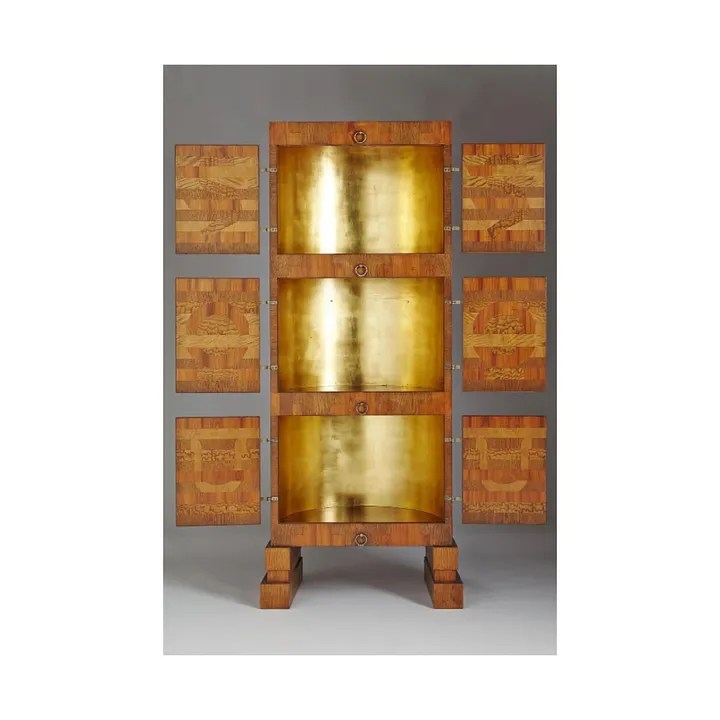
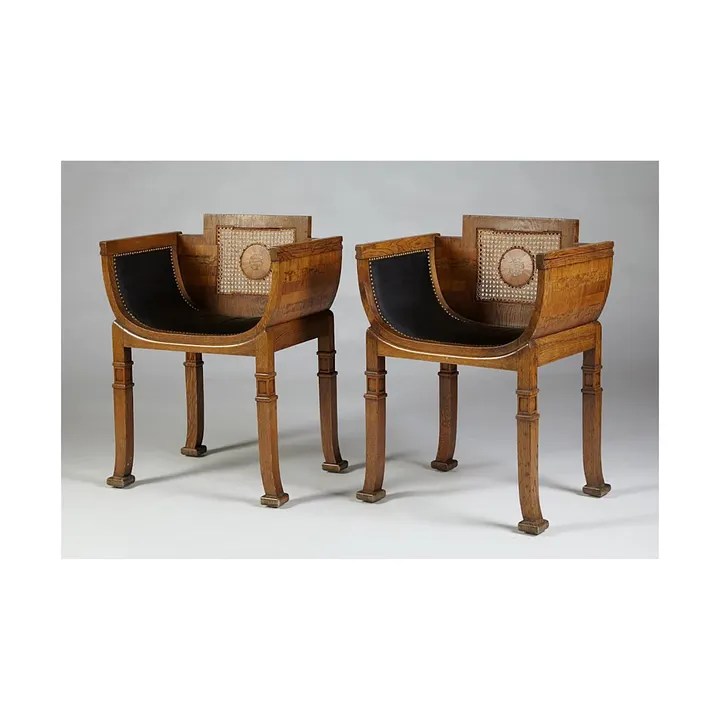
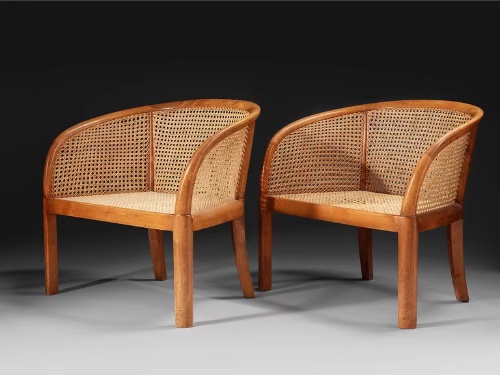
Cabinet and chair designed by Carl Hörvik for the L’Exposition Internationale des Arts Décoratifs et Industriels Modernes in Paris, 1925. Photos: Modernity
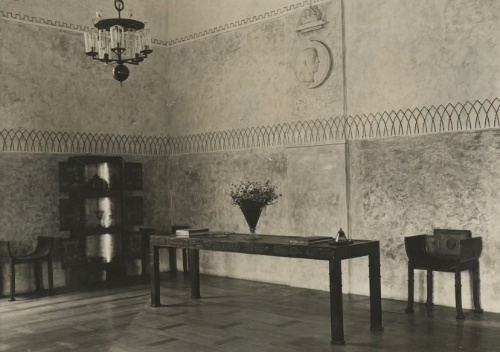
The award-winning furniture employed for example oak, with inlays of various other woods. A mix that created a visual interest through contrasting tones and textures and found favour with contemporary critics.
A cabinet, with accompanying chairs, was intended to be displayed with its doors open and contained three gilded niches specifically designed for exhibiting objets d’art. An idea and architectual notion that highlights Hörvik’s consideration for both form, beauty and function. These pieces – produced by Nordiska Kompaniet (NK), the department store in Stockholm – are now part of the collection of Sweden’s Nationalmuseum.
Cast furniture
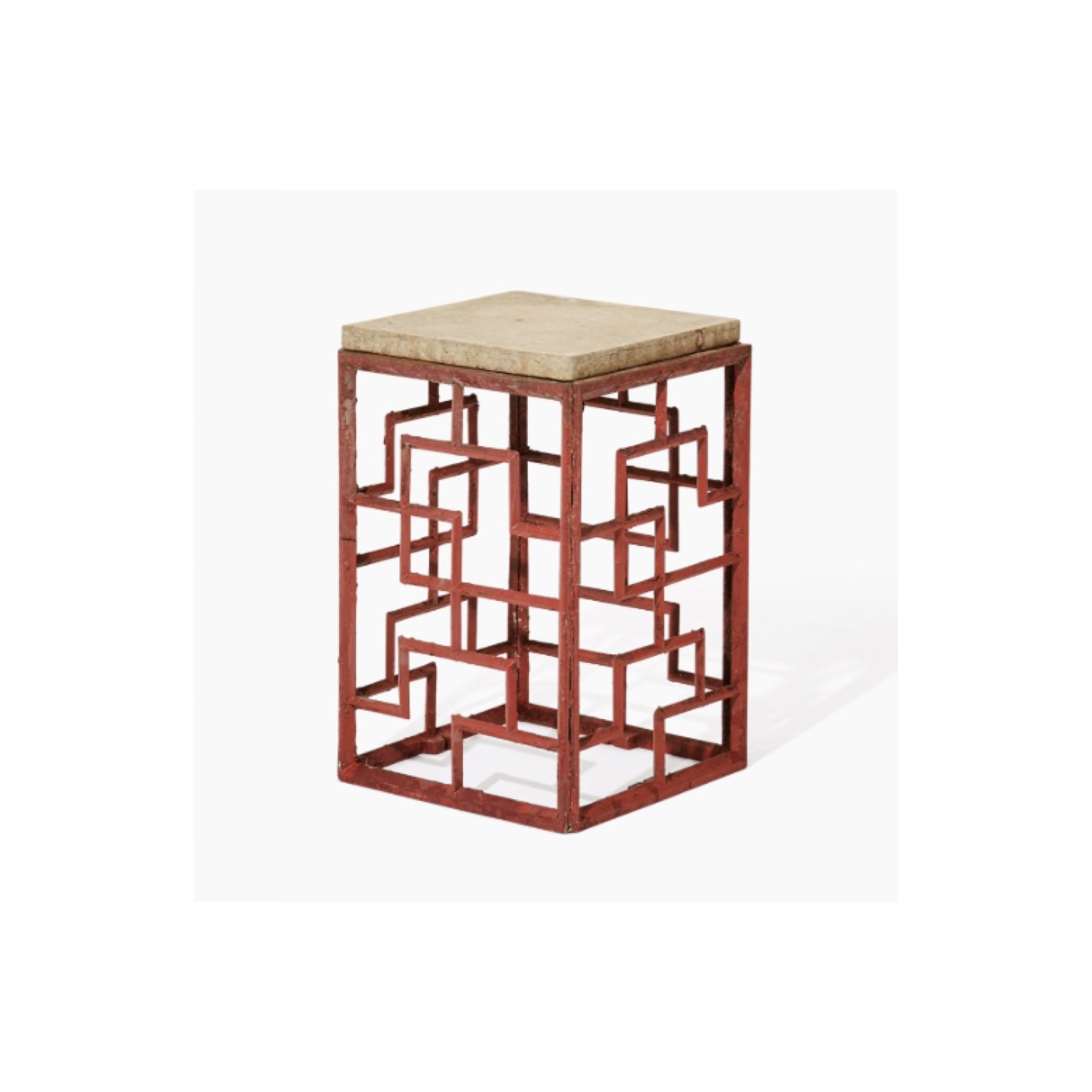
But already in 1922 Carl Hörvik began a now famous collaboration with Näfveqvarns bruk (an ironworks) when they started to produce “Blomsterbordet” (the “Bloom-side table”), which features a cast iron frame and limestone top. The table was designed a few years prior for a cast iron competition initiated by Svenska Slöjdföreningen and Näfveqvarns bruk. The table was shown at the Gothenburg Exhibition in 1923 and got an exceptional reception. Today we only know of four still existing tables.
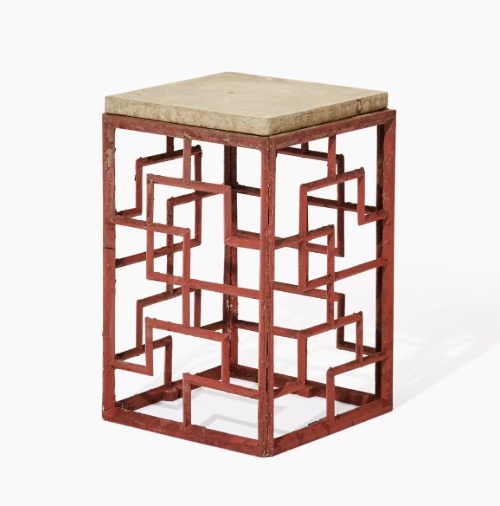
Some years later, 1927-1930, Hörvik started another cast iron furniture collaboration – with a clear design line to “Blomsterbordet” – for Hotel Skansen in Båstad and later the summer restaurant Lindgården in Stockholm when he designed durable outdoor furniture for the two venues. The table and chairs were made out of cast iron with wood and slate; robust designs able to withstand the elements.
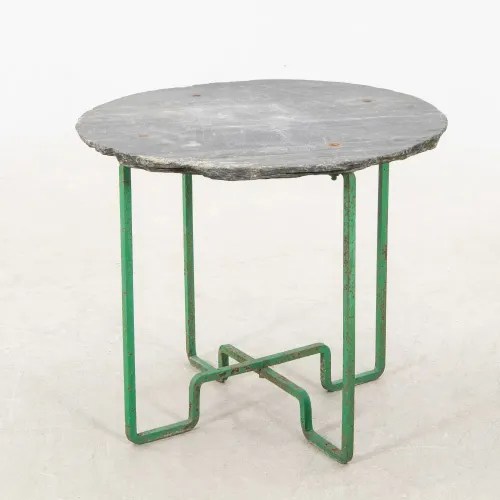
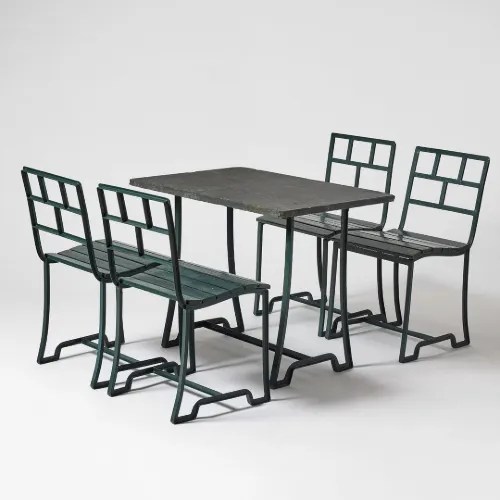
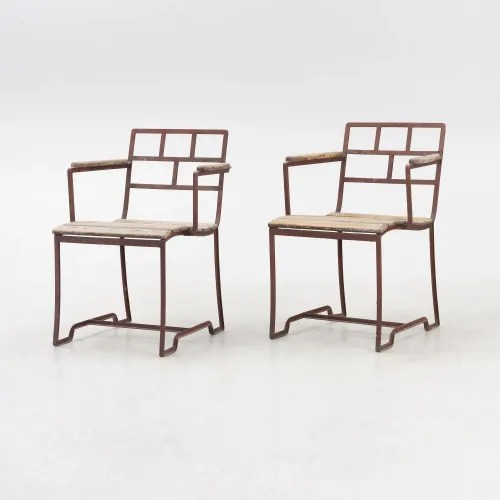
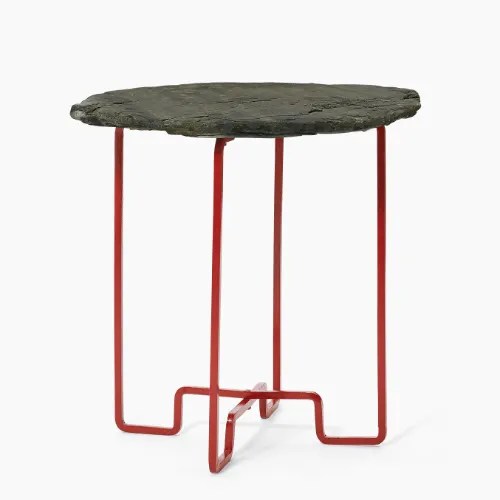
Cast iron outdoor garden furniture for ‘Hotel Skansen’ in Båstad, late 1920s and for the ‘Restaurant Lindgården, on Djurgården in Stockholm in 1930. Different manufacturers. Photos: Bukowskis, Stockholms Auktionsverk and Uppsala Auktionskammare
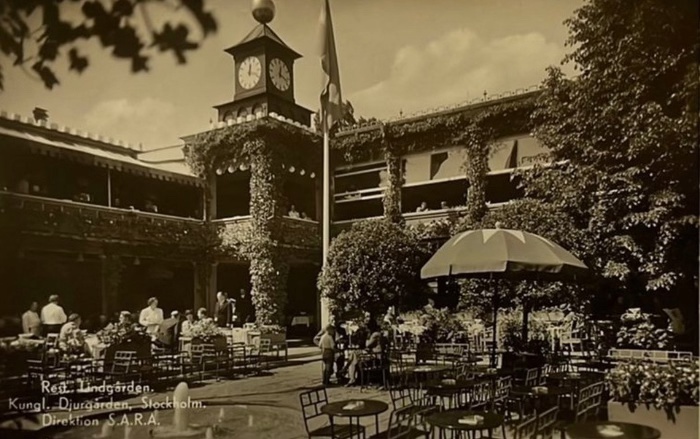
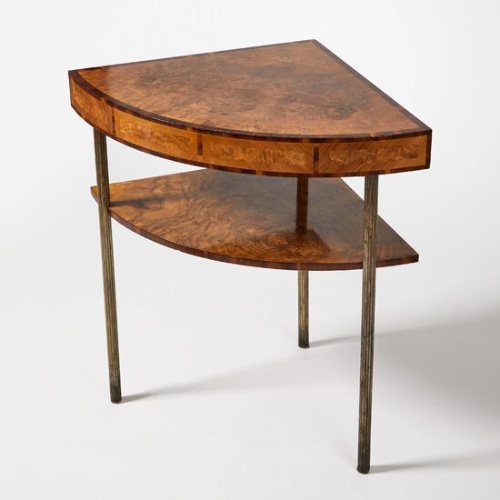
Throughout his career, Carl Hörvik collaborated with various Swedish manufacturers, including beforementioned Nordiska Kompaniet, where he designed furniture which through its functionality and high aesthetic quality, came to exemplify the Swedish elegance.
Functionalism
From the earlier classicist movements through the Swedish Grace period, Carl Hörvik finally came to wholeheartedly embrace functionalism. By the 1930s, we find him showcase tubular-steel furniture at the 1930 Stockholm Exhibition.
In 1937, he was employed by the Swedish Royal Air Force Administration. This transition, coming from a a harsh financial situation, would mark the end of his public design career.
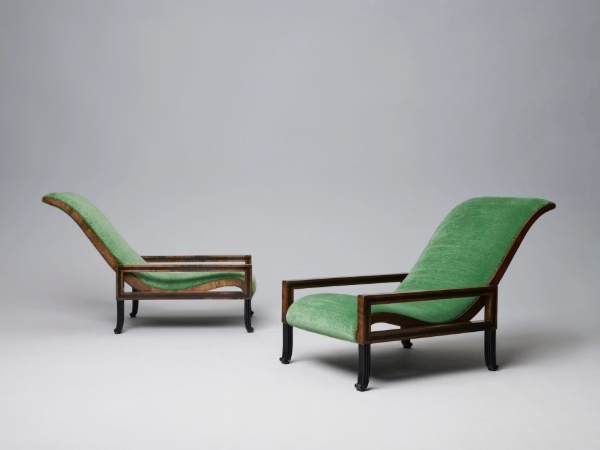
Carl Hörvik’s legacy lives on through his furniture designs that combines functionality with elegance. Their refined aesthetics – with a Swedish modernistic spirit – with the traditional but exeptional craftsmanship added, show us the modern thoughts and sensibilities during a transformative period in design.
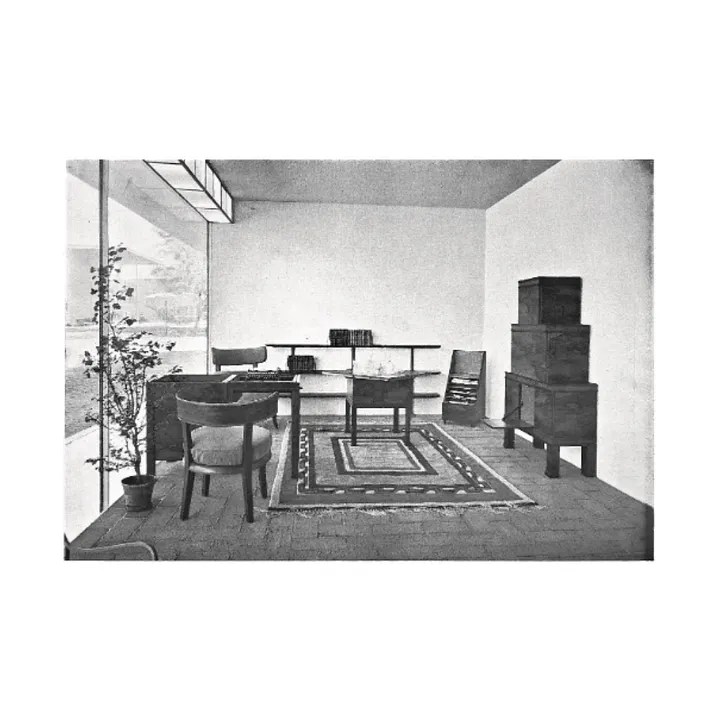
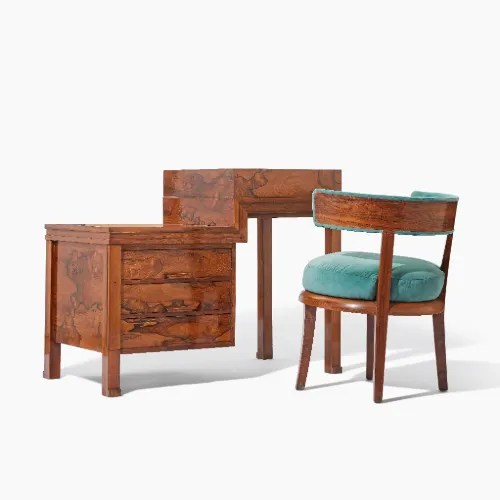
Desk with chair, Nordiska Kompaniet, Sweden, ordered for the 1930 Stockholm Exhibition. / First photo: Found online / Second photo: Bukowskis
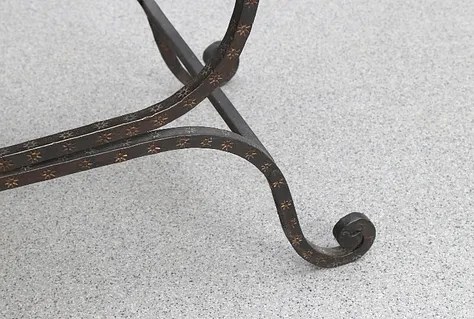
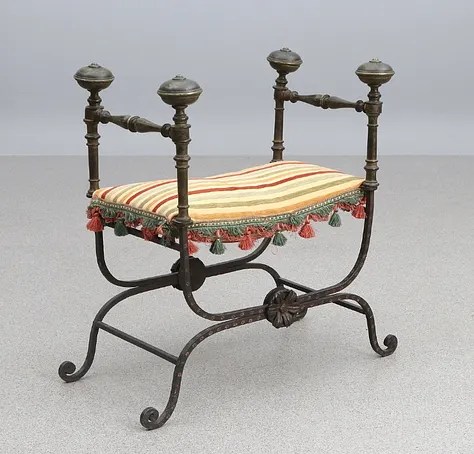
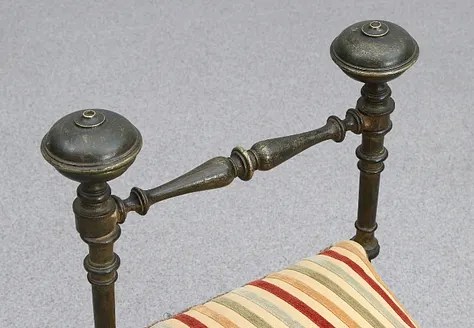
Photos: Skånes Auktionsverk
©SlowClapStories
Originally published on Substack at Swedish Grace. Read the newsletter here.
 Slow Clap Stories
You must be logged in to post a comment.