…a kingdom of functionalism for a chair
Uno Åhrén’s career span over a crucial period of Swedish design and architecture and he is celebrated as a key figure in the development of functionalist architecture, social housing and other modern urban planning.
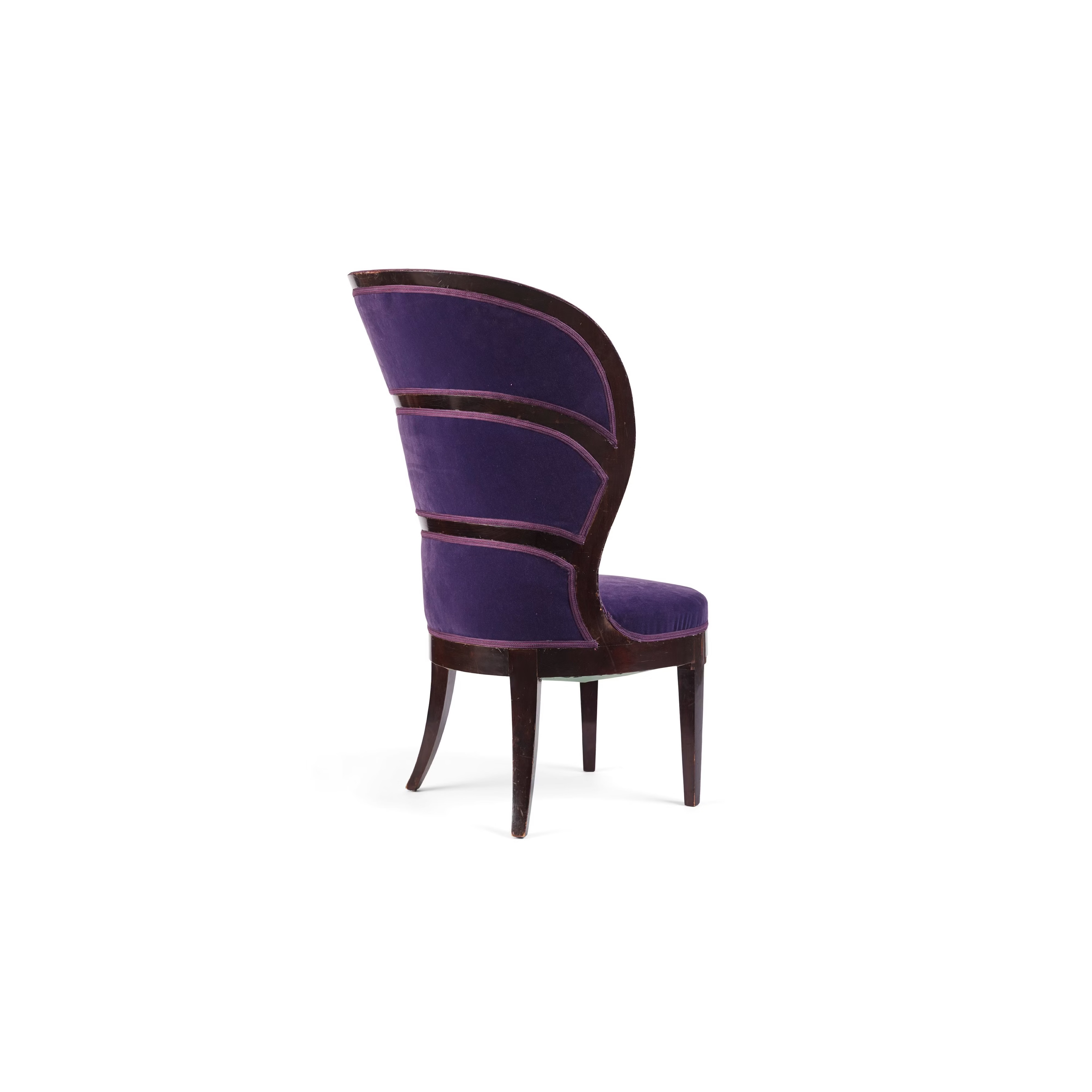
However this post will focus on a chair from his early furniture design. A design I am not completely sure he would have liked to be remembered for…
Born in Stockholm, Sweden, Uno Åhrén (1897-1977) became one of Sweden’s most influential architects, urban planners and a leading proponent of functionalism but also, in his early days, made a mark as a furniture designer within Art Déco.
Åhrén graduated from the Royal Institute of Technology (KTH) in Stockholm in 1918. His early work was rooted in the Swedish Grace style, characterized by refined craftsmanship and classical elegance. Åhrén contributed to all the “important” exhibitions with furniture and interiors, like the Swedish Home Exhibition in 1917, the Jubilee Exhibition in Gothenburg in 1923, and the Paris Exposition in 1925, where he won a gold medal for his silver compositions.
The Paris Exhibition
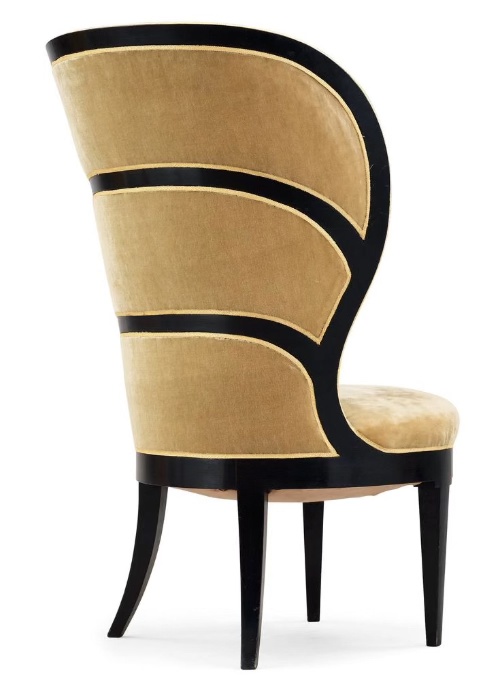
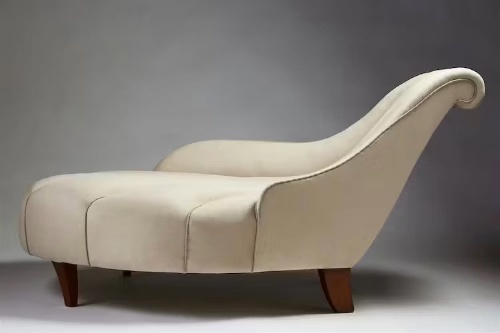
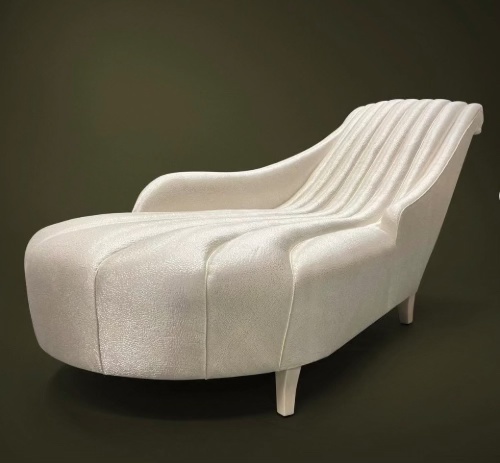
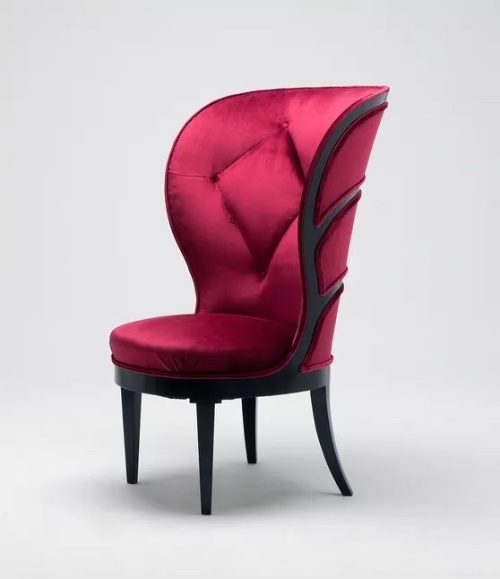
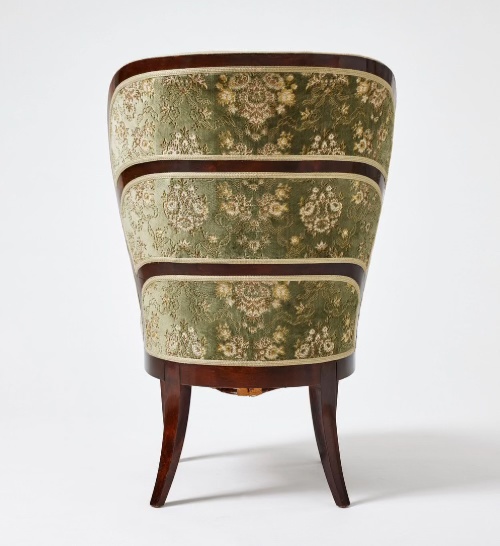
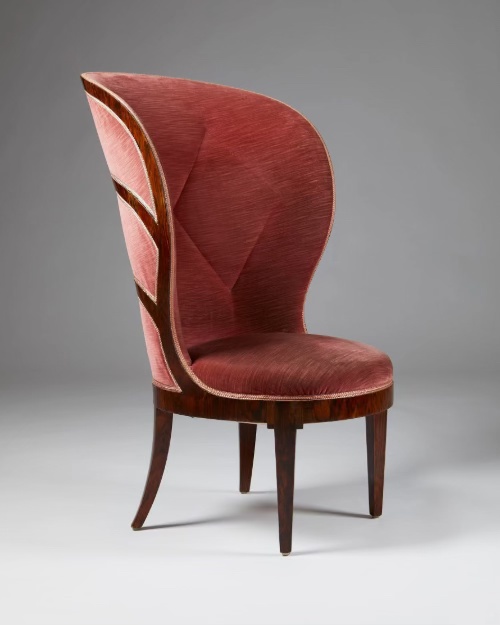
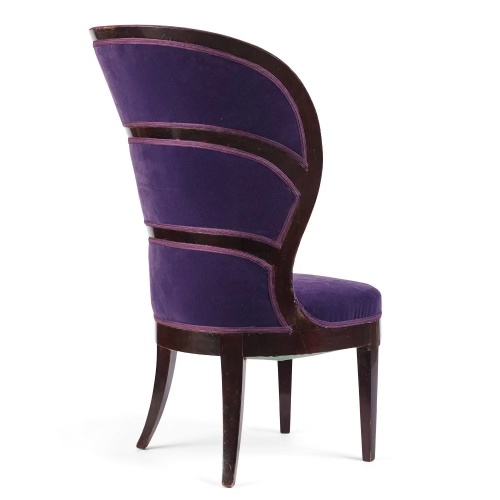
For the exhibition in Paris 1925, Uno Åhrén designed a ladies’ drawing room and one of the furniture pieces was this beautiful and very feminine easy chair. It hade a frame of rosewood, and upholstery in velvet. The chair was part of a set that also included a chaise longue and coffee table.
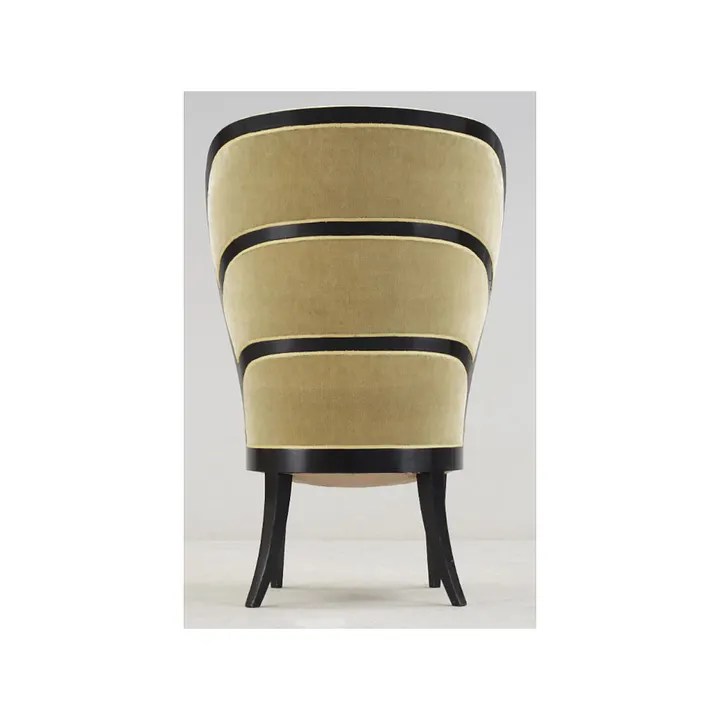
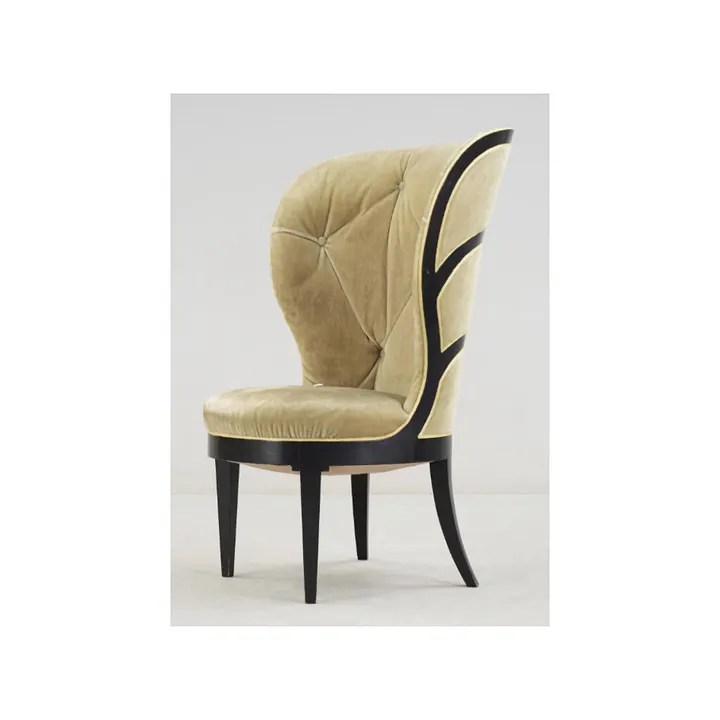
Chair by Uno Åhrén, manufactured by Mobilia AB, Sweden, circa 1925. Photo: Bukowskis
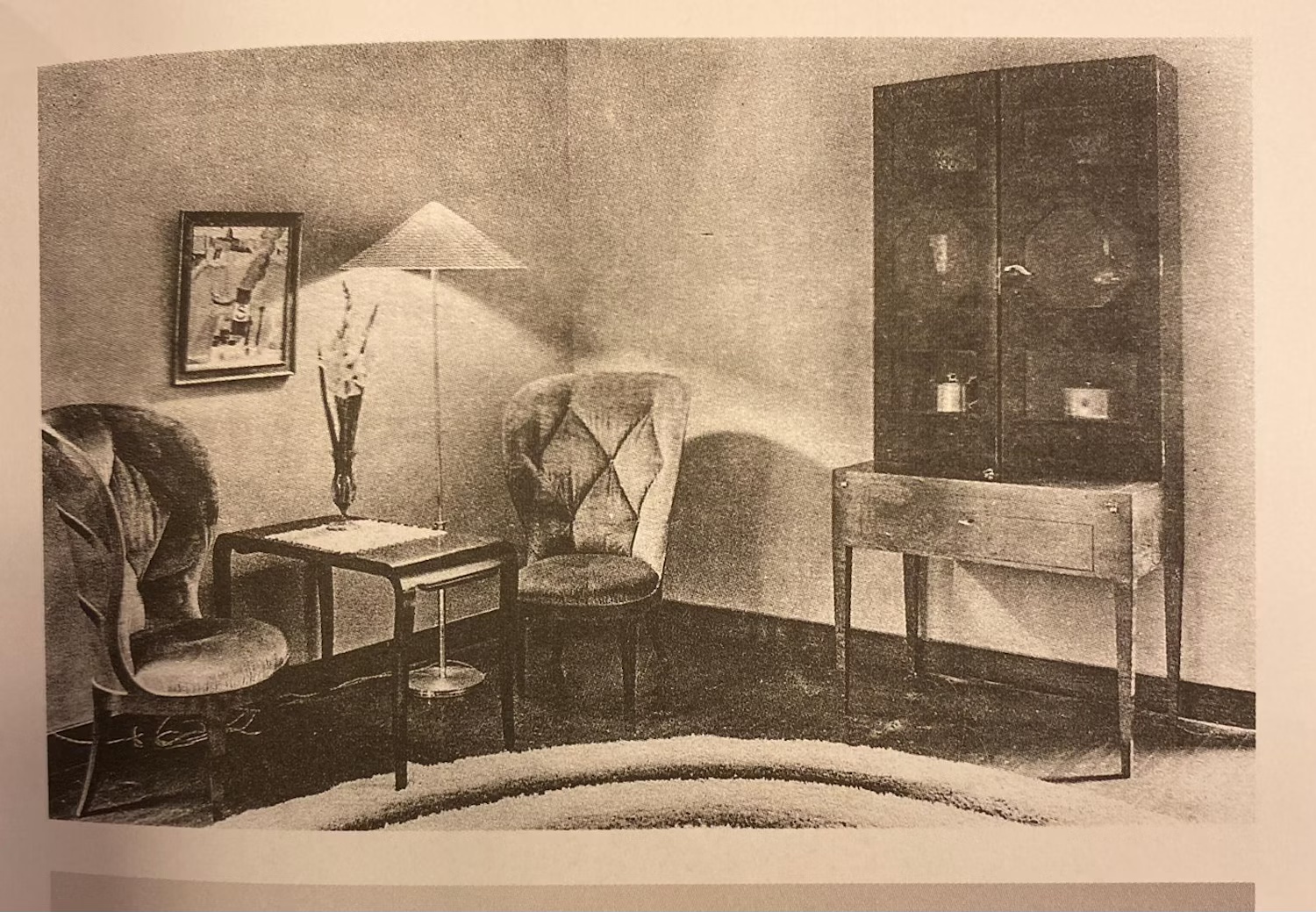
During these years Åhrén also designed for Estrid Ericson’s company, Svenskt Tenn in Stockholm.
Amongst his diverse and versatile design work one will find wallpapers, tiled stoves and theatre sets, all showcasing his talent.
Times of change
This success coincided with a time when the earlier, more decorative aesthetics were being challenged by modernist principles. When it comes to this change, it is said that the 1925 Paris Exhibition marked a breaking point for Åhrén. Experiencing Le Corbusier’s Pavilion L’Esprit Nouveau, made him a strong advocate for functionalism; emphasizing simplicity, utility and mass production.
Uno Åhrén even went on to write an essay, “Conflicts” (“Brytningar”), about this ideological shift in which he critiqued his earlier, more ornamental, work and embraced the new modernist approach to design. In the essay, Åhrén distances and criticizes himself from and for his own participation in the Paris Exhibition, but also talks about how the new design movement should be be created by anonymous designers. Designers who would serve society but never emphasize their own individual artistic ability.
In 1927 Åhrén then joined, amongst others, Le Corbusier and Mies van der Rohe at Weissenhofsiedlung exhibition in Stuttgart, Germany where presented his vision of modern housing.
With start in 1930 Uno Åhrén continued his work emphasizing and developing Swedish modernism. For example, as one of the architects and contributers to the Stockholm Exhibition of 1930. In his contributions he lay focus on solutions for people with limited economic means.
Accept the new times
The following year, he co-authored the influential manifesto “acceptera” (“accept”), which established the social and aesthetic principles of the Swedish functionalism. In the wake of international figures like Le Corbusier, Walter Gropius the manifesto talks about the importance of rationality, standardization, sensible financial choices and social responsibility but also formulates the importance of housing projects that prioritize light, air and spatial efficiency.
Uno Åhrén described the functionalist ideas as a critique of the traditions and authorities belonging to a disappearing society. Every architectural style is an expression of a certain society, a particular culture, he argued. Since modern society was already a reality, it was necessary to simply accept this new style.
Uno Åhrén also went on to collaborate with the Swedish sociologist, reformer and Nobel prize winner [in Economic Sciences] Gunnar Myrdal, between the years 1932-1935. Åhrén contributed to the work “The Housing Question as a Social Planning Problem“. A work that came to influence Sweden’s social democratic policies, the development of the concept “Folkhemmet” and the structuring of the Swedish Social Democratic Party.
Beyond his architectural practice, Åhrén was the editor of PLAN magazine, a significant publication in the field, and also served as Gothenbuurg’s first City Planning Manager 1932-1943. 1943-1945 he served as CEO of the company “Riksbyggen”.
In 1947, Åhrén was appointed Sweden’s first professor of Urban Studies/Planning at KTH, (the Royal Institute of Technology) a position he held until 1963. KTH awarded him an honorary doctorate in technology in 1974.
For his times, Uno Åhrén was quite radical in his opinions, which has made his legacy complex. Because he tirelessly worked for socially conscious design and urban planning he is seen and praised as one of the pioneers who introduced Modernism, the so called Functionalism, in Sweden. But this work has also lent him critic for leading to the so called “city sanitation” which reshaped many Swedish city centers demolishing their older architectural heritage.
But more about all that, and if you want to have a look at his architecture, you will have to google it yourself. This is about a chair…
©SlowClapStories
Originally published on Substack at Swedish Grace. Read the newsletter here.
 Slow Clap Stories
You must be logged in to post a comment.